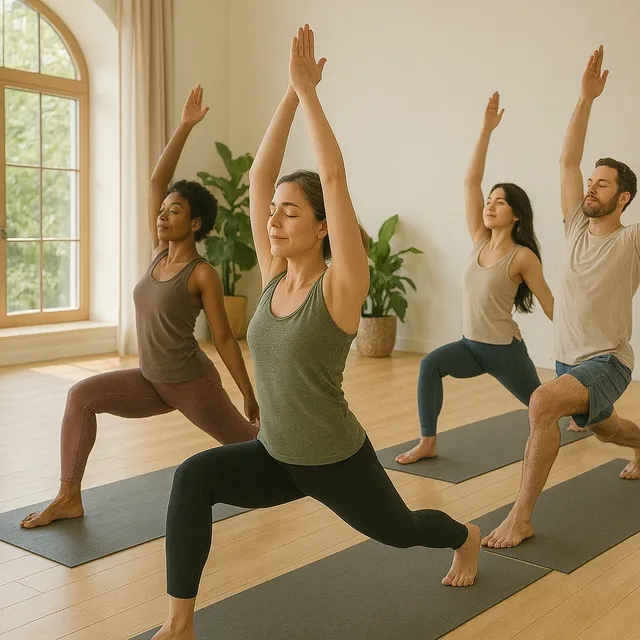
Fitness advice online contradicts itself constantly — low carb versus balanced macros, heavy lifting versus functional training, daily workouts versus rest-day obsession. Most of it isn't wrong exactly, it's just context-dependent, and nobody tells you which context applies to you. Here's the version that holds up regardless of which trend is popular this year.
Consistency beats intensity, especially early on. Three moderate sessions a week that you actually do beats an ambitious five-day plan that collapses after two weeks. The people who see real long-term results are almost never the ones training hardest in month one — they're the ones still training in month twelve.
Strength training matters at every fitness level, not just for people trying to build visible muscle. It preserves muscle mass during any weight loss, raises resting metabolic rate, and directly protects against the natural strength decline that comes with age. You don't need a gym for this — bodyweight exercises (squats, push-ups, lunges) are a legitimate starting point.
HIIT is time-efficient, not magic. Short, intense interval sessions genuinely work for cardiovascular fitness and calorie burn in less time than steady-state cardio — but they're also easier to get wrong (poor form under fatigue, inadequate recovery between sessions) than a slower-paced alternative. Good for busy schedules, not necessarily better than other approaches for everyone.
Mobility and flexibility work isn't optional extra credit. Especially for anyone doing a lot of desk-based work, basic mobility routines addressing tight hips and a stiff upper back prevent a lot of the aches that otherwise get blamed on "just getting older."
Recovery is often treated as an afterthought, but it's where the actual adaptation happens — training breaks muscle down, recovery is what rebuilds it stronger. A few things that make a genuine difference:
Sleep. Seven to nine hours isn't a nice-to-have — poor sleep measurably slows recovery, affects the hunger hormones that drive overeating, and reduces the next day's training quality regardless of how disciplined you are about the workout itself.
Active recovery over total rest. A gentle walk or light stretching on a rest day tends to reduce soreness faster than doing nothing at all — full days of complete inactivity aren't usually necessary unless you're managing an actual injury.
Foam rolling and stretching, applied consistently rather than only when something already hurts, is a genuinely useful low-cost habit for mobility and reducing chronic tightness.
You don't need a strict macro spreadsheet to fuel a fitness routine well. Protein at most meals supports muscle repair; enough carbohydrate keeps energy up for training sessions; consistent hydration matters more than most people account for. If you want more detail on this, the that apply to weight management apply equally here.
One thing worth saying plainly: occasional treat meals aren't a failure of discipline. Rigid all-or-nothing eating tends to produce worse long-term consistency than a flexible approach that allows for real life.
Self-directed fitness works for plenty of people, but the two most common reasons people stall aren't lack of information — they're not knowing whether what they're doing is actually working, and not having anyone to adjust the plan when life gets in the way. If either of those sounds familiar, that's exactly what a coach adds that a generic programme can't. (URL guessed from the title pattern — confirm the real slug before publishing) — including how to tell if coaching is the right next step, and what a good first few weeks with a beginner-focused coach actually looks like.
are checked against a real accrediting body before they can take a client, and it's pay-per-session — a reasonable way to try structured coaching without committing to an extended programme upfront.
Do I need to join a gym to get real results? No — bodyweight training and home-based routines are genuinely effective, particularly for building the consistency habit early on. A gym adds equipment variety, which matters more as you progress, but it's not a prerequisite for starting.
How much should I be exercising each week? General guidance points to at least 150 minutes of moderate activity weekly, but the more useful question is what you can actually sustain — three realistic sessions beat five aspirational ones you skip half the time.
Is it normal to feel sore after starting a new routine? Mild soreness in the 24-48 hours after a new type of exercise is normal and usually eases with light movement. Sharp pain, or soreness that doesn't improve after several days, is worth checking with a professional rather than pushing through.
How do I know if I need a coach rather than following a free plan? If you keep starting and stopping, feel unsure whether your form or programme is actually right, or want someone to adjust things as your schedule or energy changes, that's when coaching tends to add real value over a generic plan.
Your email address will not be published. Required fields are marked *
Why beginners often quit without supportThere is a reason so many fitness plans fall apart after a promising start. Most beginners do not lack discipline as much as they lack a realistic system.
When you are new, it is easy to copy routines from people with very different bodies, schedules and experience levels. That usually leads to one of two outcomes. Either the plan is too hard and you stop, or it is so vague that you never quite begin. Coaching helps close that gap by turning good intentions into something specific.
There is also the emotional side. Starting fitness can bring up self-consciousness, frustration and comparison. If you already feel burnt out or stretched thin, a harsh approach can make things worse. Supportive coaching works better because it meets you where you are. It gives you permission to start small without treating small as meaningless.
Many people look for a coach because they want visible results - more strength, improved fitness, weight loss, better energy, or a healthier routine. Those are valid goals. But for beginners, the first win is usually behavioural.
Can you move regularly without dreading it? Can you fit exercise into a busy week? Can you recover well enough to come back again? Can you build trust in your own ability to follow through? These questions matter because they shape what happens after the first burst of motivation fades.
A strong coach understands this. They are not just prescribing workouts. They are helping you create repeatable patterns. That might mean three short sessions instead of five long ones, walking on stressful days instead of skipping movement entirely, or learning how to restart without guilt after a disrupted week.
This is one reason holistic support matters. Physical goals do not exist in isolation. Sleep, stress, mood and work pressure all influence your ability to stay consistent. That is why platforms such as SympathiQ can feel especially useful for people who want support that sees the bigger picture, rather than treating fitness as a stand-alone task.
Not everyone needs coaching forever, and not every beginner needs the same kind of help. Some people mainly need accountability. Others need education, reassurance or a plan tailored around a health condition, low confidence or a stop-start history with exercise.
You are likely to benefit from coaching if you keep delaying the start because you feel overwhelmed, if you have tried generic programmes and lost momentum, or if you want expert guidance without the pressure of figuring everything out alone. It can also be helpful if you are returning to movement after stress, burnout or a long gap. In those moments, confidence tends to matter as much as fitness itself.
That said, the fit matters. A brilliant coach for an experienced gym-goer may be completely wrong for a beginner. You want someone who can explain things clearly, adapt to your pace and treat your starting point with respect. If their method relies on shame, extremes or all-or-nothing thinking, keep looking.
The right coach should make the process feel clearer, not more intimidating. Credentials matter, but communication matters just as much. You need someone who can translate knowledge into action you can actually take.
Look for a coach who asks thoughtful questions before building a plan. They should want to know about your goals, current activity level, schedule, energy, preferences and any injuries or concerns. If they hand you a rigid programme before understanding your life, that is a warning sign.
It also helps to notice how they talk about progress. Good beginner coaching is specific and encouraging. It focuses on building skills and habits, not chasing punishment or perfection. You should leave sessions feeling supported and stretched in a healthy way, not defeated.
Online coaching can work especially well here because it adds flexibility. For busy adults, being able to book sessions around work and home life often makes the difference between a plan that sounds good and one that actually happens.
What your first few weeks may look likeOne of the biggest misconceptions about coaching is that you need to be ready for a dramatic transformation from day one. In reality, a thoughtful start is often much quieter.
Your first weeks may focus on simple movement patterns, short sessions and learning how your body responds. You might work on walking, bodyweight exercises, basic strength training or mobility. You may also discuss recovery, confidence, routine and what tends to throw you off track.
This can feel almost too simple if you are used to dramatic before-and-after messaging. But simple is often what works. Beginners usually do better with an approach they can repeat than with one that leaves them exhausted after four days.
There will be trade-offs. If your main goal is speed, a slower build may test your patience. If your schedule changes constantly, your plan may need more flexibility and less precision. That does not mean the process is weak. It means it is designed to last.
One reason people give up early is that they expect progress to look immediate and visible. Sometimes it does. Often, especially at the beginning, it shows up in quieter ways.
You may notice that stairs feel easier, your posture improves, your mood lifts after movement, or you recover faster from a busy week. You may feel less intimidated by exercise and more certain about what to do when you walk into a gym or start a session at home. These shifts matter because they create momentum.
A coach helps you recognise those markers, which is more important than it sounds. When you can see progress clearly, you are less likely to mistake a normal plateau for failure.
There is no prize for choosing the hardest possible version of getting fit. For beginners, the most effective plan is usually the one that respects your current capacity while still moving you forward.
That may mean two sessions a week. It may mean starting at home before joining a gym. It may mean combining fitness support with help for stress, routine or confidence. The path will not look identical for everyone, and that is a strength, not a weakness.
If you have been waiting to feel fully ready, consider this your reminder that readiness is often built through action, not before it. The right support will not ask you to become a different person overnight. It will help you take the first step in a way that feels safe enough to repeat.
Check qualifications, evidence, total cost, sales pressure and what happens after the programme ends |