Subscribe to Our Newsletter
To get the latest tips and news to support your well-being journey!

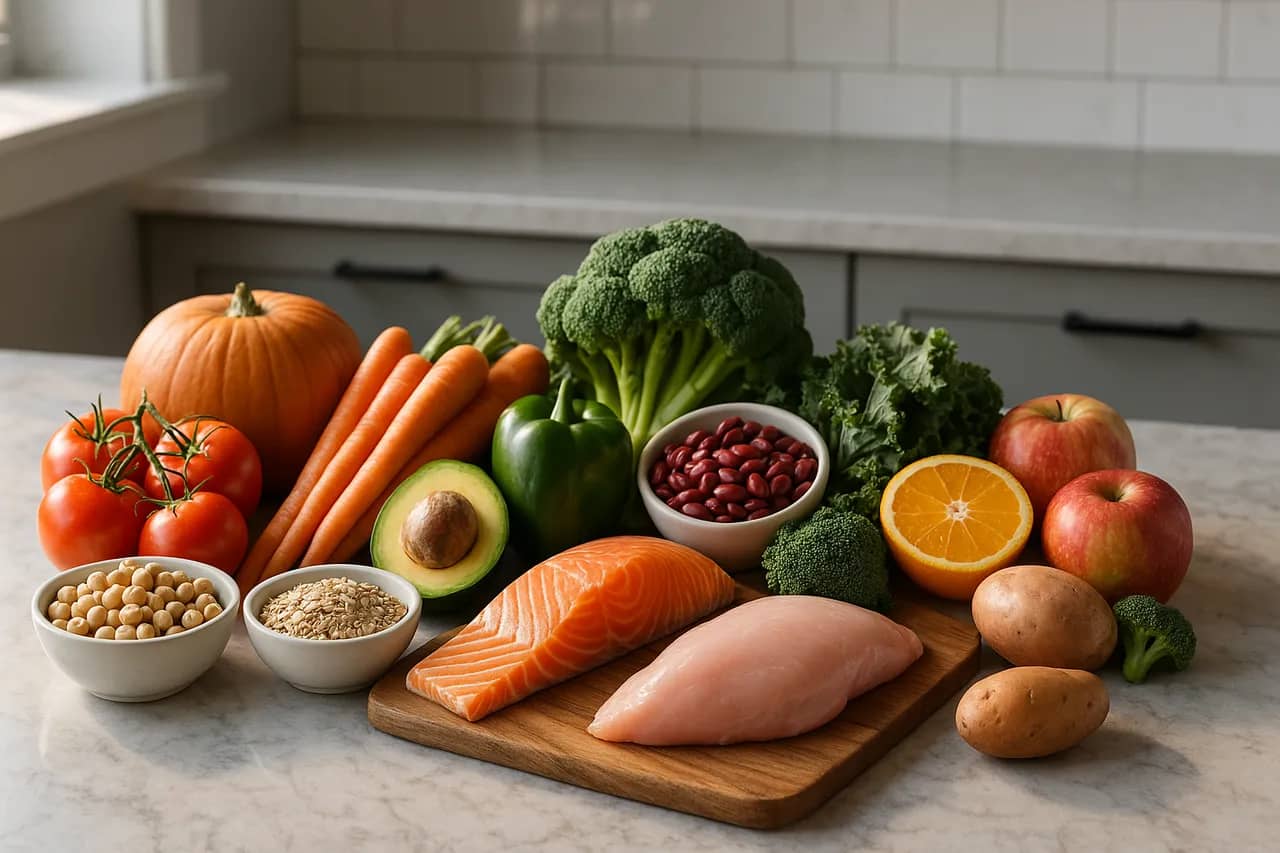
Healthy eating means choosing a varied balance of foods that provides the energy and nutrients your body needs. In the UK, the Eatwell Guide recommends building your overall diet around fruit and vegetables, higher-fibre starchy carbohydrates, varied protein foods, dairy or fortified alternatives, and small amounts of unsaturated fats.
You do not need to achieve perfect balance at every meal. What matters is the pattern across a day or even a week. Healthy eating can include home-cooked meals, convenient foods, cultural dishes, restaurant meals and occasional foods that are higher in fat, salt or sugar.
This guide explains what healthy food means in practical terms, how the UK food groups fit together and how to improve your routine without following restrictive rules.
Important: This article provides general information for adults and is not personalised medical or dietary advice. Speak to a GP or registered dietitian if you have a medical condition, significant allergies or intolerances, digestive symptoms, pregnancy-related needs, an eating-disorder history or another reason to follow a specialist diet. The Eatwell Guide is not designed for children under two.
Food group | Practical UK guidance | Everyday examples |
Fruit and vegetables | Aim for at least five varied portions a day | Fresh, frozen or tinned vegetables; fruit; salad; pulses |
Starchy carbohydrates | Base meals on these foods and choose higher-fibre options where possible | Potatoes with skins, oats, wholemeal bread, brown rice, wholewheat pasta |
Protein foods | Include a variety and use beans and pulses regularly | Lentils, chickpeas, tofu, eggs, fish, poultry, lean meat, nuts |
Dairy and alternatives | Include some; choose unsweetened fortified alternatives where relevant |
Milk, yoghurt, cheese, fortified soya or oat products |
Oils and spreads | Prefer unsaturated varieties and use modest amounts | Olive, rapeseed or sunflower oil; unsaturated spreads |
Foods high in fat, salt or sugar | Have less often and in smaller amounts | Sugary drinks, sweets, cakes, biscuits, crisps and some takeaways |
Fluids | Around six to eight cups or glasses a day is a general guide | Water, lower-fat milk, tea, coffee and lower-sugar drinks |
The official NHS Eatwell Guide shows these proportions visually. They describe your diet overall rather than requiring every meal to look identical.
A healthy food is one that contributes useful nutrients or helps create a balanced overall eating pattern. No single ingredient can make your whole diet healthy, and one less nutritious food does not make it unhealthy.
Foods commonly included in a balanced diet provide combinations of:
fibre;
protein;
vitamins and minerals;
higher-fibre carbohydrates;
unsaturated fats; and
hydration.
This includes more than fresh produce. Frozen vegetables, tinned beans, wholemeal bread, plain yoghurt and other convenient foods can all support healthy eating.
It is usually more helpful to ask, “What does this food add to my overall diet?” than to divide everything into “good” and “bad” categories.
A simple starting point is:
make vegetables or salad a substantial part of the meal;
include a source of protein;
include a higher-fibre starchy carbohydrate; and
add a modest amount of unsaturated fat if needed.
For example:
baked salmon, potatoes with their skins and green vegetables;
chickpea curry with brown rice and spinach;
wholemeal pasta with lentil and vegetable sauce;
an egg and salad wholemeal sandwich with fruit; or
vegetable soup with beans and wholemeal toast.
This is a flexible guide rather than a precise rule. Soups, curries, casseroles, sandwiches and pasta dishes combine the food groups in one dish. Portions also vary according to age, body size, activity, appetite, health and goals.
For a complete weekly example, use our 7-day healthy meal plan rather than trying to turn every general healthy-eating tip into a rigid menu.
UK guidance recommends at least five portions of varied fruit and vegetables a day. Fresh, frozen and tinned options can count, which makes variety possible throughout the year.
Typical adult portions include:
around 80 g of fresh, frozen or tinned fruit or vegetables;
around 30 g of dried fruit, preferably eaten with a meal;
around 80 g of beans or pulses, although these count as only one of your five portions regardless of how much you eat; or
up to 150 ml of fruit juice or smoothie, which counts as a maximum of one portion a day.
Choose different colours and types across the week. Variety matters because different foods provide different nutrients and fibres.
Starchy foods include bread, potatoes, rice, pasta, oats and other grains. They are an important source of energy and should make up just over a third of the food eaten overall according to the Eatwell Guide.
Higher-fibre choices include:
porridge oats;
wholemeal bread or wraps;
brown rice;
wholewheat pasta;
wholegrain cereals; and
potatoes with their skins.
Carbohydrates do not need to be removed from a healthy diet. How much you need and which choices work best can depend on your activity, health, preferences and culture.
Protein foods support growth and repair and provide a range of nutrients. Aim for variety rather than relying on one source.
Options include:
beans, lentils, chickpeas and peas;
tofu and tempeh;
eggs;
fish;
poultry and lean meat;
nuts and seeds; and
dairy foods.
Beans and pulses are useful because they provide both protein and fibre. If you eat fish, the NHS recommends at least two portions a week, including one portion of oily fish such as salmon, sardines or mackerel. Advice differs during pregnancy and for some groups because of contaminants, so check the relevant NHS guidance.
The NHS also recommends eating less red and processed meat such as bacon, ham and sausages.
Milk, yoghurt and cheese provide protein and calcium. Unsweetened dairy alternatives can also contribute when they are fortified with nutrients such as calcium and vitamin D.
Check the label because plant-based drinks and yoghurts vary considerably. If you follow a vegan diet, nutrients including vitamin B12 and iodine need particular attention. The NHS vegan diet guide explains the key considerations.
Some dietary fat is essential. UK guidance recommends choosing unsaturated options such as olive, rapeseed, sunflower and vegetable oils instead of relying mainly on saturated fats.
All fats are energy dense, so a small amount may be enough. Nuts, seeds, avocado and oily fish can also provide unsaturated fats as part of meals.
Not necessarily. Fresh, frozen and tinned foods can all be nutritious choices. The best option depends on availability, cost, storage and how you plan to use it.
Type | Advantages | What to check |
Fresh | Useful for texture and foods eaten raw | Buy realistic quantities to reduce waste |
Frozen | Long shelf life, convenient and often affordable | Avoid assuming added sauces are nutritionally identical to plain vegetables |
Tinned | Convenient source of beans, fish, fruit and vegetables | Compare salt and added sugar; choose fruit in juice rather than syrup where possible |
Dried | Useful for oats, grains, beans, fruit, nuts and seeds | Portions and preparation differ; dried fruit is concentrated and best kept to mealtimes |
Convenience is not a nutritional failure. A freezer bag of vegetables and a tin of lentils may make a balanced meal more achievable than ingredients that spoil before you can use them.
No. “Processed” describes many different foods, including frozen vegetables, tinned beans, bread, yoghurt and cheese. Some processing makes food safer, more convenient or longer-lasting.
Instead of trying to eliminate everything processed, consider:
the food’s overall nutritional contribution;
how often you eat it;
the portion;
salt, saturated fat and free-sugar levels; and
what you eat alongside it.
Foods high in fat, salt or sugar can still be enjoyed, but UK guidance recommends having them less often and in smaller amounts.
Use the information on the pack to compare similar products rather than judging one food in isolation.
Front-of-pack labels may show whether fat, saturated fat, sugar and salt are low, medium or high. More green and amber indicators can help identify a lower option within the same category.
The per-100 g figure creates a fairer comparison between products with different suggested serving sizes.
Ingredients appear in descending order by weight. This can help when comparing wholegrain content or identifying allergens.
The manufacturer’s serving may not match the amount you usually eat. Use the label as information, not as a moral score.
The NHS gives six to eight cups or glasses of fluid a day as a general guide. Needs vary with body size, activity, weather, pregnancy, breastfeeding and health.
Water, lower-fat milk, tea and coffee can contribute. Fruit juice and smoothies should be limited to a combined total of 150 ml a day because they contain free sugars and can contribute to tooth decay.
You may need more fluid during hot weather or physical activity. Some medical conditions require specific fluid advice, so follow guidance from your healthcare team where relevant.
Healthy eating does not require premium “superfoods.” Start with versatile staples:
oats, potatoes, rice and wholemeal bread;
tinned or dried beans and lentils;
frozen vegetables and fruit;
eggs;
seasonal produce;
plain yoghurt or fortified alternatives; and
tinned fish where appropriate.
Practical ways to reduce cost include:
Plan a few main meals before shopping.
Check what you already have.
Use supermarket own-brand staples.
Repeat ingredients across several dishes.
Use leftovers safely for lunches.
Freeze extra portions before they are forgotten.
Replace some meat with beans or lentils.
Do not buy supplements, powders or special products merely because they are marketed as essential for healthy eating.
Focus on reducing friction rather than cooking every meal from scratch.
Examples include:
scrambled eggs, wholemeal toast and tomatoes;
microwave brown rice with vegetables and tinned beans;
vegetable soup with wholemeal bread and yoghurt;
a baked potato with tuna, beans or cottage cheese and salad; or
wholemeal pasta with tinned tomatoes, lentils and frozen spinach.
Cook one grain, one protein option and a tray of vegetables, then combine them differently. This provides flexibility and avoids eating the same prepared meal for an entire week.
Pre-cut vegetables, frozen produce, tinned pulses and ready-cooked grains can be worthwhile if they help you eat a balanced meal. Check labels when choosing products high in salt, sugar or saturated fat.
Keep a simple freezer meal or store-cupboard option for late workdays. A workable backup is more useful than an ideal plan you cannot follow.
You do not need to change everything at once. Choose one or two of these actions:
Add one vegetable to your usual evening meal.
Replace one refined grain with a higher-fibre option.
Include beans or lentils in one meal this week.
Keep fruit where it is easy to see and use.
Measure cooking oil rather than pouring automatically.
Eat one meal without a phone, laptop or television.
Plan two simple dinners before your next food shop.
Review after two weeks. Keep the changes that genuinely fit and adapt the ones that create unnecessary difficulty.
General healthy-eating guidance cannot account for every medical condition, symptom, medication, allergy, pregnancy, sports goal or difficult relationship with food.
A registered dietitian is usually the appropriate starting point for clinical nutrition needs. A suitably qualified nutrition professional or coach may help with non-clinical education, habits, planning and accountability within their scope.
Read Dietitian vs Nutrition Coach: Which Fits? if you are unsure which professional you need. You can also browse SympathiQ specialists, review how specialists are verified and check session pricing.
Healthy eating is a varied, balanced pattern that provides enough energy and nutrients for your needs. It includes foods from the main food groups and limits, rather than necessarily bans, foods high in fat, salt or sugar.
Aim for varied fruit and vegetables, higher-fibre starchy carbohydrates, a source of protein, and some dairy or a suitable fortified alternative. Exact amounts depend on individual needs, and balance can be achieved across the day or week.
No. Starchy carbohydrates are an important part of UK healthy-eating guidance. Choose higher-fibre options such as oats, wholemeal bread, brown rice, wholewheat pasta and potatoes with their skins where possible.
Frozen fruit and vegetables can be nutritious, convenient and affordable. Check added sauces, salt or sugar when comparing prepared frozen products.
No. Calorie awareness may help with some goals, but healthy eating also involves food variety, nutritional quality, portions and a sustainable routine. Anyone needing a personalised calorie target should seek appropriate professional advice.
Yes. Healthy eating is based on the overall pattern. Foods high in fat, salt or sugar can be included less often and in smaller amounts without turning the diet into a failure.
No eating pattern is automatically balanced. A vegan diet can support healthy eating when it is varied and includes suitable fortified foods or supplements for nutrients that are harder to obtain, particularly vitamin B12 and iodine.
Consider a registered dietitian if food is connected to a diagnosed condition, persistent symptoms, allergies, nutritional deficiencies, pregnancy, medication, unexplained weight change or eating-disorder recovery.
Healthy eating is not a test of discipline and it does not require a perfect fridge, expensive ingredients or a restrictive diet. Begin with the food groups, make one or two practical changes and build a pattern that works across ordinary days as well as busy ones.
If you want personalised support, find a SympathiQ specialist whose qualifications and approach match your goals.
Your email address will not be published. Required fields are marked *