Logo
  • Home
  • Find Specialists
  • Partnerships
    dropdown arrow
      Training CentresUniversities & AcademiaProfessional BodiesBecome a Partner
  • For Specialists
    dropdown arrow
      Therapist & CounsellorFitness & Personal TrainerNutritionist & DietitianLife & Performance CoachBurnout & Stress CoachView all specialist types →
  • Pricing

For Specialists

  • Therapist & Counsellor
  • Fitness & Personal Trainer
  • Nutritionist & Dietitian
  • Life & Performance Coach
  • Burnout & Stress Coach
  • View all specialist types

Partnerships

  • Training Centres
  • Universities & Academia
  • Professional Bodies
  • Become a Partner
Logo
  • Home
  • Find Specialists
  • Partnerships
    dropdown arrow
      Training CentresUniversities & AcademiaProfessional BodiesBecome a Partner
  • For Specialists
    dropdown arrow
      Therapist & CounsellorFitness & Personal TrainerNutritionist & DietitianLife & Performance CoachBurnout & Stress CoachView all specialist types →
  • Pricing

For Specialists

  • Therapist & Counsellor
  • Fitness & Personal Trainer
  • Nutritionist & Dietitian
  • Life & Performance Coach
  • Burnout & Stress Coach
  • View all specialist types

Partnerships

  • Training Centres
  • Universities & Academia
  • Professional Bodies
  • Become a Partner

Subscribe to Our Newsletter

To get the latest tips and news to support your well-being journey!

SympathyiQ logo

Subscribe to our newsletter to get the latest tips and news to support your well-being journey!

Platform

HomeFind SpecialistsPricingNews

Specialists

Join as SpecialistTherapistsFitness TrainersLife Coaches

Company

About usTrust & SafetyWeb AccessibilityTerms & ConditionsPrivacy PolicyContact Us

© 2026 SympathiQ, All Rights Reserved.

ProtectedEU GDPR Compliant
CertifiedMindful Employer
RegisteredICO — Information Commissioner's Office
Powered byStripe
HomeSearch

Showing 1–10 of 15 results

Default Sorting
    Virtual Dietitian UK: Is Online Support Worth It?
    08.07.2026

    Virtual Dietitian UK: Is Online Support Worth It?

    Skipping lunch, eating at your desk, then wondering why your energy crashes by 4pm - this is exactly why a virtual dietitian UK service can feel less like a luxury and more like practical support. When life is full, nutrition often becomes reactive. You eat what is quick, what is nearby, or what feels comforting after a demanding day. Working with a dietitian online can help bring structure back without adding another stressful appointment to your week.

    For many people, the biggest appeal is not only convenience. It is the chance to get personalised, evidence-based guidance in a setting that feels private, flexible, and easier to stick with. If you have ever tried to overhaul your eating habits with generic meal plans or social media advice, you will know how quickly motivation fades when the plan does not fit real life.

    What a virtual dietitian UK service actually offers

    A registered dietitian is trained to assess your nutritional needs, understand your medical history, and help you make changes that support your health goals. In a virtual setting, that process stays largely the same. The difference is that consultations happen online, usually by video call, with messaging or digital follow-up often included.

    That matters because nutrition is rarely just about food. It is also about routine, stress, sleep, confidence, culture, budget, and your relationship with eating. A good online dietitian looks at the wider picture rather than handing over a rigid list of foods to avoid.

    You might seek support for weight management, digestive symptoms, hormonal health, sports nutrition, emotional eating, high cholesterol, type 2 diabetes, or simply wanting a more balanced way of eating. Some people come with a clear diagnosis. Others just know they feel flat, foggy, or stuck in habits that are not helping.

    Why online nutrition support works for busy adults

    Traditional appointments can be hard to maintain when you are juggling work, family life, commuting, or caring responsibilities. A virtual dietitian UK option removes a lot of that friction. You can speak from home, from the office in a private room, or wherever feels manageable.

    That ease is not a small detail. It often makes the difference between attending one appointment and building real momentum over time. Consistency tends to matter more than intensity when it comes to nutrition change. Small adjustments repeated week by week usually beat a dramatic reset that lasts ten days.

    Online support can also feel more comfortable for people who are nervous about discussing food, weight, binge eating, or long-standing health concerns. Being in your own space can reduce that sense of pressure. When you feel calmer, you are more likely to be honest, and honesty is what makes support useful.

    The benefits of a virtual dietitian UK approach

    The strongest benefit is personalisation. Your dietitian can help you build habits around your schedule, your food preferences, your cultural background, and your actual goals rather than an idealised version of yourself. If you hate cooking, work shifts, travel often, or live with a health condition, the advice should reflect that.

    Another major advantage is accessibility. In-person specialist care is not always easy to find locally, especially if you want someone with experience in a specific area such as IBS, menopause, sports performance, or disordered eating recovery. Online care opens up more choice.

    It can also support privacy. Some people feel uncomfortable discussing nutrition challenges in a clinic waiting room or explaining time off for appointments. Virtual sessions can offer a more discreet route to getting help.

    Then there is affordability. This varies, but online services can sometimes be more cost-effective than face-to-face appointments because overheads are lower. It is worth checking what is included. A lower session fee is not always better value if there is no follow-up, no plan, and no continuity.

    Where virtual support has limits

    Online care is helpful, but it is not magic, and it is not the right fit for every situation. If you need a physical examination, urgent medical treatment, or close multidisciplinary supervision for a complex condition, virtual support may need to sit alongside GP care or specialist NHS services rather than replace them.

    There is also the reality that progress still depends on engagement. A virtual appointment is convenient, but convenience alone does not create change. If you book sessions and never act on what you discussed, you will not get the benefit. The best outcomes usually come when support feels collaborative rather than passive.

    Technology can be another barrier. Poor internet, lack of privacy at home, or discomfort with video calls can affect the experience. Some people prefer face-to-face interaction because it helps them feel more connected. That preference is valid. Better support is the support you can actually use.

    What to expect from your first session

    Your first appointment should feel like a conversation, not a test. A dietitian will usually ask about your health history, current eating patterns, symptoms, lifestyle, routines, and goals. They may also explore factors such as stress, sleep, physical activity, and previous dieting experiences.

    If the session is done well, you should leave with more clarity, not more confusion. That might mean a few realistic actions to try, a clearer understanding of what is driving your symptoms, or a roadmap for the next stage of support. You do not need a perfect food diary or a dramatic goal to get started. You just need to be honest about where things stand.

    A strong practitioner will avoid judgement and quick fixes. They will help you identify what is realistic now, not what sounds impressive on paper. For a burnt-out professional, that could mean building regular meals before discussing calories. For someone managing a health condition, it could mean symptom relief and stable energy before any weight-related target.

    How to choose the right virtual dietitian in the UK

    Credentials come first. Look for a registered dietitian with appropriate qualifications and relevant experience in the area you want support with. That gives you a safer, more evidence-based alternative to the flood of nutrition advice online.

    After that, look at fit. Do they work in a way that feels supportive and practical? Do they focus on sustainable habits or extreme restriction? Do they understand your challenges, whether that is emotional eating, menopause, gut health, workplace stress, or eating well on a tight schedule?

    It is also worth checking how the service is delivered. Some people want one-off advice. Others need regular sessions, messaging support, secure booking, and an easy way to track progress. Platforms that combine specialist access with simple scheduling and ongoing communication can make the whole process feel less fragmented and easier to continue.

    If holistic wellbeing matters to you, it can help to choose a service that sits within a broader wellness setting. Nutrition does not happen in isolation. Stress, anxiety, poor sleep, low mood, and burnout often shape eating patterns more than willpower ever does. Support that recognises the full picture tends to be more useful.

    Is a virtual dietitian UK service worth paying for?

    Often, yes - but it depends on what you need and what you are comparing it with. If your current approach is a cycle of googling symptoms, trying random plans, and starting over every Monday, professional guidance can save time, reduce frustration, and help you make progress that lasts.

    The value is especially clear when advice is tailored, practical, and linked to your day-to-day life. One targeted change that improves your energy, digestion, confidence, or relationship with food can have a wider effect on work, sleep, training, and mood.

    That said, not everyone needs intensive support. If your goals are simple and you already have good knowledge, a short block of sessions may be enough. If you have a medical condition, a long history of dieting, or patterns tied to stress and emotional health, more consistent support may be the better route.

    A platform such as SympathiQ can be especially helpful if you want that support to feel connected rather than siloed. When nutrition sits alongside access to wider wellbeing specialists, it becomes easier to build changes that match your whole life rather than one isolated goal.

    The real question is whether it fits your life

    The best nutrition support is not the strictest plan or the loudest expert. It is the support that helps you make calmer, steadier choices in the middle of a busy week, with enough structure to guide you and enough flexibility to keep going. If seeing someone in person has always felt like one more thing to organise, a virtual route may be the first option that genuinely feels doable.

    You do not need to wait until your symptoms get worse or your motivation returns in some perfect form. Sometimes taking the first step is simply choosing support that meets you where you are, and helps you move forward from there.

    Read moreSympathiQ Media Team

    Author

    SympathiQ Media Team

    How to Build Healthy Habits That Stick
    08.07.2026

    How to Build Healthy Habits That Stick

    You do not usually lose momentum because you are lazy. More often, life gets crowded, energy dips, stress rises, and the habits you meant to keep never quite fit the shape of your day. That is why learning how to build healthy habits is less about willpower and more about creating routines that work with your real life, not against it.

    For many adults, especially those balancing work, family, and the quiet pressure to keep everything together, habit change can start to feel like another item on an already full list. The answer is not to become more disciplined overnight. It is to make the next step feel manageable, repeatable, and worth returning to even after an off day.

    How to build healthy habits without relying on motivation

    Motivation can help you start, but it is unreliable when you are tired, overwhelmed, or stretched thin. Healthy habits last when they are small enough to repeat and meaningful enough to matter. If a new routine depends on feeling inspired every day, it will probably fade as soon as life becomes demanding.

    A better approach is to reduce friction. If you want to move more, choose a form of exercise that does not require a long commute, expensive kit, or perfect weather. If you want to eat more nourishing meals, think about what is realistic on your busiest weekday, not what looks ideal on a Sunday evening. When a habit is easier to begin, it becomes easier to keep.

    It also helps to anchor habits to something you already do. A five-minute stretch after brushing your teeth, a glass of water before your morning tea, or a short walk after lunch can feel far more natural than trying to invent an entirely new routine from scratch. Small links like these give your brain a reliable cue.

    Start smaller than you think you need to

    One of the biggest reasons habits fail is that people begin at the level they hope to reach, rather than the level they can sustain. There is nothing wrong with ambition, but consistency grows from actions that feel almost too easy.

    If your goal is better sleep, begin with one steady bedtime cue, such as putting your phone down 20 minutes earlier. If your goal is to improve fitness, start with ten minutes of movement three times a week. If your goal is to support your mental wellbeing, try two minutes of journalling rather than promising yourself a long reflective practice every morning.

    This may seem modest, but modest is often what works. A habit does not need to feel impressive to be effective. What matters is repetition. Repetition builds familiarity, and familiarity lowers resistance.

    There is also a psychological benefit to small wins. Each time you follow through, you strengthen trust in yourself. That matters more than people realise. When you believe you can keep a promise to yourself, change becomes steadier and less emotionally draining.

    Choose habits that support the whole person

    When people think about self-improvement, they often focus on one area at a time. Exercise. Diet. Productivity. Sleep. Stress. In reality, these areas constantly affect each other. Poor sleep can make nourishing food choices harder. Chronic stress can drain your motivation to move. Lack of movement can affect mood and energy.

    That is why the most effective habit changes tend to be holistic. Rather than asking, What is the perfect morning routine, ask, What would help me feel a little more steady this week? The answer might be going to bed earlier, taking proper lunch breaks, limiting late-night scrolling, or speaking to someone about burnout before it spills into every part of your life.

    Healthy habits are not only about physical health. They can include setting boundaries, making time for recovery, noticing your emotional patterns, or reaching out for support. For some people, the healthiest new habit is not adding more. It is removing something that keeps them in a cycle of exhaustion.

    How to build healthy habits when life feels busy

    Busy people are often given advice that sounds good on paper but collapses under real-world pressure. If your calendar is full, your habits need to be flexible enough to survive imperfect days.

    Start by separating your ideal routine from your minimum version. Your ideal might be cooking a fresh dinner, doing a full workout, and reading before bed. Your minimum version might be a quick balanced meal, a ten-minute walk, and lights out by a reasonable hour. Both count. The goal is not to perform wellness perfectly. The goal is to keep your rhythm, even in a smaller form.

    Planning for obstacles is also useful. If you know Thursdays are chaotic, decide in advance what your realistic version of success looks like that day. This removes the need to make decisions when you are already tired.

    It can also help to notice which habits restore energy and which simply look virtuous. Some routines are popular because they are visible, not because they are sustainable. A healthy habit should support your life, not become another source of pressure.

    Make your environment work for you

    Your environment quietly shapes your behaviour every day. If your trainers are buried in a cupboard, your desk is cluttered, and your phone is always within reach, even good intentions can get lost.

    You do not need to overhaul your home or workspace. Small changes can make a real difference. Keep a water bottle nearby. Put fruit where you can see it. Prepare tomorrow's lunch while clearing dinner. Set up a calming evening space that makes winding down easier. If a habit matters to you, make the cue visible and the first step obvious.

    Digital environments matter too. If social media pulls you away from sleep or focus, create more distance between the impulse and the action. Move distracting apps off your home screen. Turn off non-essential notifications. Use reminders carefully, not excessively. Too many prompts become background noise.

    The aim is not control for its own sake. It is support. Good environments make healthy choices feel less effortful.

    Track progress gently, not obsessively

    Many people abandon habits because they miss a few days and decide they have failed. But habit building is rarely neat. It is a process of returning.

    Tracking can help, especially in the early stages, but it should be simple and compassionate. A tick on a calendar, a short note on your phone, or a weekly check-in can be enough. You are looking for patterns, not perfection.

    It is worth asking practical questions instead of critical ones. What made this easier last week? What got in the way? What needs adjusting? This keeps you in problem-solving mode rather than shame.

    If a habit keeps breaking down, that does not always mean you lack commitment. It may mean the habit is too big, the timing is wrong, or the support around it is missing. Changing the plan is not giving up. It is often the most mature part of the process.

    Support makes habits easier to keep

    There is a strong cultural story that personal change should be private and self-driven. In practice, support often makes the difference between a habit that fades and one that becomes part of your life.

    That support might come from a friend who joins you for walks, a partner who shares meal planning, or a coach or specialist who helps you connect your goals to a broader picture of wellbeing. If stress, low mood, emotional eating, poor sleep, or burnout are shaping your habits, practical guidance can be far more effective than trying to push through alone.

    This is where a holistic approach matters. Habits do not exist in isolation from your mental and emotional state. If you are exhausted, anxious, or constantly overwhelmed, the right support can help you understand why certain patterns keep repeating and what will realistically help you shift them.

    For some people, that means accountability. For others, it means compassion, structure, or a personalised plan. There is no single formula. What works depends on your energy, your schedule, your environment, and what you are carrying beneath the surface.

    Build identity, not just routine

    The deepest habit changes often happen when your actions begin to match the person you want to become. Instead of focusing only on outcomes, focus on identity. Not I need to run three times a week, but I am someone who looks after my body. Not I must stop feeling stressed, but I am someone who protects my energy.

    This shift matters because identity is more stable than motivation. When a habit becomes part of how you see yourself, returning to it feels natural, even after disruption. You are not starting from zero each time. You are reconnecting with yourself.

    That identity does not need to be rigid. It can be gentle, flexible, and realistic. A healthy person is not someone who gets everything right. It is someone who notices what they need and responds with care more often than not.

    If you are learning how to build healthy habits, give yourself permission to begin in a way that feels almost ordinary. Drink the water. Take the walk. Shut the laptop a little earlier. Ask for support if you need it. Lasting change often starts quietly, then grows into something strong enough to carry you forward.

    Read moreSympathiQ Media Team

    Author

    SympathiQ Media Team

    Healthy Meal Planning Support That Helps
    05.06.2026

    Healthy Meal Planning Support That Helps

    When your week is already full, food choices often get made in the gap between meetings, school runs, low energy and whatever happens to be in the fridge. That is exactly where healthy meal planning support matters most - not as another pressure, but as a way to make everyday eating feel calmer, clearer and more manageable.

    For many people, meal planning sounds sensible in theory and exhausting in practice. You might save recipes, buy ingredients with good intentions, then end up ordering takeaway because the day got away from you. That does not mean you lack discipline. More often, it means your plan was built for an ideal week rather than your real one.

    What healthy meal planning support actually means

    Good healthy meal planning support is not a rigid meal chart or a list of foods you are told to avoid. It is structured guidance that helps you make decisions with less stress and more confidence. That might include help with portion balance, shopping routines, prep habits, energy levels, emotional eating patterns or simply working out what to cook on a Wednesday when your brain feels done.

    The best support is personal. A parent juggling family meals needs something different from a shift worker, someone managing burnout or a professional trying to eat better between long calls. Nutrition is never only about food. It is tied to schedule, mood, budget, sleep, culture and capacity.

    That is why generic plans often fail. They can look polished, but if they ignore your day-to-day reality, they create guilt rather than progress.

    Why so many meal plans fall apart

    Most people do not struggle because they do not know vegetables are good for them. They struggle because life is busy, appetite changes, motivation dips and habits are hard to sustain when they ask too much.

    A common mistake is overplanning. You decide this is the week you will cook fresh meals every night, prepare perfect lunches and cut out all snacks. By Thursday, one late finish or stressful phone call knocks the whole thing off course. Then the plan gets abandoned.

    Another issue is all-or-nothing thinking. If people cannot follow a meal plan exactly, they assume it is not working. In reality, flexible consistency beats strict perfection every time. A workable plan leaves room for tired evenings, social meals and the fact that some weeks are simply harder than others.

    Support matters because it helps you build a system that bends without breaking.

    What useful healthy meal planning support looks like

    Useful support starts by reducing mental load. Instead of asking you to reinvent your food choices every day, it gives you a reliable framework. That could be as simple as choosing three evening meals for the week, repeating two easy lunches and keeping staple breakfasts on hand.

    It also helps you focus on balance rather than rules. A meal does not need to be flawless to be nourishing. Often, a realistic plate includes a source of protein, some fibre, something colourful and enough substance to keep you satisfied. That is far more practical than chasing a version of clean eating that leaves you hungry and frustrated.

    The emotional side matters too. If planning meals makes you feel judged, restricted or constantly behind, the plan is not supporting your wellbeing. Proper support should leave you feeling steadier, not smaller.

    This is where working with a qualified professional can make a real difference. A dietitian or nutrition specialist can help you identify what is getting in the way, whether that is time, confidence, digestion, stress eating or the stop-start cycle of trying to be good all week. They can also help you set goals that fit your life, not someone else’s feed.

    Start with your real life, not your best intentions

    If you want meal planning to stick, begin by looking at your actual week. When do you have energy to cook? Which days are rushed? When do you usually get hungry? What meals do you already manage well?

    This approach may sound obvious, but it changes everything. Many plans fail because they are built around aspiration rather than evidence. If Mondays are always hectic, that is not the night to test a new recipe with twelve ingredients. If you never fancy breakfast early, forcing it may not be the best first step.

    A better plan works with your rhythms. It respects the difference between a low-capacity day and a high-capacity one. It includes easy options on purpose, not as a fallback.

    For some people, that means batch cooking. For others, it means buying chopped vegetables, using frozen staples or relying on the same lunch most weekdays. Convenience is not failure. If it helps you eat more regularly and with less stress, it is doing its job.

    The connection between food, stress and burnout

    Meal planning often gets framed as a productivity skill, but for many adults it is also a resilience issue. When stress is high, food can become either an afterthought or a source of comfort. Both are understandable.

    If you are skipping meals, grazing through the day or reaching the evening absolutely ravenous, your eating pattern may be reflecting more than poor organisation. It may be reflecting overload. In that situation, healthy meal planning support should not pile on more expectations. It should help restore a sense of steadiness.

    That might mean planning simpler meals, eating at more regular times or building a shortlist of foods you can tolerate when energy is low. It may also mean recognising that nutrition support works best alongside wider wellbeing support. If stress, poor sleep and emotional exhaustion are driving your habits, food guidance alone may only solve part of the problem.

    That holistic view is where platforms such as SympathiQ can feel especially relevant. Being able to access support across nutrition, stress management and overall wellbeing in one place can make change feel more joined up and less overwhelming.

    How to tell if you need more than a meal plan

    Sometimes the issue is not knowing what to eat. It is feeling stuck in patterns you cannot shift on your own. You might plan well, then emotionally eat when work gets intense. You might swing between restriction and overeating. You might feel anxious around food, disconnected from hunger cues or exhausted by the constant effort of trying to get it right.

    In those cases, support should go beyond meal suggestions. You may benefit from professional guidance that considers mindset, routine and emotional triggers as well as nutrition. That does not mean something is wrong with you. It means your eating habits are happening in the context of your life, and that context matters.

    A good practitioner will not simply hand over a plan and send you on your way. They will help you understand your patterns, troubleshoot barriers and make changes that feel sustainable. Progress often comes from small adjustments repeated over time, not dramatic overhauls.

    Building a meal planning routine that lasts

    Long-term success usually comes from making planning smaller, not bigger. Choose a regular time each week to think ahead. Keep a shortlist of meals you actually enjoy. Repeat favourites without guilt. Make your shopping list from those meals rather than from vague intentions to eat healthier.

    It also helps to separate essential effort from optional effort. Essential effort is having enough food in the house for basic meals and snacks. Optional effort is making everything from scratch, trying new recipes and perfectly matching your plan to your goals. When life is busy, focus on the essentials first.

    A sustainable routine also leaves room for change. Your appetite may vary. Your social plans may shift. Some weeks call for more convenience, others allow more cooking. Healthy eating is not a fixed performance. It is an ongoing relationship with your needs, your schedule and your energy.

    That is why the most effective support feels collaborative. It helps you notice what is working, adjust what is not and keep moving without starting from zero each time.

    A gentler way to move forward

    Healthy meal planning support should help you feel more capable, not more controlled. It should make food decisions easier on hard days, not add another standard you have to meet. When support is grounded in your real life, it creates space for nourishment, consistency and self-trust.

    If meal planning has felt frustrating in the past, that does not mean it is not for you. It may simply mean you have been trying to do it without the right kind of support. Start with one small shift that makes this week feel lighter, and let that be enough to begin.

    Read moreSympathiQ Media Team

    Author

    SympathiQ Media Team

    Mounjaro: What to Know Before You Start
    24.04.2026

    Mounjaro: What to Know Before You Start

    If you have been hearing more about mounjaro lately, you are not imagining it. It has moved from specialist clinics and medical conversations into everyday life, often framed as a fast answer to weight loss. For many people, though, the real question is not whether it is popular. It is whether it is right for their body, their health history and the kind of support they actually need.

    That is where a calmer, more informed view helps. Medication can be part of meaningful progress, but it rarely works well as a stand-alone fix. Lasting change usually comes from the combination of medical advice, realistic nutrition, emotional support and habits that fit your life.

    What is mounjaro?

    Mounjaro is the brand name for tirzepatide, a prescription medicine used to support blood sugar management in some people with type 2 diabetes and, in some settings, weight management under clinical supervision. It works by mimicking hormones involved in appetite, digestion and insulin response.

    In practical terms, many people feel less hungry, fuller sooner and less driven by constant food noise. That can make it easier to eat in a calorie deficit or stick to a more structured eating pattern. But easier does not mean effortless, and it certainly does not mean suitable for everyone.

    How mounjaro works in real life

    The science matters, but so does the lived experience. Mounjaro slows stomach emptying and affects appetite signalling, which can reduce cravings and portion sizes. Some people notice a big shift within weeks. Others find the process slower, with dosage changes, side effects and some trial and error along the way.

    That difference matters because expectations can quickly become unhelpful. If someone starts treatment believing they will feel transformed immediately, normal bumps in the road can feel like failure. A better approach is to see the medication as one tool inside a broader care plan.

    For example, if stress eating, poor sleep, burnout or low mood are part of the picture, appetite suppression alone may not address the deeper pattern. You might eat less for a period, but still feel stuck in cycles that affect energy, self-worth and consistency. This is why joined-up support often makes such a difference.

    Who might consider mounjaro?

    Mounjaro may be considered for adults under the guidance of a qualified clinician, particularly where weight or blood sugar concerns are affecting health. Eligibility depends on medical history, current conditions, other medications and treatment goals.

    It may feel appealing if you have tried multiple diets, struggled with cravings or found that lifestyle advice alone has not led to change. That said, being frustrated does not automatically mean this is the next best step. Sometimes the barrier is not effort, but the absence of tailored support around food, movement, stress and behaviour.

    A good clinician will look beyond the number on the scales. They should ask about your relationship with food, your sleep, your mental health, your routine and whether you have any history that makes this medication unsuitable.

    When mounjaro may not be the right fit

    There are situations where extra caution is needed. Certain gastrointestinal issues, past medical conditions, pregnancy plans or specific medication interactions may make mounjaro a poor option or one that needs careful review.

    There is also the emotional side. If your hope is that weight loss will solve burnout, body image distress or long-standing anxiety, the results may feel more complicated than expected. Some people lose weight and feel relieved. Others discover that the pressure they placed on that outcome was carrying much more than health goals alone.

    This is not an argument against treatment. It is simply a reminder that physical health and emotional wellbeing are closely linked. If you are carrying both, your care should reflect both.

    Side effects and trade-offs to expect

    The most talked-about side effects are nausea, vomiting, diarrhoea, constipation and reduced appetite. Some people have mild symptoms that settle as the body adjusts. Others find the side effects disruptive enough to pause or stop treatment.

    There can also be less obvious trade-offs. Eating less may sound simple, but if it leads to low protein intake, poor hydration or under-fuelling, energy and strength can suffer. This is especially relevant if you are trying to improve fitness, maintain muscle or support a demanding work schedule.

    Another common challenge is social and emotional. Shared meals, celebrations and routines around food can feel different on mounjaro. Some people welcome that change. Others feel disconnected from normal eating patterns and need time to adjust.

    It depends on your starting point, your dosage, your support and how your body responds. There is no gold-standard experience that everyone should expect.

    The role of food, habits and mindset

    This is where the conversation often gets too narrow. Medication may change appetite, but it does not automatically teach sustainable eating habits. It does not build confidence in meal planning, improve body image or help you understand why evenings are harder than mornings.

    If you are taking mounjaro, think about what needs to sit alongside it. Nutritional guidance can help you eat enough protein, fibre and micronutrients even when appetite is lower. Gentle fitness support can help protect muscle mass and improve energy. Coaching or therapy can be useful if emotional eating, perfectionism or shame around weight have been part of your experience.

    That kind of support is not an extra. For many people, it is the difference between short-term change and a steadier path they can maintain.

    Cost, access and the pressure to self-manage

    Mounjaro can be expensive, and access may vary depending on your route to care. That financial reality matters because treatment is rarely just about the prescription itself. There may be ongoing reviews, dose increases and follow-up appointments to consider.

    The pressure to self-manage can creep in quickly. People often feel they should know what to eat, how to avoid side effects and how to stay motivated, all while navigating work, family and everyday stress. When support is fragmented, it becomes much harder to keep going in a way that feels healthy.

    This is why integrated care matters. A medication conversation is more useful when it sits alongside expert input on nutrition, movement and mental wellbeing, rather than treating each part of health as completely separate.

    Questions worth asking before you start mounjaro

    Before starting mounjaro, it helps to ask a few honest questions. Am I looking for medical support, or am I looking for rescue from exhaustion and disappointment? Do I understand the likely side effects and the need for monitoring? If my appetite drops, do I have a plan to nourish my body properly? And if progress is slower than I hoped, what support will help me stay grounded?

    These are not meant to put you off. They are meant to help you choose from a place of clarity rather than urgency.

    A trusted clinician should also explain what success will look like for you. That might be weight change, better blood sugar control, reduced cravings or improved confidence with eating habits. The best goals are specific, realistic and linked to your wider wellbeing, not just a short-term target.

    A more balanced way to think about mounjaro

    There is no shame in wanting help. If weight management has affected your health, confidence or quality of life, exploring treatment options can be a positive step. Mounjaro may be helpful for some people, especially when prescribed appropriately and supported well.

    At the same time, it is healthy to resist extremes. It is not a miracle cure, and it is not a moral shortcut either. It is a medical tool with benefits, limitations and responsibilities. The more honestly that is discussed, the better people are able to make decisions that feel safe and sustainable.

    For adults trying to build a healthier life around busy schedules, stress and competing demands, the goal is not perfection. The goal is support that fits the whole person. That may include medication, or it may begin with nutrition guidance, behaviour change, therapy-style support or a combination of all three. Platforms such as SympathiQ reflect that shift towards more connected care, where physical health goals are not separated from the emotional and practical realities behind them.

    If mounjaro is on your mind, let it be the start of a better conversation with yourself and with a qualified professional - one that looks not just at what helps you lose weight, but at what helps you feel well, steady and supported for the long term.

    Read moreSympathiQ Media Team

    Author

    SympathiQ Media Team

    GLP-1: What It Is and Why It Matters
    18.04.2026

    GLP-1: What It Is and Why It Matters

    If you have been hearing more about glp-1 lately, you are not imagining it. What was once a more specialist medical term is now part of everyday health conversations, especially around weight management, blood sugar, appetite and long-term wellbeing. But the real value of understanding GLP-1 is not in the buzz - it is in knowing how your body works, what support might help, and where expectations need to stay realistic.

    a woman practicing yoga outside.

    What is GLP-1?

    GLP-1 stands for glucagon-like peptide-1. It is a hormone your body naturally produces, mainly in the gut, in response to eating. Its job is not small. GLP-1 helps regulate blood sugar, slows stomach emptying and sends signals to the brain that support feelings of fullness.

    That combination matters because appetite, energy and metabolic health are deeply connected. If you feel constantly hungry, find it hard to stay satisfied after meals, or struggle with blood sugar swings, those experiences are not simply about willpower. Hormones, stress, sleep, food choices and overall health all play a part.

    In simple terms, GLP-1 is one of the body’s ways of helping you stay in balance after eating. When that balance is disrupted, weight management and metabolic health can become much harder than they look from the outside.

    Why GLP-1 matters beyond weight loss

    A lot of public discussion around GLP-1 focuses on weight loss medication. That is understandable, but it is also narrow. GLP-1 matters because it sits at the intersection of hunger, blood sugar control and satiety. Those are everyday quality-of-life issues, not just numbers on a scale.

    For some people, improved GLP-1 activity can support steadier appetite, fewer intense cravings and more consistent energy. For others, the biggest benefit may be better blood glucose regulation, especially if they are living with type 2 diabetes or insulin resistance. There can also be emotional effects. When hunger feels less chaotic, people often find it easier to build routines that support mental wellbeing rather than undermine it.

    That said, this is where nuance matters. GLP-1 is important, but it is not a magic override for every health challenge. If someone is dealing with chronic stress, poor sleep, emotional eating, burnout or a difficult relationship with food, a hormonal pathway alone may not address the whole picture.

    How GLP-1 works in the body

    After you eat, GLP-1 is released from the intestine. It encourages the pancreas to release insulin when needed, which helps move glucose from the bloodstream into cells. It also reduces glucagon, a hormone that raises blood sugar. At the same time, it slows the rate at which food leaves the stomach, which can help you feel full for longer.

    There is also a brain component. GLP-1 influences appetite regulation in ways that may reduce the drive to keep eating once your body has had enough. For people who have spent years feeling as though hunger is always louder than logic, this part of the conversation can feel especially validating.

    None of this means appetite becomes irrelevant. It means appetite is biologically guided, not purely a character test. That shift in understanding can be powerful.

    GLP-1 medications and what they are designed to do

    When people refer to GLP-1 now, they are often talking about GLP-1 receptor agonists - medicines that mimic or enhance the action of the natural hormone. These treatments are used in certain cases to support blood sugar management and, for some individuals, weight reduction.

    They can help people feel fuller sooner, reduce appetite and improve glycaemic control. For the right person, under medical supervision, that can create meaningful health improvements. It may lower health risks, support mobility, ease the physical strain of excess weight and help someone regain a sense of possibility.

    But suitability depends on the individual. Medical history, current conditions, digestive health, mental wellbeing, previous dieting patterns and personal goals all matter. Not everyone is a good candidate, and not everyone wants a medication-based route.

    There are also practical realities. These treatments can come with side effects such as nausea, vomiting, constipation or diarrhoea. Some people tolerate them well. Others do not. Cost, availability and long-term maintenance can also shape the decision.

    The part people often miss - behaviour still matters

    One reason GLP-1 has gained so much attention is that it can reduce some of the friction around eating less. But even when medication helps, habits still matter. Not in a harsh or blame-based way - in a supportive, sustainable way.

    If someone eats very little because they feel less hungry but does not get enough protein, fibre or fluids, they may feel weak, depleted or unwell. If weight changes happen without support for sleep, movement, stress and mindset, progress may feel harder to maintain. If food has been a coping tool for anxiety, loneliness or overload, reduced appetite does not always resolve the emotional need underneath.

    This is where holistic care makes a real difference. Nutrition guidance, coaching, mental health support and realistic routine-building can all help someone make the most of any treatment plan. The body and mind are not separate projects.

    GLP-1 and emotional wellbeing

    Conversations about GLP-1 often stay very clinical, but for many people this topic is emotional. Weight, hunger and health habits can be wrapped up with shame, self-criticism and years of trying to do everything right without seeing results.

    Learning that hormones influence appetite can bring relief. It can help people move away from the idea that struggling with food or weight is a personal failure. At the same time, treatment decisions can also bring pressure. Some people feel judged if they choose medication. Others feel judged if they do not.

    A healthier starting point is compassion. Ask what support would genuinely improve your life, not what would make your health story look more acceptable to other people. The best plan is the one that is safe, informed and sustainable for you.

    Who might want to explore GLP-1 support?

    People usually start asking about GLP-1 when they feel stuck. They may be managing type 2 diabetes, noticing persistent hunger, dealing with metabolic health concerns or feeling exhausted by repeated cycles of dieting and regain.

    For some, exploring GLP-1-based treatment with a qualified clinician may be appropriate. For others, the better first step may be a fuller health review that looks at eating patterns, stress load, sleep quality, physical activity and emotional wellbeing. It depends on what is driving the struggle.

    If burnout is part of the picture, that matters too. High stress can affect hunger cues, cravings, energy and recovery. When life feels overwhelming, even the best nutrition advice can be hard to apply. Support needs to fit real life, not an ideal version of it.

    Questions worth asking before taking the next step

    If GLP-1 is on your mind, try to look beyond the headline promise. What is your actual goal - lower blood sugar, reduced appetite, weight loss, better energy, improved confidence, or all of the above? What support will help you stay well while working towards it? And what happens if the first approach is not the right one?

    A thoughtful plan should consider medical safety, emotional readiness and day-to-day practicality. It should also leave room for adjustments. Health journeys rarely move in a straight line.

    For many people, the most helpful route is not choosing between medication and lifestyle support as though they are opposites. It is combining the right clinical advice with the right human support. That might include a dietitian, a coach, a therapist or a broader wellbeing platform such as SympathiQ, where support can be shaped around the whole person rather than one symptom.

    A more grounded way to think about GLP-1

    GLP-1 matters because it reminds us that health is not just about effort. Biology matters. Emotions matter. Environment matters. And when support takes all of that seriously, progress tends to feel less punishing and more possible.

    If this topic has left you curious, hopeful or even a little overwhelmed, that is understandable. You do not need to have every answer before you ask better questions. Sometimes the most powerful first step is simply choosing support that sees the full picture of your health - and helps you move forward with clarity, not pressure.

    Read moreSympathiQ Media Team

    Author

    SympathiQ Media Team

    Dietitian vs Nutrition Coach: Which Fits?
    03.04.2026

    Dietitian vs Nutrition Coach: Which Fits?

    If you are weighing up a dietitian vs nutrition coach decision, you are probably not looking for theory. You want to know who can actually help you feel better, eat with less stress, and make progress that lasts. The tricky part is that both can support healthier habits, but they do not do the same job.

    This is one of those choices that looks simple until your real life gets involved. Maybe you are managing IBS, high cholesterol, emotional eating, burnout, menopause symptoms, or a packed work schedule that keeps knocking your intentions off course. In those cases, picking the right kind of support matters - not because one is better than the other, but because the fit needs to match your goals, health needs and level of complexity.

    A professional split-scene real photo showing two experts side by side: on the left, a registered dietitian in a white lab coat reviewing nutritional charts and medical documents in a clinical office setting; on the right, a friendly nutrition coach in casual athletic wear holding healthy fruits and vegetables in a bright modern wellness studio. Natural lighting, photorealistic, high quality editorial photography style.

    Dietitian vs nutrition coach: the core difference

    At the simplest level, a dietitian is a regulated health professional trained to give evidence-based nutrition care, including support for medical conditions. A nutrition coach usually focuses on behaviour change, accountability and practical habit-building around food and lifestyle.

    That distinction shapes everything else.

    A dietitian is often the right choice when nutrition is tied to your health in a clinical or therapeutic way. That might include diabetes, coeliac disease, digestive issues, food allergies, PCOS, high blood pressure, eating disorder recovery support within their scope, or malnutrition risk. Their advice is grounded in professional regulation, formal training and clinical assessment.

    A nutrition coach, by contrast, is often the better fit when you know what you "should" be doing but struggle to do it consistently. They may help you plan meals around a hectic job, build a better relationship with snacking, increase protein intake, prepare for fitness goals, or stay accountable as you create more sustainable routines.

    Neither role is automatically the answer for everyone. The real question is whether you need clinical nutrition care, behavioural support, or a mix of both.

    What a dietitian can help with

    Dietitians are trained to work where food and health overlap in a more complex way. They assess symptoms, medical history, medications, blood test results where relevant, and nutritional needs. Their recommendations are usually tailored not just to your preferences, but to your condition, risks and treatment plan.

    If you have a diagnosed condition, recurring symptoms, or have been told by a GP or consultant to change your diet, a dietitian is usually the safer starting point. The same applies if you are confused by conflicting advice online and want a plan based on actual clinical reasoning rather than trends.

    Dietitians can also be especially valuable when your nutrition needs are changing. Pregnancy, postnatal recovery, peri-menopause, ageing, fatigue, digestive flare-ups and recovery from illness can all benefit from professional oversight. What looks like a simple eating issue on the surface can sometimes have a more complicated root.

    That does not mean working with a dietitian has to feel medical or intimidating. A good one will still meet you where you are, respect your lifestyle and help you make realistic changes. The difference is that their support is anchored in regulated expertise.

    What a nutrition coach can help with

    Nutrition coaches tend to shine when the challenge is execution. You may already understand the basics of balanced eating, but applying them on a busy Tuesday is another matter entirely.

    A coach can help turn vague intentions into repeatable actions. Instead of telling you what a textbook-perfect plate looks like, they might help you work out how to eat better when you commute, work late, share meals with family, or rely on convenience foods more than you would like. That practical layer matters.

    This kind of support often feels collaborative and motivating. Sessions may focus on setting goals, reviewing habits, spotting patterns, handling setbacks and building confidence. For many people, that regular accountability is the missing link.

    Nutrition coaching can be particularly useful for general wellness goals such as improving energy, feeling more in control around food, supporting exercise, creating structure after burnout, or reducing the all-or-nothing cycle that often comes with dieting.

    The trade-off is that a nutrition coach should not replace a regulated clinician when medical issues are involved. If your symptoms suggest an underlying condition, or if your goals touch anything diagnostic or therapeutic, coaching alone may not be enough.

    Qualifications matter more than job titles

    Here is where people often get caught out. The label someone uses is less important than what they are actually trained and qualified to do.

    In the UK, dietitian is a protected title. That means not everyone can call themselves one. A registered dietitian meets specific professional standards and accountability requirements.

    Nutrition coach is different. It can mean many things, from someone with strong behaviour change training and a thoughtful, evidence-based approach to someone with a short online certificate and a lot of confidence. That does not make coaching ineffective, but it does mean you need to ask better questions.

    Look at their training, scope of practice, experience with your goals, and how they talk about results. Be cautious if anyone promises quick fixes, demonises whole food groups without clear reason, or acts as though one approach works for everybody.

    Good support should feel personalised, not pushy. It should also feel honest about limits.

    How to choose based on your situation

    A useful way to decide is to ask yourself one question: is my challenge mainly clinical, behavioural, or both?

    If it is clinical, start with a dietitian. That includes diagnosed conditions, persistent digestive issues, nutritional deficiencies, complex hormone-related symptoms, significant weight changes without clear reason, or anything that may need medical context.

    If it is behavioural, a nutrition coach may be exactly what you need. That includes struggling with consistency, emotional or stress-led eating, meal planning, motivation, habit formation or integrating healthier routines into everyday life.

    If it is both, you do not necessarily need to choose one forever. Some people benefit from starting with a dietitian to get clarity and safety, then working with a coach to maintain momentum in day-to-day life. Others want one practitioner who understands holistic wellbeing and can support them within a clearly defined scope.

    This is where online care can be genuinely helpful. If you are trying to fit support around work, family and energy levels, access matters. Being able to book securely, speak to the right specialist, and continue with flexible sessions can remove a lot of the friction that stops people getting help in the first place.

    Red flags to watch for

    Whether you are considering a dietitian or a nutrition coach, a few warning signs are worth noticing.

    Be wary of anyone who treats your body like a maths problem and ignores stress, sleep, mental health or real-life barriers. Nutrition does not happen in isolation. If your support plan depends on perfect discipline, it is likely to fall apart the moment life becomes messy.

    Watch out too for fear-based messaging. If someone builds trust by making you afraid of everyday foods, that is not empowerment. And if they dismiss your symptoms without suggesting appropriate medical support, that is a problem.

    The right professional should help you feel informed and supported, not judged. They should make space for nuance, because nutrition is rarely one-size-fits-all.

    The best choice is the one that supports your whole life

    The dietitian vs nutrition coach question is really about the kind of support that will move you forward with the least confusion and the most care. For some people, that means clinical guidance from a dietitian. For others, it means consistent behavioural support from a nutrition coach. Quite often, it means recognising that wellbeing is not just about food choices, but about stress, routine, confidence and capacity too.

    If you are looking for support that fits around real life, a platform such as SympathiQ can make that process feel far less overwhelming by helping you find the right specialist for your goals in one place.

    You do not need to have everything figured out before you ask for help. You only need to know what is getting in the way right now - and take the next step towards support that matches it.

    Read moreSympathiQ Media Team

    Author

    SympathiQ Media Team

    How a Personalised Meal Plan Online Helps
    22.03.2026

    How a Personalised Meal Plan Online Helps

    Trying to eat well when your calendar is full, your energy is low and every bit of advice online seems to contradict the last can feel exhausting. A personalised meal plan online changes that by replacing guesswork with structure that actually fits your life, your preferences and your goals.

    For many people, the problem is not motivation. It is friction. You might want to feel more energised, support fitness goals, improve digestion or stop relying on convenience food after long workdays. But if your eating plan ignores your routine, stress levels, budget or relationship with food, it rarely lasts. Personalisation matters because real life matters.

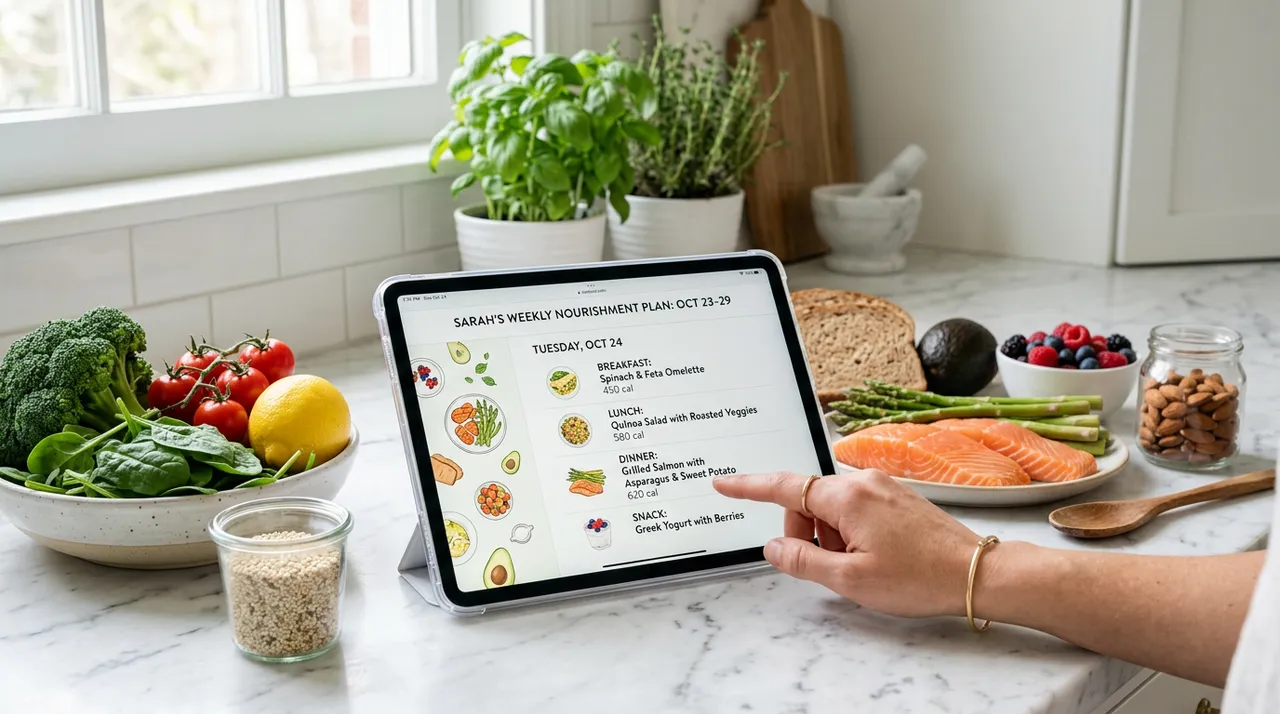
    A beautifully organised personalised meal plan on a tablet, surrounded by fresh, vibrant whole foods on a clean marble counter — showing how easy and accessible online nutrition planning can be.

    What a personalised meal plan online actually gives you

    At its best, a personalised meal plan online is not a rigid menu telling you exactly what to eat forever. It is a practical framework built around your needs. That can include your health goals, dietary requirements, cooking confidence, schedule, food preferences and even how much mental space you have for planning meals.

    This is where online support can be especially helpful. Instead of starting from a generic PDF or a trend on social media, you can work from guidance that reflects your current reality. If you travel for work, hate batch cooking, need family-friendly ideas or want meals that support training without taking over your week, the plan should account for that.

    Personalisation also helps remove the all-or-nothing thinking that often derails progress. A useful plan does not assume every week will be perfect. It gives you options for busy days, lower-energy evenings and moments when life becomes unpredictable.

    Why generic meal plans often fall short

    Generic plans tend to look tidy on paper and messy in practice. They often assume you have the same appetite every day, the same access to ingredients, the same amount of time to cook and the same goals as everyone else. That is rarely true.

    A person managing burnout may need something very different from someone training for a half marathon. Someone trying to improve blood sugar balance may need a different structure from someone who simply wants to stop skipping lunch. Even two people with the same goal, such as weight management, may need completely different approaches depending on stress, sleep, medical history and daily routine.

    There is also the issue of sustainability. A meal plan can look healthy and still be unrealistic. If it depends on complicated recipes, expensive ingredients or constant food prep, it can become another source of pressure rather than support.

    The real benefit is less decision fatigue

    One of the biggest advantages of a personalised meal plan online is not only nutrition. It is mental relief.

    When you already spend your day making decisions, food can become one more draining task. Deciding what to buy, what to cook and whether what you are eating is “right” can quietly chip away at your energy. A personalised plan reduces that load. You know what you are aiming for, what your fallback options are and how to make choices without overthinking every meal.

    That is particularly valuable for busy professionals and anyone feeling stretched. Healthy habits become much easier to maintain when they are built into your week instead of competing with everything else in it.

    How a personalised meal plan online supports different goals

    The phrase covers a wide range of needs, which is exactly why personalisation matters. For some people, the focus is fat loss or muscle gain. For others, it is better digestion, hormone support, improved energy or a calmer relationship with food.

    If your goal is performance, your plan may need to consider meal timing, protein intake and fuelling around exercise. If your goal is stress recovery, it may be more useful to focus on consistency, balanced meals and practical ways to avoid long gaps without eating. If you are managing a health condition or food intolerance, the right structure becomes even more important.

    This is also why one-size-fits-all nutrition advice can feel frustrating. What works brilliantly for one person may be unhelpful, or even counterproductive, for another. Good support meets you where you are and helps you move forward from there.

    What to look for in a good online meal planning service

    Not every service offering a personalised meal plan online delivers the same level of care. Some are little more than automated templates with your calorie target dropped in. Others take a more thoughtful approach and consider your wider wellbeing.

    Look for a service that asks meaningful questions before making recommendations. Your goals matter, but so do your routines, preferences and barriers. If a provider does not ask about these, the plan may not be as personalised as it claims.

    Flexibility is another good sign. A strong plan should adapt as your life changes. If you hit a stressful patch at work, start a new fitness routine or realise you need simpler meals than expected, your support should evolve too.

    It also helps when nutrition is treated as part of a bigger picture. Eating habits are shaped by sleep, stress, workload, mindset and emotional wellbeing. A platform such as SympathiQ can feel useful here because it sits within a broader model of support rather than treating food in isolation.

    Personalised does not mean perfect

    There is a common assumption that once you have a tailored plan, everything should click instantly. In reality, even the best plan may need adjusting.

    You might learn that you need quicker breakfasts than you thought. You might discover that evening snacking is less about hunger and more about stress or habit. You might start with ambitious cooking plans and then realise that simpler meals are what help you stay consistent.

    That is not failure. It is useful information. The purpose of personalisation is not to create a flawless plan on day one. It is to create something responsive enough to keep working as you learn more about what supports you.

    This matters because long-term progress usually comes from small changes you can repeat, not a short burst of perfection.

    The role of accountability in an online meal plan

    Information alone is rarely the issue. Most people already know the broad basics of healthy eating. The challenge is applying them consistently when life gets busy or motivation dips.

    That is where accountability can make a real difference. With the right online support, you are not left alone with a document and a good intention. You have guidance, feedback and someone helping you turn advice into habits that feel manageable.

    For some people, accountability means regular check-ins. For others, it means having a plan they genuinely want to follow because it feels realistic rather than punishing. Both matter. A plan that respects your capacity is often easier to stick to than one that demands constant discipline.

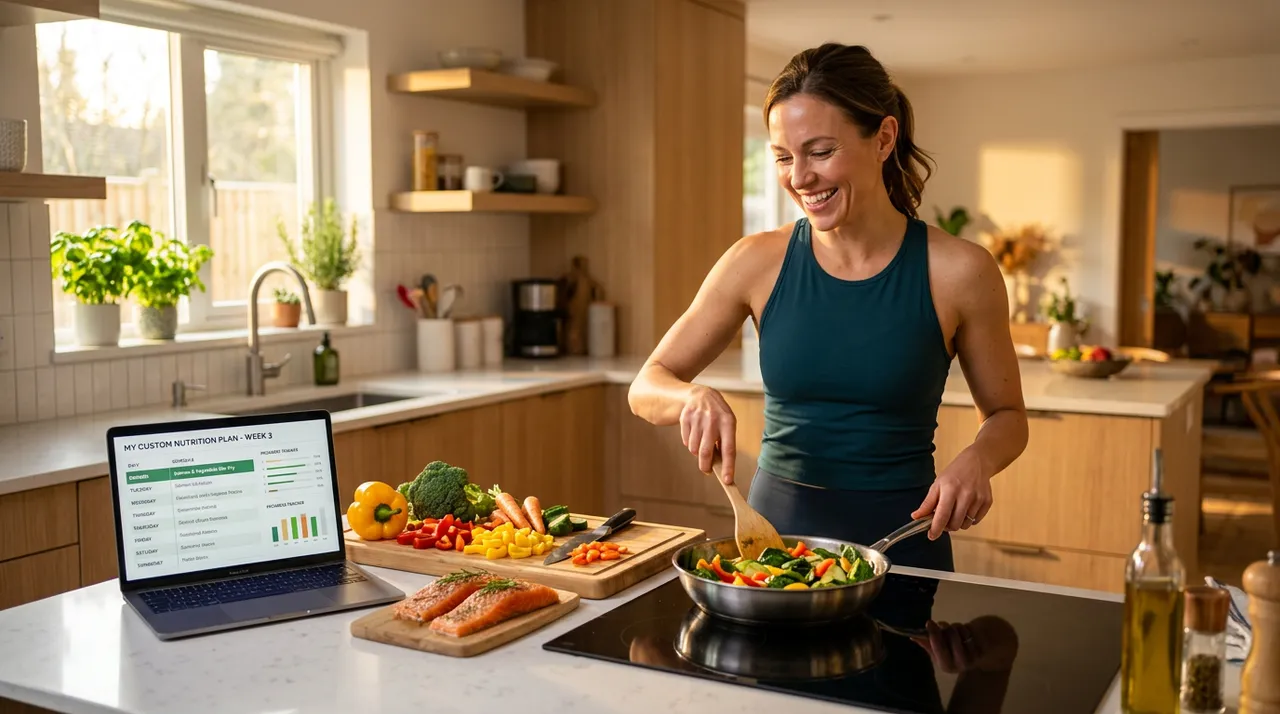
    A confident, happy woman cooking a wholesome meal in her kitchen while following her personalised plan on a laptop — bringing the online plan to life in a real, practical way.

    Is a personalised meal plan online worth it?

    It depends on what you need.

    If you enjoy planning meals, feel confident about nutrition and only need a few fresh ideas, you may not need much support. But if food feels confusing, inconsistent or emotionally loaded, a personalised approach can save time, reduce stress and help you make steadier progress.

    It can also be especially worthwhile if you have tried multiple plans before and struggled to maintain them. Often, that is not because you lacked willpower. It is because the plan was not built for your life.

    The value is not only in what to eat. It is in having a clearer path, fewer daily decisions and support that feels aligned with your goals instead of fighting against your routine.

    A healthier way to think about meal planning

    The best meal plan is not the strictest or the most impressive. It is the one that helps you feel better and keeps working on ordinary Tuesdays.

    That might mean repeating simple lunches, relying on easy staples during stressful weeks or choosing progress over precision. A personalised meal plan online should give you structure without making food feel like another source of pressure. It should support your wellbeing, not take over it.

    If you have been stuck between wanting to eat better and not knowing how to make it realistic, taking the first step towards personalised support can bring a surprising amount of clarity. Sometimes what changes everything is not more effort. It is having a plan that finally fits.

    Read moreSympathiQ Media Team

    Author

    SympathiQ Media Team

    How an Online Nutrition Coach Can Help
    22.03.2026

    How an Online Nutrition Coach Can Help

    Trying to eat well when your calendar is packed, your energy is low, and every week looks different is not a lack of willpower. It is a real-life problem. That is exactly where an online nutrition coach can make a meaningful difference - not by handing you a rigid meal plan, but by helping you build habits that work in the middle of work deadlines, family commitments, stress, travel, and all the other things that shape everyday choices.

    For many people, nutrition support sounds helpful in theory but difficult in practice. You may not want another appointment across town, another waiting room, or another system that feels impossible to maintain. Online coaching changes that. It brings expert guidance into your routine in a way that can feel more flexible, private, and realistic.

    What an online nutrition coach actually does

    An online nutrition coach helps you improve the way you eat through personalised guidance, education, accountability, and ongoing support. That can include support with weight management, sports nutrition, digestive issues, emotional eating patterns, energy levels, meal structure, confidence around food, or simply getting out of an all-or-nothing cycle.

    The best coaching is not built around shame, perfection, or extreme rules. It is built around your goals, your lifestyle, and your starting point. One person may need help eating regularly during a stressful workweek. Another may want support after years of trying restrictive diets. Someone else may be focused on performance, recovery, or building a healthier relationship with food.

    This is where the online format matters. Rather than treating nutrition as a separate problem to solve in isolation, a coach can look at the wider picture - sleep, stress, routine, motivation, movement, and mindset. Food choices rarely happen on their own. They are often connected to burnout, emotional load, confidence, and time pressure.

    Why online support works for a busy life

    When life feels full, convenience is not a luxury. It is often the difference between getting support and putting it off again.

    An online nutrition coach allows you to book sessions around your life rather than rearranging your life around appointments, which can be especially helpful if a busy life keeps getting in the way. That may mean a lunchtime call, an evening check-in, or support while travelling. If you have ever abandoned a health goal because the logistics became too much, this model can remove a lot of friction.

    There is also a level of comfort that matters. Talking about food, body image, stress eating, or health concerns can feel personal. For many people, speaking from home feels more at ease than sitting in a clinic. That privacy can make it easier to be honest, and better communication usually leads to better support.

    Online coaching can also create stronger consistency. Instead of one-off advice that fades after a few days, you are more likely to have regular touchpoints, message-based accountability, and a plan that adapts as your week changes, which can help you stay consistent. That matters because nutrition progress usually comes from steady adjustments, not one perfect month.

    The real value is personalisation

    Generic nutrition advice is everywhere. Eat more protein. Cut sugar. Meal prep on Sundays. Drink more water. Some of it is useful, but none of it helps much if it does not fit your reality.

    A good online nutrition coach looks at what is realistic for you. If you work shifts, recommendations should reflect that. If stress affects your appetite, that needs to be part of the plan. If you have cultural food preferences, family routines, or a history of dieting, those are not side notes. They are central.

    Personalisation also means knowing when to go slower. Not every goal should be tackled at once. Sometimes the right first step is regular breakfasts. Sometimes it is reducing the chaos around evening eating. Sometimes it is helping you build habits gradually so you stop starting over every Monday.

    Habit tracking improves accountability and consistency in behavior change.

    It can also increase goal achievement by 30% while improving self-awareness and motivation.

    That kind of support can feel refreshingly human. Instead of forcing yourself into a system, the system starts to fit you through an evidence based approach grounded in science.

    What to look for in online nutrition coaching

    Not all coaching is equal, and the right fit matters. Qualifications are an important place to start. Depending on your needs, you may benefit from a registered dietitian, nutrition professional, or specialist with experience in a particular area such as sports nutrition, weight management, or behaviour change, even if some readers are also comparing that role with a personal trainer.

    Beyond credentials, pay attention to approach. Does the coach ask about your goals and your lifestyle? Do they explain things clearly? Do they offer structure without judgement? The strongest coaching relationships tend to feel collaborative rather than controlling, so clients feel confident in the process.

    It is also worth looking at how support is delivered. Some people prefer live video sessions. Others benefit from written check-ins, habit tracking, or a mix of both, along with clear service expectations for support between sessions. There is no single best format. The right one is the one you can actually stay engaged with.

    If you are comparing options, look for clarity around privacy, pricing, scheduling, and what happens between sessions. Good support should feel accessible, not confusing.

    When an online nutrition coach is a good fit

    An online nutrition coach can be especially helpful if you are stuck in a cycle of knowing what to do but not doing it consistently, especially if you are struggling with weight loss or working toward specific weight loss goals. That gap is common. Most adults do not need more information. They need support turning intention into routine.

    It can also be a strong option if you feel overwhelmed by conflicting advice. Social media can make nutrition feel noisy and moralised, with every food choice framed as either excellent or terrible. Coaching can bring calm back into the picture with clearer, evidence-informed guidance. You get context, nuance, and recommendations that are shaped around your health rather than trends.

    This support can be valuable during periods of change too. Returning to exercise, managing burnout, entering a new life stage, working on stress, trying to improve energy, or adjusting nutrition for training can all affect the way you eat. It can also help athletes who want better fueling and recovery. In those moments, nutrition guidance works best when it is part of a broader picture of wellbeing.

    That is one reason integrated platforms can feel especially useful. If your eating habits are linked to stress, sleep, confidence, or mental load, having access to wider wellbeing support through one secure space, such as https://Sympathiq.com, can make change feel more joined up, especially when that support includes the right team.

    What weight loss goals can you realistically expect?

    The honest answer is that it depends on your goals, your consistency, and the kind of support you choose. A coach is not a shortcut. They cannot remove every obstacle from your week or make change effortless, but they can help you achieve realistic results.

    What they can do is help you make progress with more clarity and less guesswork. That may look like steadier energy, more regular meals, fewer binge-restrict cycles, a healthier diet, better recovery, improved confidence around food, or a sustainable way to lose weight through gradual body composition changes over time. High protein meals can support weight loss and muscle retention. For some people, the biggest result is not visible at all. It is feeling calmer and more in control.

    Progress is rarely linear. Some weeks go well. Others are messy. A good coach expects that and helps you respond without slipping into guilt or giving up altogether. That mindset is often what makes the difference between another short-lived attempt and maintaining something that lasts.

    Over 1,000 people have transformed their lifestyle from home.

    Online nutrition coach support is not about perfection

    One of the biggest misconceptions about nutrition coaching is that you need to be highly motivated before you begin. In reality, many people start when they feel frustrated, tired, or unsure where to turn next.

    You do not need a perfect kitchen, a colour-coded meal plan, or endless free time. You need support that meets you where you are, helps you handle common challenges, and makes the right choices easier in real life. Sometimes that means ambitious goal-setting. Sometimes it means taking the pressure down and rebuilding trust in yourself. More importantly, the goal is a healthy approach you can sustain, not perfection.

    That is the quiet strength of good coaching. It helps you stop treating health as a test you keep failing and start seeing it as a process you can learn.

    If nutrition has started to feel heavier than it needs to, the right support can lighten the load. A thoughtful online coach will not just tell you what to eat. They will help you build knowledge, focus on practical decisions, understand what is getting in the way, what is worth changing, and what can finally feel sustainable in your real life, so you can feel great instead of just follow a diet.

    Read moreSympathiQ Media Team

    Author

    SympathiQ Media Team

    Grow Your Dietitian Practice with SympathiQ
    17.06.2025

    Grow Your Dietitian Practice with SympathiQ

    Dietitian Marketing UK – Join Our Dietitian Directory & Online Nutritionist Platform to Grow Your Practice

    PROBLEM – Evidence-based nutrition is in record demand across the UK, yet many registered dietitians still lean on word-of-mouth alone. That means unpredictable enquiries, calendar gaps, and nights spent chasing invoices instead of planning meal plans.

    AGITATE – When Google overflows with quick-fix “nutrition gurus”, qualified professionals get buried. Potential clients see fad promises first, book impulsively, and hit plateaus—while your expertly designed low-FODMAP programme never crosses their screen. Empty appointment slots drain both revenue and morale.

    SOLUTION – SympathiQ changes the game. Our purpose-built Dietitian Directory and online nutritionist platform in the UK puts genuine expertise centre stage, matching you with people actively searching for accredited help. By the end of this guide, you’ll know exactly how to plug in, polish your profile, and grow your dietitian practice in the UK—without hiring an agency or turning into a full-time marketer. 🚀


    Why Digital Visibility Matters for UK Dietitians

    Clients Expect One-Tap Booking
    If a runner in Cardiff can order sushi in 90 seconds, she expects to schedule a sports nutrition consult just as quickly. Visibility at that precise moment is priceless.

    Trust Is Your Secret Weapon
    Registered dietitians must meet strict
    British Dietetic Association and HCPC standards. SympathiQ places those badges front and centre, instantly separating you from unregulated “wellness coaches.”

    Local SEO Is Hyper-Specific
    Google’s Vicinity update rewards up-to-date addresses, verified reviews, and fresh content. SympathiQ structures that data for you, nudging your profile toward the coveted top-three map spots—exactly where high-intent prospects click first.

    Conversation Cycles Move Lightning-Fast
    A single TikTok on “seed cycling” can spark 10,000 searches overnight. If your service isn’t discoverable, that surge vanishes in hours.


    SympathiQ Features That Put You Centre-Stage

    Hyper-Targeted Filters – Visitors sort by speciality (IBS, paediatrics, oncology), language, and insurance, so only the right prospects land in your inbox.

    Schema-Ready Profiles – Behind the scenes, SympathiQ marks up your credentials, opening hours, and location in structured data Google loves.

    Integrated Booking & Encrypted Messaging – Appointments sync with your calendar, payments are automatically cleared, and a GDPR-compliant chat keeps client questions organized and secure.

    Automated Review Requests – After each session, clients receive a gentle reminder: more five-star reviews lead to higher trust and more substantial local rankings.

    Real-Time Analytics – Track profile views, conversion rates, and average client value. Spot that Sunday evening surge? Extend your “virtual clinic” hours with two clicks.

    Professional Community – Peer forums for case-study swaps, CPD webinars, and referral partnerships. More than 600 UK dietitians already trade tips weekly.


    Step-by-Step: Join the Dietitian Directory UK Today

    1. Create Your Account – Hit “Join” on the SympathiQ specialist page. Enter your HCPC number for instant verification. AfN-registered nutritionists can upload proof for manual approval.

    2. Optimise Your Profile – Post a natural-light head-shot; open with “I’m a sports dietitian…” so search algorithms and humans recognise you instantly. For a template, see our guide on client retention strategies.

    3. Set Services & Pricing – Clear, package-based fees build trust (e.g., “Initial consult £90 | Follow-up £60 | Six-session bundle £320”). Need inspo? Skim our telehealth setup guide.

    4. Publish & Promote – New profiles appear in our newsletter and social media feeds, reaching over 14,000 nutrition-curious subscribers. Repurpose your bio with our social-media checklist.

    5. Collect Reviews & Iterate – The platform auto-prompts every client. Check the dashboard Friday afternoons—our data shows review-rate peaks then—and nudge any silent happy clients with one click.


    SympathiQ Impact Snapshot 📊

    • Average increase in monthly bookings: more paying clients without extra ad spend — +78 % within the first 90 days.

    • Reduction in admin hours: less time on email ping-pong, more time with patients — about 5.6 hours saved each week.

    • Listings that reach Google’s Top-3 map pack: prime real estate for “near me” searches — 61 % of new profiles hit this spot in three months.

    • Average number of new 5-star reviews collected: social proof that converts hesitant prospects — around nine fresh reviews in the first quarter.

    • Return on every £1 spent on in-platform paid promos: geo-targeted ads that run right inside the SympathiQ dashboard — £4.30 in revenue for every pound invested.


    How the Numbers Add Up 🔍

    • Low-FODMAP, PCOS, and Sports Nutrition are the three most searched specialties on the platform, accounting for 46 % of all bookings.

    • Publishing a 300-word microblog twice a month boosts profile traffic by an additional 22 %, confirming that fresh, niche content still wins.

    • Dietitians who offer both video consultations and in-person sessions convert 1.7 × better than those with a single service format.

    • Adding a simple lead magnet—for example, a free 7-Day Mediterranean Meal Plan—grows email lists by an average of 37 new subscribers per month, feeding a steady pipeline for premium programmes.


    These results aren’t down to luck; they stem from SympathiQ’s built-in advantages: SEO-friendly structured data, friction-free booking, automated review prompts, and a supportive professional community that openly shares what works. Plug in once, and watch your visibility compound day after day.


    Actionable Dietitian Marketing UK Ideas You Can Deploy Tonight

    Write Topic-Rich Micro-Blogs – Short 500-word explainers on emerging buzzwords—ultra-processed foods, GLP-1s, menopause weight. Embed your booking link each time and link internally to our nutrition content calendar 🍏.

    Film 90-Second Reels – Start with a pain point (“Three £2 breakfast swaps to cut cholesterol”), share a quick tip, and finish: “Book a personalised plan on SympathiQ.” Viewer → Bio → Booking in under a minute.

    Launch a “Clinic in Your Pocket” Newsletter – SympathiQ’s Mail-Chimp integration tags subscribers by goal (weight loss, performance, gut health). Send one snack-size tip each month; link your latest article on pricing strategies to position higher-value packages.

    Offer Downloadable Lead Magnets – A “7-Day Mediterranean Meal Plan” gated by email adds dozens of warm leads weekly. SympathiQ then auto-follows up with a “Book your assessment” prompt after 48 hours.

    Network Offline—Follow Up Online – Post business cards at CrossFit boxes or yoga studios, but direct them to your SympathiQ URL for a friction-free booking experience. Hand-to-digital journeys convert 18 % better than phone calls.

    Turn Dashboard Data into Posts – If “plant-based dietitian Glasgow” spikes, draft a quick success story about fueling vegan 10K runners. Share it, tag local running clubs, and watch the referrals roll in.


    Frequently Asked Questions

    Is there an upfront fee?
    No listing is free. SympathiQ takes a modest commission only when you earn.

    Do I need extra software?
    Video, payments, scheduling, and secure notes live under one roof. Wave goodbye to Zoom and Calendly subscriptions.

    How quickly will I appear in Google search results?
    Complete profiles with three reviews typically reach top-three map positions within six weeks.

    Can I list corporate workshops?
    Yes. Tick “Workplace Wellbeing” under Services. Demand is soaring as UK companies chase healthier teams.

    What about GDPR?
    All data stays on UK servers, encrypted end-to-end. For more detailed information, please refer to our data security checklist.


    Advanced Growth Tactics (When You’re Ready)

    Bundle Digital Products – Package your low-FODMAP meal plan PDF and grocery tracker as a £29 download linked from your profile. Passive income while you sleep.

    Host a Paid Masterclass – Use SympathiQ’s built-in ticketing to charge £15 for a one-hour “Nutrition for Perimenopause” webinar. Recordings stay on your profile as on-demand assets that clients can purchase later.

    Leverage Public Relations – Draft expert commentary on national sugar-tax debates and pitch it to NHS Inform. A single backlink from a high-authority UK domain can skyrocket domain trust.

    Track Lifetime Value, Not Just Bookings – The dashboard’s cohort view shows that bundled clients stay 42 % longer. Use that metric to refine your offers and forecast revenue with confidence.

    Earn CPD Credits Inside SympathiQ – Complete peer-reviewed case presentations or attend monthly webinars to log formal CPD hours—handy when HCPC renewals loom.


    Conclusion & Next Steps 🌱

    Digital-first healthcare isn’t future talk—it’s happening right now. SympathiQ’s dietitian directory in the UK lets you skip tech headaches and connect directly with motivated clients.

    1. Claim your profile today – at the SympathiQ webpage.

    2. Level-up your strategy – Bookmark our lean marketing budget guide for monthly inspiration.

    3. Stay informed – Follow the latest nutrition reports from Gov UK and NICE guidelines to keep your advice cutting-edge.

    Whether you’re solo in Manchester or heading a London clinic, SympathiQ is your launchpad: list once, market smarter, and watch your diary fill week after week. Ready to thrive? Join now and help transform UK nutrition—one well-fed client at a time. 🚀


    Read moreAuthor

    Author

    Anonymous

    Nutritionist Growth Starts Here: Join SympathiQ’s UK Dietitian Directory
    20.05.2025

    Nutritionist Growth Starts Here: Join SympathiQ’s UK Dietitian Directory

    UK Nutritionists: Growth Starts Here—Join SympathiQ's Dietitian Directory

    Why UK Nutritionists and Dietitians Trust SympathiQ to Build Their Online Practice

    Thousands of Britons search “nutritionist near me” every week, but most never scroll past the first three Google results. If your name isn't there, your science-backed guidance remains invisible. SympathiQ exists to change that.

    The Problem

    Traditional directories mix you with global coaches who may not have recognised UK qualifications or training, and may be unfamiliar with UK labelling laws and NHS guidelines. Meanwhile, social media is an endless treadmill of reels, trends, and paid ads.

    The Agitation

    Hours spent hustling for visibility steal precious time from clients—and from your meal with the family. Even worse, patchy online details can erode public trust. One unanswered message can send a prospect running to a big-budget clinic.

    The Solution

    SympathiQ's UK-only Nutritionist Directory weaves local SEO, automated marketing, built-in marketing and nutrition support tools, and peer mentorship into a single login. You reclaim your evenings and still wake up to an inbox of new bookings.

    What Makes SympathiQ the Stand-Out Online Platform for Registered Nutritionists in the UK

    Local-First Search Power

    Your profile automatically targets city-specific phrases such as “sports nutritionist Cardiff” or “IBS dietitian Glasgow.” Early adopters report a 40% lift in organic clicks after three months, though results vary depending on location, specialism, and local competition.

    Instant UK Voluntary Register Credential Badges

    Upload HCPC or AfN proof during onboarding so your qualifications can be assessed, and an “Accredited UK Nutritionist” badge appears beside your name—zero web-design skills required. This helps distinguish registered dietitians and registered nutritionists.

    Dietitian Marketing UK Toolkit

    The dashboard contains Canva-ready recipe cards, email nurture flows, practical guidance materials, and caption templates. Add your logo and schedule, then get back to analysing food diaries, with a toolkit designed to be practical for busy clinics.

    Seamless Client Journey

    Clients can book, pay in GBP, and receive SMS reminders from the same link. HMRC-ready invoices sync to Xero and QuickBooks—no shoebox of receipts. Clients can also use that booking link to make contact before committing to a session.

    Peer Community & CPD

    Monthly mastermind calls, a private Slack-style forum, and joint webinars keep you inspired and compliant, aligned with the Association for Nutrition's Code of Ethics, while supporting ongoing education and keeping your knowledge current through research-informed sessions.

    How SympathiQ Helps You Grow Dietitian Practice UK

    Smart Profile Builder

    Answer ten multiple-choice questions about your specialisms—sports, paediatrics, gut health, adults, and children—and the AI suggests high-intent keywords plus an eye-catching headline (for example, “Low-FODMAP Specialist | Liverpool”)—no copywriting stress.

    Automated Visibility Boost

    Publish a blog post through SympathiQ to demonstrate your evidence based expertise grounded in nutrition science; it is auto-syndicated to Google News, our 25,000-subscriber digest, and your socials. For strategy tips, read Using Long-Tail Keywords to Attract Ideal Clients.

    Nutrition Science Content Library & Client Handouts

    Download helpful food and nutrition infographics on portion sizes, IBS-friendly swaps, or Mediterranean plate guides. Brand them in minutes and send them straight after consults—for example, with simple what to eat guidance—clients love tangible take-home value.

    Telehealth & Messaging Hub

    GDPR-compliant HD video calls, secure chat, and photo-based food diary uploads mean no juggling apps, and they also support remote monitoring for cases like diabetes management or eating disorders support. Beginners can follow Telehealth Nutrition: Starter Kit to launch in under an hour.

    Five-Step Action Plan to Join SympathiQ's Dietitian Directory UK

    • Visit the sign-up page: Click Create My Profile to open the guided wizard (≈ 5 minutes).

    • Upload credentials: Add your HCPC or AfN documents; our verification team applies an “Accredited” badge within 24 hours.

    • Pick service packages: Choose 1-to-1 consults, group programmes, or both—booking widgets appear automatically (≈ 10 minutes).

    • Sync your calendar: Connect Google or Outlook so SympathiQ blocks existing slots (≈ 2 minutes).

    • Go live: Your new profile publishes instantly, and our system emails thousands of site visitors a “Meet Our New Specialist” announcement. 🎉

      Advanced Marketing Moves for Ambitious Nutritionists

    SEO Smart Suggestions

    A colour-coded bar inside your profile shows optimisation strength. It highlights unused long-tail phrases such as “prenatal vegan nutritionist London.”

    Public Health Data-Driven Blog Prompts

    Our AI scans NHS trend reports for public health topics and wider developments across the world, then proposes hot topics like ultra-processed foods in teen diets. Accept, tweak, or reject with one click. After six weeks, post-fortnightly users enjoy a 27% lead boost.

    Referral Partnerships

    The Partner Hub pairs you with personal trainers, wellness apps, and corporate wellbeing providers for referral partnerships, workplace teaching sessions, or staff training. Cross-promos multiply your reach without extra ad spend.

    Offline Exposure

    Order pre-designed flyers for GP surgeries and similar local healthcare settings featuring a QR code that links to your SympathiQ bookings—hyper-local visibility for pennies.

    Metrics Dashboard

    From profile impressions to lifetime client value, every data point is graphed in real time so you can double down on what's working, with the dashboard supporting quick assessment of what is performing best.

    Frequently Asked Questions

    What does SympathiQ cost?Flexible plans are available, including a 14-day free trial. Prefer to pay only when you earn? Opt for the commission-only option.

    Can you import my existing reviews?Yes—sync Google or Treatwell reviews with one click. CSV uploads are free with onboarding support.

    I'm newly qualified—can I join?Absolutely. Provide proof of HCPC or AfN registration. Many members qualify through accredited courses and a nutrition degree. Requirements can also differ by route and further training. Your profile displays “Early-Career Nutritionist,” so prospects know exactly where you stand.

    Do you support group programmes?Yes. You can create cohort start dates and class seats and handle bulk payments—ideal for six-week weight-management courses.

    How are client payments and payouts handled?SympathiQ uses secure, PCI-compliant payment partners. Clients can pay by card or Apple/Google Pay, and you receive payouts to your bank account on a next-business-day or weekly schedule—your choice—no hidden fees.

    Can I run virtual consultations through the platform?DympathiQ includes built-in video conferencing (or Zoom integration if you prefer). Appointment links are auto-generated and added to the client's confirmation email and your calendar—zero tech stress!

    Common Misconceptions About UK Nutritionist Directories

    • “Directories hog my profits.” SympathiQ caps fees at 8% or charges nothing on subscription plans. Globally-oriented apps often take 20% or more. It’s also worth understanding the difference between protected titles and the voluntary register held by some practitioners.

    • “Clients only value face-to-face sessions.” NHS Digital reported a 46% rise in remote dietetic appointments in 2024. Convenience boosts adherence and expands your catchment.

    • “Only big clinics hit page 1 on Google.” Local intent queries—think “coeliac nutritionist Brighton”—have minimal competition. SympathiQ's UK-focused SEO gives independents a fighting chance. Some roles in nutrition sit on a uk voluntary register rather than statutory regulation.

    The Future of Online Nutrition in the UK

    The government's 2025 Food Strategy aims to halve childhood obesity by 2030, which is forecast to dramatically increase demand for accredited dietary advice.

    • Policy tailwinds: The 2025 Food Strategy targets halving childhood obesity by 2030, and more families will seek accredited nutrition advice.

    • Virtual-first care: NHS shifts mean digital consults could hit 65 % of dietetic visits by 2027.

    • Retail adoption: Tesco and other supermarkets are piloting in-app healthy-basket swaps powered by virtual nutritionists—SympathiQ's API is already plugged in.

    • Wearable data boom: CGMs, smart scales, and fitness apps give clients real-time metrics; SympathiQ's upcoming analytics plug-in turns those numbers into actionable insights.

    • Corporate wellness growth: Rising HR budgets for nutrition coaching make SympathiQ's Organisation Hub (launching 2026) a future revenue stream for practitioners.

    Choosing a platform that evolves with these trends is the best insurance policy for your practice's longevity.

    Five Quick Wins to Supercharge Your SympathiQ Profile

    • Craft a niche headline: Replace “Registered Nutritionist” with “Low-Histamine Diet Specialist | Liverpool.”

    • Publish a weekly blog: Search engines (and SympathiQ's digest) reward consistency.

    • Add transformation photos (with permission): Before-and-after pantry makeovers convert browsers to bookers.

    • Link your profile in your Instagram and LinkedIn bios for seamless discovery.

    • Automate review requests: Switch on the “Ask after Session 2” toggle and let the stars roll in.

    Conclusion & Call-to-Action

    Your evidence-based expertise can transform lives, but only if people find you, and SympathiQ provides trusted support with discovery, booking, compliance, and community so you can focus on results. Today you could:

    • Be listed in a high-ranking nutritionist directory in the UK

    • Access ready-made dietitian marketing UK assets

    • Join a peer group that understands British regulations inside and out

    • Support parents if your practice includes family-focused nutrition

    Don't let another prospective client scroll past. Create your SympathiQ profile now and watch your diary fill—rainy Tuesdays included.

    Read moreAuthor

    Author

    Anonymous