Subscribe to Our Newsletter
To get the latest tips and news to support your well-being journey!

Thousands of Britons search “nutritionist near me” every week, but most never scroll past the first three Google results. If your name isn't there, your science-backed guidance remains invisible. SympathiQ exists to change that.
Traditional directories mix you with global coaches who may not have recognised UK qualifications or training, and may be unfamiliar with UK labelling laws and NHS guidelines. Meanwhile, social media is an endless treadmill of reels, trends, and paid ads.
Hours spent hustling for visibility steal precious time from clients—and from your meal with the family. Even worse, patchy online details can erode public trust. One unanswered message can send a prospect running to a big-budget clinic.
SympathiQ's UK-only Nutritionist Directory weaves local SEO, automated marketing, built-in marketing and nutrition support tools, and peer mentorship into a single login. You reclaim your evenings and still wake up to an inbox of new bookings.
Your profile automatically targets city-specific phrases such as “sports nutritionist Cardiff” or “IBS dietitian Glasgow.” Early adopters report a 40% lift in organic clicks after three months, though results vary depending on location, specialism, and local competition.
Upload HCPC or AfN proof during onboarding so your qualifications can be assessed, and an “Accredited UK Nutritionist” badge appears beside your name—zero web-design skills required. This helps distinguish registered dietitians and registered nutritionists.
The dashboard contains Canva-ready recipe cards, email nurture flows, practical guidance materials, and caption templates. Add your logo and schedule, then get back to analysing food diaries, with a toolkit designed to be practical for busy clinics.
Clients can book, pay in GBP, and receive SMS reminders from the same link. HMRC-ready invoices sync to Xero and QuickBooks—no shoebox of receipts. Clients can also use that booking link to make contact before committing to a session.
Monthly mastermind calls, a private Slack-style forum, and joint webinars keep you inspired and compliant, aligned with the Association for Nutrition's Code of Ethics, while supporting ongoing education and keeping your knowledge current through research-informed sessions.
Answer ten multiple-choice questions about your specialisms—sports, paediatrics, gut health, adults, and children—and the AI suggests high-intent keywords plus an eye-catching headline (for example, “Low-FODMAP Specialist | Liverpool”)—no copywriting stress.
Publish a blog post through SympathiQ to demonstrate your evidence based expertise grounded in nutrition science; it is auto-syndicated to Google News, our 25,000-subscriber digest, and your socials. For strategy tips, read Using Long-Tail Keywords to Attract Ideal Clients.
Download helpful food and nutrition infographics on portion sizes, IBS-friendly swaps, or Mediterranean plate guides. Brand them in minutes and send them straight after consults—for example, with simple what to eat guidance—clients love tangible take-home value.
GDPR-compliant HD video calls, secure chat, and photo-based food diary uploads mean no juggling apps, and they also support remote monitoring for cases like diabetes management or eating disorders support. Beginners can follow Telehealth Nutrition: Starter Kit to launch in under an hour.
Visit the sign-up page: Click Create My Profile to open the guided wizard (≈ 5 minutes).
Upload credentials: Add your HCPC or AfN documents; our verification team applies an “Accredited” badge within 24 hours.
Pick service packages: Choose 1-to-1 consults, group programmes, or both—booking widgets appear automatically (≈ 10 minutes).
Sync your calendar: Connect Google or Outlook so SympathiQ blocks existing slots (≈ 2 minutes).
Go live: Your new profile publishes instantly, and our system emails thousands of site visitors a “Meet Our New Specialist” announcement. 🎉
Advanced Marketing Moves for Ambitious Nutritionists
A colour-coded bar inside your profile shows optimisation strength. It highlights unused long-tail phrases such as “prenatal vegan nutritionist London.”
Our AI scans NHS trend reports for public health topics and wider developments across the world, then proposes hot topics like ultra-processed foods in teen diets. Accept, tweak, or reject with one click. After six weeks, post-fortnightly users enjoy a 27% lead boost.
The Partner Hub pairs you with personal trainers, wellness apps, and corporate wellbeing providers for referral partnerships, workplace teaching sessions, or staff training. Cross-promos multiply your reach without extra ad spend.
Order pre-designed flyers for GP surgeries and similar local healthcare settings featuring a QR code that links to your SympathiQ bookings—hyper-local visibility for pennies.
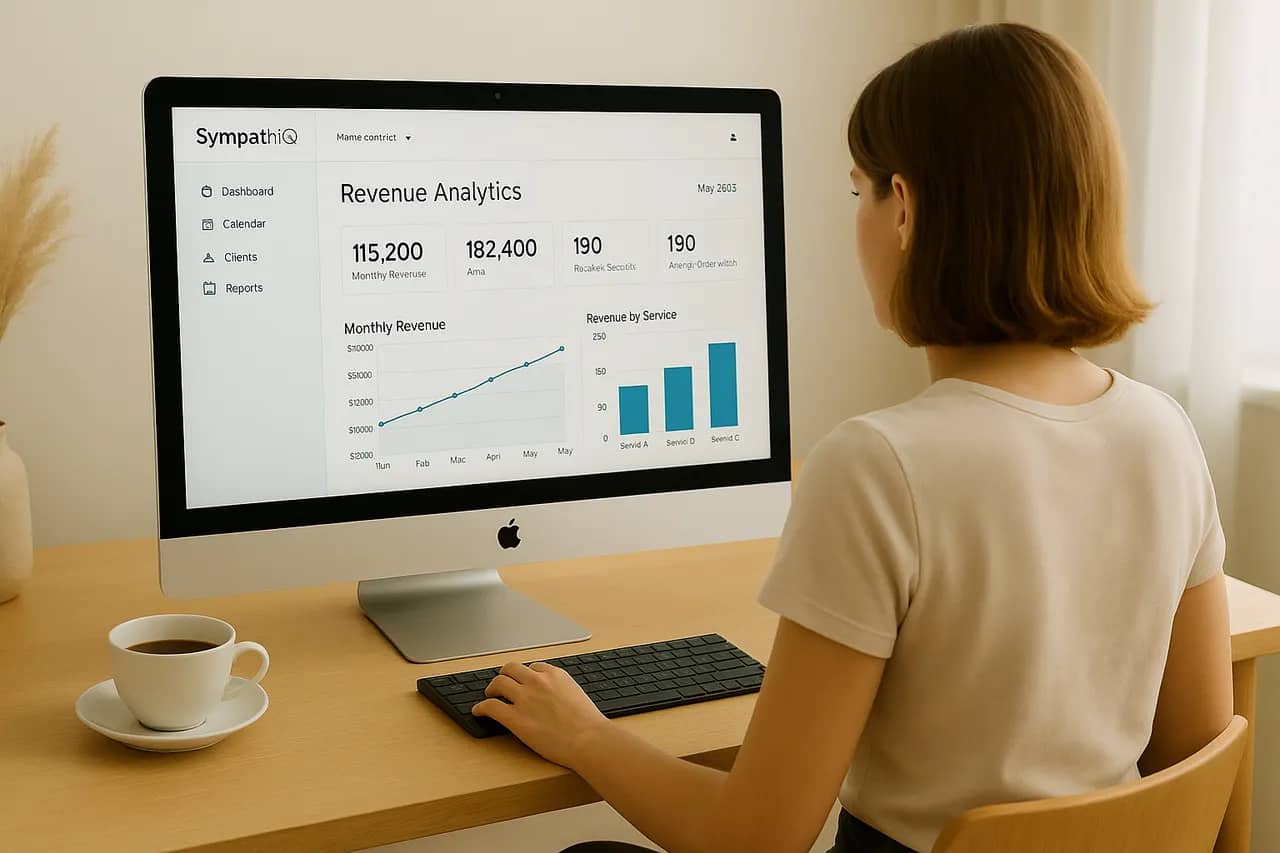
From profile impressions to lifetime client value, every data point is graphed in real time so you can double down on what's working, with the dashboard supporting quick assessment of what is performing best.
What does SympathiQ cost?Flexible plans are available, including a 14-day free trial. Prefer to pay only when you earn? Opt for the commission-only option.
Can you import my existing reviews?Yes—sync Google or Treatwell reviews with one click. CSV uploads are free with onboarding support.
I'm newly qualified—can I join?Absolutely. Provide proof of HCPC or AfN registration. Many members qualify through accredited courses and a nutrition degree. Requirements can also differ by route and further training. Your profile displays “Early-Career Nutritionist,” so prospects know exactly where you stand.
Do you support group programmes?Yes. You can create cohort start dates and class seats and handle bulk payments—ideal for six-week weight-management courses.
How are client payments and payouts handled?SympathiQ uses secure, PCI-compliant payment partners. Clients can pay by card or Apple/Google Pay, and you receive payouts to your bank account on a next-business-day or weekly schedule—your choice—no hidden fees.
Can I run virtual consultations through the platform?DympathiQ includes built-in video conferencing (or Zoom integration if you prefer). Appointment links are auto-generated and added to the client's confirmation email and your calendar—zero tech stress!
“Directories hog my profits.” SympathiQ caps fees at 8% or charges nothing on subscription plans. Globally-oriented apps often take 20% or more. It’s also worth understanding the difference between protected titles and the voluntary register held by some practitioners.
“Clients only value face-to-face sessions.” NHS Digital reported a 46% rise in remote dietetic appointments in 2024. Convenience boosts adherence and expands your catchment.
“Only big clinics hit page 1 on Google.” Local intent queries—think “coeliac nutritionist Brighton”—have minimal competition. SympathiQ's UK-focused SEO gives independents a fighting chance. Some roles in nutrition sit on a uk voluntary register rather than statutory regulation.
The Future of Online Nutrition in the UK
The government's 2025 Food Strategy aims to halve childhood obesity by 2030, which is forecast to dramatically increase demand for accredited dietary advice.
Policy tailwinds: The 2025 Food Strategy targets halving childhood obesity by 2030, and more families will seek accredited nutrition advice.
Virtual-first care: NHS shifts mean digital consults could hit 65 % of dietetic visits by 2027.
Retail adoption: Tesco and other supermarkets are piloting in-app healthy-basket swaps powered by virtual nutritionists—SympathiQ's API is already plugged in.
Wearable data boom: CGMs, smart scales, and fitness apps give clients real-time metrics; SympathiQ's upcoming analytics plug-in turns those numbers into actionable insights.
Corporate wellness growth: Rising HR budgets for nutrition coaching make SympathiQ's Organisation Hub (launching 2026) a future revenue stream for practitioners.
Choosing a platform that evolves with these trends is the best insurance policy for your practice's longevity.
Craft a niche headline: Replace “Registered Nutritionist” with “Low-Histamine Diet Specialist | Liverpool.”
Publish a weekly blog: Search engines (and SympathiQ's digest) reward consistency.
Add transformation photos (with permission): Before-and-after pantry makeovers convert browsers to bookers.
Link your profile in your Instagram and LinkedIn bios for seamless discovery.
Automate review requests: Switch on the “Ask after Session 2” toggle and let the stars roll in.
Your evidence-based expertise can transform lives, but only if people find you, and SympathiQ provides trusted support with discovery, booking, compliance, and community so you can focus on results. Today you could:
Be listed in a high-ranking nutritionist directory in the UK
Access ready-made dietitian marketing UK assets
Join a peer group that understands British regulations inside and out
Support parents if your practice includes family-focused nutrition
Don't let another prospective client scroll past. Create your SympathiQ profile now and watch your diary fill—rainy Tuesdays included.
Your email address will not be published. Required fields are marked *
Personalisation also helps remove the all-or-nothing thinking that often derails progress. A useful plan does not assume every week will be perfect. It gives you options for busy days, lower-energy evenings and moments when life becomes unpredictable.
Generic plans tend to look tidy on paper and messy in practice. They often assume you have the same appetite every day, the same access to ingredients, the same amount of time to cook and the same goals as everyone else. That is rarely true.
A person managing burnout may need something very different from someone training for a half marathon. Someone trying to improve blood sugar balance may need a different structure from someone who simply wants to stop skipping lunch. Even two people with the same goal, such as weight management, may need completely different approaches depending on stress, sleep, medical history and daily routine.
There is also the issue of sustainability. A meal plan can look healthy and still be unrealistic. If it depends on complicated recipes, expensive ingredients or constant food prep, it can become another source of pressure rather than support.
One of the biggest advantages of a personalised meal plan online is not only nutrition. It is mental relief.
When you already spend your day making decisions, food can become one more draining task. Deciding what to buy, what to cook and whether what you are eating is “right” can quietly chip away at your energy. A personalised plan reduces that load. You know what you are aiming for, what your fallback options are and how to make choices without overthinking every meal.
That is particularly valuable for busy professionals and anyone feeling stretched. Healthy habits become much easier to maintain when they are built into your week instead of competing with everything else in it.
The phrase covers a wide range of needs, which is exactly why personalisation matters. For some people, the focus is fat loss or muscle gain. For others, it is better digestion, hormone support, improved energy or a calmer relationship with food.
If your goal is performance, your plan may need to consider meal timing, protein intake and fuelling around exercise. If your goal is stress recovery, it may be more useful to focus on consistency, balanced meals and practical ways to avoid long gaps without eating. If you are managing a health condition or food intolerance, the right structure becomes even more important.
This is also why one-size-fits-all nutrition advice can feel frustrating. What works brilliantly for one person may be unhelpful, or even counterproductive, for another. Good support meets you where you are and helps you move forward from there.
Not every service offering a personalised meal plan online delivers the same level of care. Some are little more than automated templates with your calorie target dropped in. Others take a more thoughtful approach and consider your wider wellbeing.
Look for a service that asks meaningful questions before making recommendations. Your goals matter, but so do your routines, preferences and barriers. If a provider does not ask about these, the plan may not be as personalised as it claims.
Flexibility is another good sign. A strong plan should adapt as your life changes. If you hit a stressful patch at work, start a new fitness routine or realise you need simpler meals than expected, your support should evolve too.
It also helps when nutrition is treated as part of a bigger picture. Eating habits are shaped by sleep, stress, workload, mindset and emotional wellbeing. A platform such as SympathiQ can feel useful here because it sits within a broader model of support rather than treating food in isolation.
There is a common assumption that once you have a tailored plan, everything should click instantly. In reality, even the best plan may need adjusting.
You might learn that you need quicker breakfasts than you thought. You might discover that evening snacking is less about hunger and more about stress or habit. You might start with ambitious cooking plans and then realise that simpler meals are what help you stay consistent.
That is not failure. It is useful information. The purpose of personalisation is not to create a flawless plan on day one. It is to create something responsive enough to keep working as you learn more about what supports you.
This matters because long-term progress usually comes from small changes you can repeat, not a short burst of perfection.
Information alone is rarely the issue. Most people already know the broad basics of healthy eating. The challenge is applying them consistently when life gets busy or motivation dips.
That is where accountability can make a real difference. With the right online support, you are not left alone with a document and a good intention. You have guidance, feedback and someone helping you turn advice into habits that feel manageable.
For some people, accountability means regular check-ins. For others, it means having a plan they genuinely want to follow because it feels realistic rather than punishing. Both matter. A plan that respects your capacity is often easier to stick to than one that demands constant discipline.
It depends on what you need.
If you enjoy planning meals, feel confident about nutrition and only need a few fresh ideas, you may not need much support. But if food feels confusing, inconsistent or emotionally loaded, a personalised approach can save time, reduce stress and help you make steadier progress.
It can also be especially worthwhile if you have tried multiple plans before and struggled to maintain them. Often, that is not because you lacked willpower. It is because the plan was not built for your life.
The value is not only in what to eat. It is in having a clearer path, fewer daily decisions and support that feels aligned with your goals instead of fighting against your routine.
The best meal plan is not the strictest or the most impressive. It is the one that helps you feel better and keeps working on ordinary Tuesdays.
That might mean repeating simple lunches, relying on easy staples during stressful weeks or choosing progress over precision. A personalised meal plan online should give you structure without making food feel like another source of pressure. It should support your wellbeing, not take over it.
If you have been stuck between wanting to eat better and not knowing how to make it realistic, taking the first step towards personalised support can bring a surprising amount of clarity. Sometimes what changes everything is not more effort. It is having a plan that finally fits.