Subscribe to Our Newsletter
To get the latest tips and news to support your well-being journey!


Evidence-based nutrition advice is in real demand across the UK, but plenty of qualified dietitians and nutritionists still rely on word-of-mouth alone — which means unpredictable enquiries and empty appointment slots, while less-qualified "wellness gurus" dominate the search results clients actually see first.
Referrals are a genuine asset, but they don't scale on their own, and they do nothing for the client who's never met anyone who's seen a dietitian before. That client is searching Google instead — and what they find first is often a confident-sounding account with no real qualification behind it, because unregulated "nutrition coach" content is easy to produce and ranks well. Being findable by someone already searching, at the moment they're deciding, does more than any amount of additional outreach.
Credentials need to be visible, not just true. In the UK, "dietitian" is a protected title regulated by the HCPC — anyone using it must be registered. "Nutritionist" isn't legally protected, which means registration with a body like the AfN (Association for Nutrition) or membership through BANT is one of the only signals a client has to tell real training from a weekend course. Whichever you are, that credential should be the first thing a prospective client sees on your profile, not something they have to dig for.
A specific focus outperforms a broad one. "Registered dietitian" tells a browsing client your qualification but not whether you're the right fit for them. "IBS and low-FODMAP" or "sports nutrition for endurance athletes" lets someone recognise themselves immediately. Listing every area you're capable of working in usually reads as less credible than owning one or two clearly.
Be upfront about format and pricing. Consultation length, video vs. in-person, single sessions vs. packages — ambiguity here creates hesitation exactly when someone's deciding whether to book. Clear, specific pricing (even a simple "initial consult / follow-up" structure) builds more trust than "contact for pricing."
Your bio should sound like a person. A short, honest note on why you focus on what you focus on tends to convert better than a credentials-only summary — clients are choosing someone to be honest with about their eating habits, not hiring a service off a menu.
Most practitioners under-ask for reviews, and the ones they get tend to be generic. A review naming a specific, real outcome — better energy, a resolved digestive issue, sustainable habits after years of yo-yo dieting — does far more convincing work than several vague five-star ratings. Ask once a client has had enough sessions to notice a genuine change, and keep it clearly optional.
A directory listing is a strong foundation, not the whole strategy. A few things compound with modest, consistent effort:
Short, specific content answering one real question your ideal client has — "what actually helps with bloating after eating" outperforms a generic "healthy eating tips" post
Genuine expert commentary on nutrition topics already in the news (the sugar tax, GLP-1 drugs, protein trends) pitched to real outlets, not just published on your own page
Workplace wellbeing sessions for local employers — a growing, genuine source of dietitian and nutritionist bookings as UK companies invest more in staff health
If most of your current bookings come from referrals and you have real capacity, a properly built, credential-forward listing is worth the time. If you're already near capacity, the better use of that time is strengthening retention with existing clients rather than chasing visibility you don't currently need.
What's the difference between a dietitian and a nutritionist, and does it matter for a listing? Yes, genuinely. "Dietitian" is a legally protected title in the UK, regulated by the HCPC — only registered dietitians can use it. "Nutritionist" isn't protected, so registration with the AfN or BANT is the credential that signals real training. Whichever applies to you, it should be the most visible thing on your profile.
Do I need to list every specialism I work in? Generally no — a narrow, specific profile tends to convert better than a broad one, because it's easier for the right client to recognise themselves in it.
How is a directory different from just having my own website? A personal website depends on you driving your own traffic to it. A directory with real search visibility puts you in front of someone already searching with intent — the two work best together rather than as substitutes.
What's the fastest way to start getting enquiries? A complete, credential-forward profile with a specific focus and at least one detailed, genuine review outperforms a generic listing regardless of platform.
Your email address will not be published. Required fields are marked *
Personalisation also helps remove the all-or-nothing thinking that often derails progress. A useful plan does not assume every week will be perfect. It gives you options for busy days, lower-energy evenings and moments when life becomes unpredictable.
Generic plans tend to look tidy on paper and messy in practice. They often assume you have the same appetite every day, the same access to ingredients, the same amount of time to cook and the same goals as everyone else. That is rarely true.
A person managing burnout may need something very different from someone training for a half marathon. Someone trying to improve blood sugar balance may need a different structure from someone who simply wants to stop skipping lunch. Even two people with the same goal, such as weight management, may need completely different approaches depending on stress, sleep, medical history and daily routine.
There is also the issue of sustainability. A meal plan can look healthy and still be unrealistic. If it depends on complicated recipes, expensive ingredients or constant food prep, it can become another source of pressure rather than support.
One of the biggest advantages of a personalised meal plan online is not only nutrition. It is mental relief.
When you already spend your day making decisions, food can become one more draining task. Deciding what to buy, what to cook and whether what you are eating is “right” can quietly chip away at your energy. A personalised plan reduces that load. You know what you are aiming for, what your fallback options are and how to make choices without overthinking every meal.
That is particularly valuable for busy professionals and anyone feeling stretched. Healthy habits become much easier to maintain when they are built into your week instead of competing with everything else in it.
The phrase covers a wide range of needs, which is exactly why personalisation matters. For some people, the focus is fat loss or muscle gain. For others, it is better digestion, hormone support, improved energy or a calmer relationship with food.
If your goal is performance, your plan may need to consider meal timing, protein intake and fuelling around exercise. If your goal is stress recovery, it may be more useful to focus on consistency, balanced meals and practical ways to avoid long gaps without eating. If you are managing a health condition or food intolerance, the right structure becomes even more important.
This is also why one-size-fits-all nutrition advice can feel frustrating. What works brilliantly for one person may be unhelpful, or even counterproductive, for another. Good support meets you where you are and helps you move forward from there.
Not every service offering a personalised meal plan online delivers the same level of care. Some are little more than automated templates with your calorie target dropped in. Others take a more thoughtful approach and consider your wider wellbeing.
Look for a service that asks meaningful questions before making recommendations. Your goals matter, but so do your routines, preferences and barriers. If a provider does not ask about these, the plan may not be as personalised as it claims.
Flexibility is another good sign. A strong plan should adapt as your life changes. If you hit a stressful patch at work, start a new fitness routine or realise you need simpler meals than expected, your support should evolve too.
It also helps when nutrition is treated as part of a bigger picture. Eating habits are shaped by sleep, stress, workload, mindset and emotional wellbeing. A platform such as SympathiQ can feel useful here because it sits within a broader model of support rather than treating food in isolation.
There is a common assumption that once you have a tailored plan, everything should click instantly. In reality, even the best plan may need adjusting.
You might learn that you need quicker breakfasts than you thought. You might discover that evening snacking is less about hunger and more about stress or habit. You might start with ambitious cooking plans and then realise that simpler meals are what help you stay consistent.
That is not failure. It is useful information. The purpose of personalisation is not to create a flawless plan on day one. It is to create something responsive enough to keep working as you learn more about what supports you.
This matters because long-term progress usually comes from small changes you can repeat, not a short burst of perfection.
Information alone is rarely the issue. Most people already know the broad basics of healthy eating. The challenge is applying them consistently when life gets busy or motivation dips.
That is where accountability can make a real difference. With the right online support, you are not left alone with a document and a good intention. You have guidance, feedback and someone helping you turn advice into habits that feel manageable.
For some people, accountability means regular check-ins. For others, it means having a plan they genuinely want to follow because it feels realistic rather than punishing. Both matter. A plan that respects your capacity is often easier to stick to than one that demands constant discipline.
It depends on what you need.
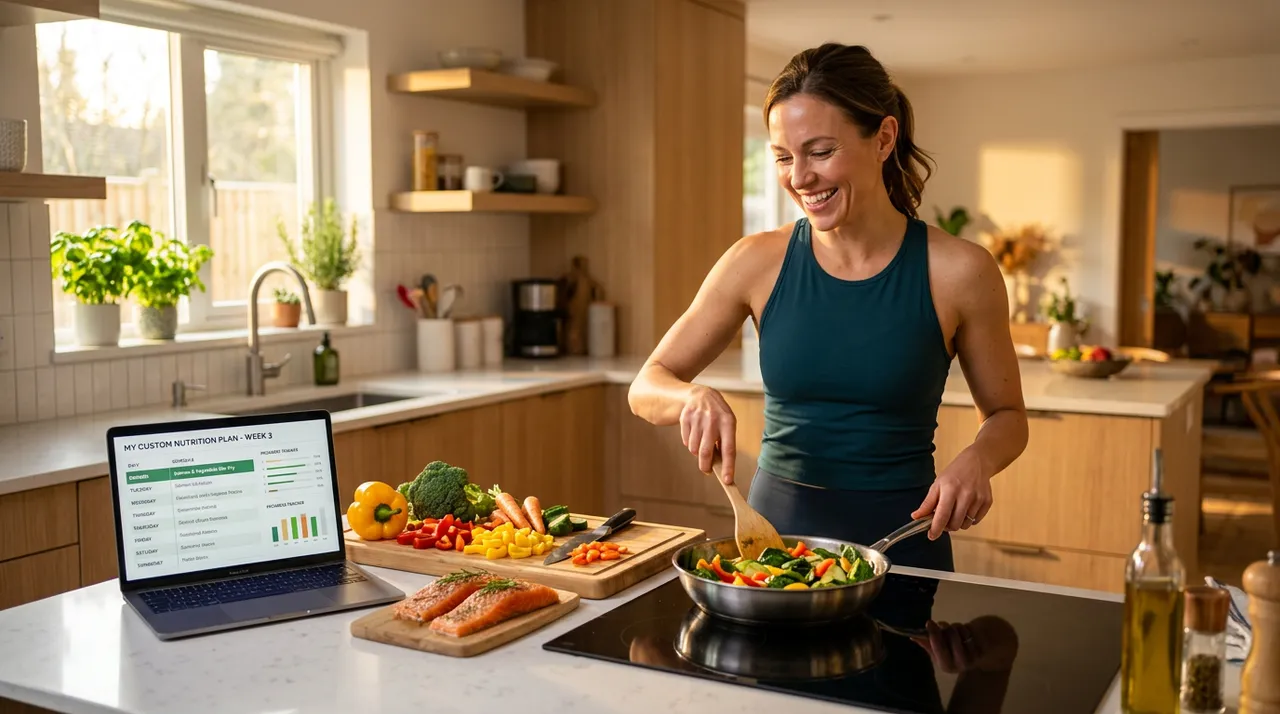
If you enjoy planning meals, feel confident about nutrition and only need a few fresh ideas, you may not need much support. But if food feels confusing, inconsistent or emotionally loaded, a personalised approach can save time, reduce stress and help you make steadier progress.
It can also be especially worthwhile if you have tried multiple plans before and struggled to maintain them. Often, that is not because you lacked willpower. It is because the plan was not built for your life.
The value is not only in what to eat. It is in having a clearer path, fewer daily decisions and support that feels aligned with your goals instead of fighting against your routine.
The best meal plan is not the strictest or the most impressive. It is the one that helps you feel better and keeps working on ordinary Tuesdays.
That might mean repeating simple lunches, relying on easy staples during stressful weeks or choosing progress over precision. A personalised meal plan online should give you structure without making food feel like another source of pressure. It should support your wellbeing, not take over it.
If you have been stuck between wanting to eat better and not knowing how to make it realistic, taking the first step towards personalised support can bring a surprising amount of clarity. Sometimes what changes everything is not more effort. It is having a plan that finally fits.