Subscribe to Our Newsletter
To get the latest tips and news to support your well-being journey!
Find the right specialist for youFind a Specialist


Each of us has wondered, much like you have, how it is possible that, despite being the generation with more communication tools than any other in history, night can still arrive with an emptiness in our chest that keeps us from falling asleep. We have hundreds of virtual friends, connected through smartphones and receive dozens of daily notifications about their lives. And yet, behind this seemingly perfect facade, many of us are fighting an invisible battle: we feel profoundly, painfully alone. And when isolation continues for too long, both the mind and the body begin to suffer in very real ways. Loneliness can gradually transform from a passing feeling of sadness into a genuine mental health crisis.
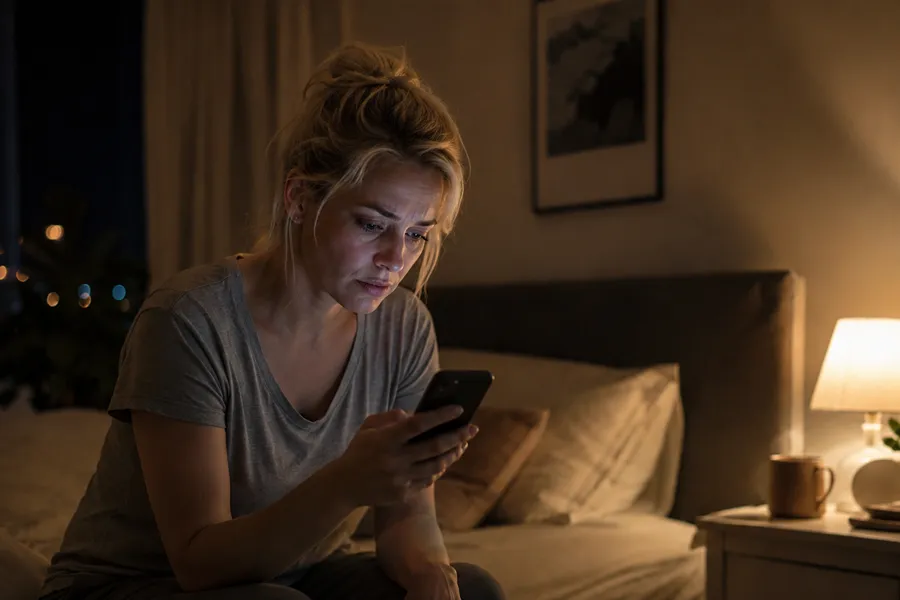
I could fill entire pages describing the psychological and mental changes that can occur when you experience prolonged loneliness: how it can contribute to anxiety, hypervigilance, panic attacks, clinical depression, sleep disturbances and exhaustion, emotional burnout, declining self-esteem, cognitive distortions, and addictive or compulsive coping behaviors. I could also explain the mechanisms that can lead us there. Our mental state influences the hormonal and physiological processes taking place in our bodies, and over time, this can begin to affect our physical health, little by little. So instead, I want to tell you something even more fascinating: prolonged loneliness may influence the way our bodies function at a biological level, including through epigenetic mechanisms, and may contribute to physical illness.
You may think that anxiety or loneliness are simply mental states, things that happen exclusively inside our heads. Modern science tells us something much deeper: prolonged stress can reach all the way into our cells and influence the way our genes are expressed. This field is known as epigenetics.
That is one reason why, after a long period of loneliness or chronic stress, you may feel as though your internal “fear thermostat” has become completely dysregulated. Small things can trigger disproportionately intense reactions, sometimes resembling a panic response. Your body may have become biologically conditioned to perceive danger almost everywhere. But these changes are not necessarily permanent. They can develop in response to a stressful or threatening environment and our biology also has the capacity to adapt when the environment changes.
Research in neuroscience suggests that psychotherapy and authentic human connection can influence the biological systems involved in stress regulation. When you feel safe with another person, when you feel seen, heard, and understood, your nervous system can gradually begin to move out of a state of chronic threat.
The therapeutic relationship can help reopen, little by little, the pathways toward calm and safety within your biology. Therapy does not simply change thoughts. It can also help change the way your body responds to life. And so, there is a powerful antidote that does not come in the form of a pill.
Authentic human connection can be deeply therapeutic.

You know that moment, usually in the evening, when the house becomes quiet and your thoughts suddenly begin racing in every direction? That is not necessarily just boredom. It can be your body entering a state of heightened alertness.
From an evolutionary perspective, prolonged social isolation has often been interpreted by the brain as a potential threat. In our distant past, being separated from the group could have meant being left without protection or resources. Human beings evolved as deeply social creatures and our nervous systems remain highly sensitive to the presence (or absence) of connection.
When you feel isolated, your stress-response system can become more active, involving hormones such as cortisol and adrenaline and keeping you more vigilant. If this state continues for months or years, the wear and tear can be profound.
Constant alertness can gradually turn into the persistent anxiety that tightens your chest, panic attacks, or depressive episodes in which even the simplest things feel exhausting.
Loneliness can drain the body while keeping the mind trapped in a vicious cycle: the more isolated we feel, the more threatened we become; the more threatened we become, the harder it can be to reach out and reconnect.
You might say to me: “But I talk to people every day. I chat with them, leave comments, see what everyone else is doing!” I understand completely. But our biological brains are not satisfied by a screen alone. We need something much deeper: we need to experience the presence of another human being.
A text message cannot fully replace the warmth of a voice, the way someone's eyes light up when they listen to you, or that quiet sigh of relief you experience when you realize that someone truly understands you without judging you. Social media can give us the appearance of connection while leaving us, in reality, emotionally hungry. We can be surrounded by digital interactions and still feel profoundly alone.
Even if relationships are what hurt you, healing will rarely come through isolation. No self-help book read alone in a room can fully replace the transformative experience of a genuine human connection, accompanied by another perspective on the reality you are living. We need another human being to help us feel safe again.
This is one of the ways an authentic relationship can support healing within a therapeutic space. A therapist is not simply a friend who pats you on the shoulder and tells you to keep going.
A therapist is a trained professional, equipped to explore the underlying causes of your difficulties and to use appropriate therapeutic approaches that take your unique personality, history, needs, and circumstances into account.
The goal is not simply to identify the problem, but to help you understand it, work through it, and find a way forward.
But before being a professional, a therapist is also a human being, a person capable of meeting you with empathy, presence and genuine understanding. And that makes possible one of the most sophisticated things human beings can experience: an authentic connection between two people. Something no social media platform can truly replicate. And something even artificial intelligence cannot replace: the lived experience of being genuinely present with another human being.

• Regulate together
Our nervous systems are deeply influenced by the people around us. When you are with someone who is calm, present, and genuinely attentive, your body can receive the signal that it is finally safe enough to lower its guard. Your heart rate may slow, your breathing may deepen, and your body can gradually move out of a state of constant vigilance.
• Rewrite painful stories
Loneliness can make us believe that something is fundamentally wrong with us. When we finally experience genuine human connection, our deepest fears can begin to lose their intensity. They become more manageable, easier to hold, and less powerful. We begin to discover that the story we have been telling ourselves about who we are may not be the whole truth.
• Learn to breathe again
Connection can help bring us out of the endless loop of our own thoughts.
It can help us step away from catastrophic scenarios, interrupt the mental noise and return to the present moment.
Perhaps one of the most beautiful possibilities of the world we live in today is that human connection no longer has to depend on physical distance. Online therapy is proof that the screens that so often isolate us can also become bridges toward support and healing. It all depends on how we choose to use them. You do not have to fight through traffic or walk into an unfamiliar office. You can sit comfortably on your own sofa, in the space where you feel safe and allow yourself to enter a meaningful therapeutic connection. On the other side of the screen, there is not only a trained professional ready to accompany you. There is also an entire team working to make that space as safe, supportive and trustworthy for you as the sofa you are sitting on. Emotional presence can travel beyond the glass of a screen.
You were never meant to carry the weight of the world entirely on your own. Asking for help and seeking connection is not a weakness. It is human. It is normal. It may be one of the most natural things we can do and it can be the first step back toward the life you remember, the life you might simply call HOME.
Connection means together. And togetherness is where loneliness begins to end.
“I’m completely exhausted.” It is a phrase we hear more and more often these days. We live in an era of extreme productivity, where tiredness has become second nature. Yet when this state persists, many of us make a critical mistake in self-assessment: we confuse physical exhaustion with burnout. Although they may look similar on the surface, psychologically they are two distinct states. And if you apply the wrong solution, you risk deepening your distress even further.
Here is why the difference matters and what you need to do in each situation.
The battery is at 0%, but you still want to keep going. Exhaustion, in this context, is insufficient or completely depleted energy. It can occur when you have worked intensely, managed a demanding project, lost sleep, or gone through a period of acute stress.
How does it feel?
Your body feels heavy, your mind seems foggy, but your underlying motivation remains intact. You still enjoy what you do, you believe in your goals, but you simply no longer have the biological fuel to continue.
The defining sign
Hope. An exhausted person knows that if they could sleep for an entire weekend or take a week-long vacation where they could truly disconnect, they would return to work refreshed and with renewed energy.
The solution
Physical rest, quality sleep, proper nutrition, and complete disconnection for several days. Recovery is direct.
The engine has not only burned out; you no longer believe in the destination. According to the World Health Organization, burnout is not simply heightened tiredness, but a complex occupational syndrome defined by three dimensions: extreme exhaustion, cynicism (detachment that can progress to apathy toward the job), and a sense of inefficacy (the feeling that nothing you do matters anymore).
How does it feel?
Burnout is a qualitative and existential crisis. Even if you sleep ten hours a night or take an extended exotic vacation, you may return feeling just as empty inside. A profound apathy can emerge.
The defining sign
Cynicism. Thoughts such as these begin to appear: “Why should I keep doing this? No one cares anyway. Everything is pointless.” You lose your connection with your values and with the meaning of your work.
The solution
Passive rest does not work here. Burnout requires reassessing and restructuring certain habits: learning to set firm boundaries, reassessing your personal values, and separating your identity as a human being from your professional performance.

If you are experiencing burnout and treat it as simple exhaustion, you may return from vacation straight into the same pattern of over-responsibility that has become toxic for you. When you see the exhaustion return after only two days of work, you may experience a profound sense of personal failure and the false belief may emerge that the problem is you.
Exhaustion can be restored through rest. Burnout requires redefining the relationship you have with yourself, with yourself in relation to others, and with your work. As specialists, we understand that people who reach burnout often also carry a history of triggers rooted in past trauma or difficult experiences that can contribute to this pattern.
If vacations no longer work and you have entered the territory of cynicism, your body may be trying to tell you that it is time for a deeper change. You do not have to go through this alone. Psychotherapy, even online, directly from the comfort of your own space can provide a safe environment where we can begin rebuilding these boundaries, piece by piece.
The hidden cost of permanent availability: digital anxiety in modern life
Wow! The technological power condensed into the palm of each of our hands has set us free! We can work from anywhere, solve problems regardless of where we are and remain just one click away from clients, colleagues, or friends. All these conveniences, extremely valuable to society as a whole come with an invisible, but very high cost to each individual’s mental health: digital anxiety.
Driven by our desire for efficiency and competitiveness, and “helped” by our devices, we have become permanently available. And the price we pay for this “luxury” is an overworked nervous system, locked in a continuous state of alert.
Digital anxiety is not simply tiredness caused by spending too much time on your phone. It is a state of hypervigilance and overwhelm triggered directly by the dynamics of our online interactions. It can manifest through several subtle but highly harmful behaviors:
Background Vigilance (Notification Micro-Stress)
Even when your phone is lying face down, part of your brain remains on alert, waiting for the next email, message, or piece of feedback. Every sound or vibration can trigger a micro-release of cortisol, the stress hormone.
Fear of Being Disconnected (Nomophobia and FOMO)
The acute feeling of vulnerability or isolation that appears when you do not have access to the internet or when your battery drops below 10%. You feel that if you are not connected, you are missing something vital or failing in your responsibilities.
Artificial Urgency
The internal pressure to respond instantly to every message or email, even outside working hours, turning your free time into an extension of your job.
From a neurobiological perspective, the human brain was not designed to remain connected 24/7 to problems that never end. In the past, a workday ended when you left the factory or office, and with it ended the amount of work and problems assigned to that day. Today, the office has moved into our pockets, work is permanent and new problems will obviously never stop appearing.
When you are always available, your nervous system never fully relaxes. The transition from a state of alertness (the sympathetic nervous system) to rest and digestion (the parasympathetic nervous system) becomes increasingly difficult. Decision fatigue appears when the uninterrupted flow of information and choices exhausts the cognitive resources of the prefrontal cortex. Sleep can also suffer because screen light and digital rumination before bedtime can interfere with melatonin production, leaving you waking up tired from the very first hour of the morning.
Healing digital anxiety does not mean deleting your accounts or moving to the forest. It means learning to establish firm boundaries between yourself and technology while protecting your mental space.
Here is what you could do:
Set a “digital stretching” hour. Turn off all work-related notifications after a certain hour in the evening (for example, 7:00 p.m.). The world will not stop existing if you respond the next morning.
Create technology-free zones. The bedroom and the family dining table should be sacred spaces where phones are not allowed.
Replace the automatic reaction with a deliberate pause. When you receive a notification, take a deep breath for a second before reaching for your phone. Ask yourself first: “Is this really an emergency, or is it simply a habit?”
Being unavailable from time to time is not an act of selfishness, professional indifference, or lack of competitiveness. It is a genuine sign of respect for your own mental health. And do not forget: your mental health is what allows you to remain empathetic, professionally focused and, above all, competitive!
If you feel that your phone, beyond being a work tool, has become a constant source of agitation in your chest, remember that help is only one click away. In online therapy, we use the screen not to create more noise, but to rebuild a safe space of quiet, where you can learn how to disconnect from the network in order to reconnect with yourself.

Your email address will not be published. Required fields are marked *