Subscribe to Our Newsletter
To get the latest tips and news to support your well-being journey!
Find the right specialist for youFind a Specialist


Private therapy in the UK typically cost £80-£100 per hour in person, which puts consistent weekly sessions out of the reach for many. Online therapy has closed that gap: qualified UK therapists now offer sessions from around 20£-80£, delivered by video, phone, or secure messaging — and research since 2015 consistently shows online therapy is as effective as in-person therapy for anxiety, depression, and most common health concerns. This guide covers what affordable online therapy in the UK actually costs, how to tell whether a practitioner is properly qualified, how the main options compare, and how to choose the right one for your situation.
This isn't a watered-down version of support. When delivered by trained, accredited professionals, therapy online offers the same rigour as in person therapy. Sessions follow the same structure, ethical codes, and confidentiality standards you would expect from any counselling room. The only difference is the medium.
People seek online counselling for a wide range of reasons: anxiety and depression, chronic stress, burnout, relationship difficulties, work pressure, grief, low mood, mood swings, and long-term habit change around sleep, exercise, or nutrition. Online therapy is effective for a wide range of mental health issues including anxiety and depression, but it also supports people navigating everyday life challenges that don't always fit neatly into a clinical category.
SympathiQ is a digital wellness platform that connects people with vetted therapists, coaches, dietitians, and fitness specialists for pay-per-session online support. Whether you need clinical mental health support or preventive wellness guidance, you can browse practitioner profiles, filter by issue and modality, and book a session without any long-term commitment.
If you're unsure whether this kind of support is right for you, keep reading. The sections below cover how online therapy compares to face to face counselling, what a typical session looks like, what it costs, and how to find the right support for your situation.

Research since around 2015 has consistently shown that online therapy is as effective as in-person therapy for many common mental health conditions. A 2024 meta-analysis covering 54 randomised controlled trials with over 5,400 participants found that remote cognitive behavioural therapy delivered results comparable to traditional therapy delivered face to face. A separate 2025 longitudinal study measuring the therapeutic relationship found no significant difference in alliance ratings between online and in person settings.
The similarities between the two formats are more striking than the differences:
Session length: usually 50–60 minutes in both settings
Professional standards: therapists hold the same qualifications and register with the same professional bodies (BACP, UKCP, HCPC)
Confidentiality: identical ethical codes apply whether you meet on screen or in a consulting room
Therapeutic approaches: the same modalities - CBT, person-centred, integrative counselling - are used in both formats
Where online therapy stands apart is convenience. Online therapy eliminates commute time and scheduling hassles. There is no waiting room, no travel, and no time lost in transit. Online therapy offers flexible scheduling compared to in-person sessions, with many therapists offering early morning, lunchtime, and evening slots. You also gain access to therapists outside your immediate area, which is particularly helpful if you live somewhere with limited local options.
That said, in person therapy may still be preferable in certain situations - for example, if you are in an acute crisis, at high risk, or simply lack a quiet private space at home. Some therapeutic approaches, such as certain trauma-focused methods, can benefit from the embodied presence of a physical room.
A balanced approach works well for many people: some combine online sessions with occasional face to face counselling over the course of their therapeutic journey. The point is to find what works for you.
Online therapy comes in several formats: video counselling, phone sessions, live chat, and secure asynchronous messaging. Each has its strengths, and the right choice depends on your circumstances, preferences, and what you are working through. Online therapy requires a reliable internet connection and a private space to speak freely - beyond that, the format is flexible.
Video therapy sessions are the closest format to traditional in person therapy. You see the therapist's face, pick up on expressions, and build rapport visually. Video sessions work well for relational work, processing difficult emotions, and any approach where body language matters. Most video therapy sessions last 50 minutes and follow the same structure as a standard counselling room appointment.
Phone sessions are a strong alternative when internet bandwidth is unreliable, when being on camera feels uncomfortable, or when a person simply prefers talking without the visual element. Many therapists offer phone sessions alongside video, and research confirms they remain effective for working through anxiety, depression, and stress.
Secure messaging and text based therapy suit people with busy schedules or those who process their thoughts more clearly through writing. These formats require clear agreements about therapist response times and boundaries. They are not ideal for crisis work or situations requiring immediate support, but they can complement regular counselling sessions well.
Online therapy can feel more discreet and private than visiting a therapist's office. Virtual sessions offer higher privacy for clients wishing to avoid physical clinics - there is no chance of bumping into someone you know in a corridor. On SympathiQ, different practitioners may offer one or several of these formats, and you can filter by your preferred session type when browsing profiles.

The delivery method - online versus in person - is separate from the therapeutic approach the therapist uses. Within online therapy, practitioners draw on a range of evidence-based therapeutic approaches tailored to each client's needs. Here are some of the most common:
Cognitive behavioural therapy (CBT): One of the most widely researched approaches. Cognitive Behavioral Therapy treats disorders like depression, generalised anxiety, panic, OCD, and PTSD. It focuses on identifying unhelpful thought patterns and replacing them with more balanced ones, often through practical exercises, thought records, and behavioural experiments. CBT translates well to online formats - worksheets and exercises can be shared on screen or via secure messaging.
Gestalt therapy: This approach highlights personal responsibility and present focus. Rather than analysing the past at length, gestalt therapy uses guided experiments - such as role-play or empty chair work - to bring awareness to what is happening in the here-and-now. It can work effectively over video with a therapist trained in adapting these techniques to a screen-based setting.
Person-centred counselling: This approach emphasises client autonomy in sessions. The counsellor listens without directing, creating a safe space for you to explore your values, feelings, and decisions at your own pace. It is often used for low self esteem, relationship issues, and adjustment to life changes.
ACT (Acceptance and Commitment Therapy): Combines mindfulness, acceptance, and value-based action. Particularly useful for chronic pain, anxiety disorders, and situations where avoidance or rumination are significant patterns.
Integrative therapy combines various therapeutic approaches for flexibility, drawing on multiple modalities depending on what a client needs at any given stage.
Dialectical Behavioural Therapy (DBT) is used for severe mental health issues, including borderline personality disorder and chronic emotional dysregulation.
Existential therapy focuses on self-actualization amid life's challenges, helping clients confront questions about meaning, freedom, and responsibility.
On SympathiQ, clients can filter by modality - for example, CBT, gestalt therapy, or integrative counselling - and by issue, such as burnout, panic attacks, social anxiety, or low self esteem, to find the right match for their specific challenges.
Your first session typically begins with an exploration of your current concerns, your life situation, your mental health history, and what you hope to get from therapy. Initial online therapy sessions discuss goals and concerns - not to lock you into a rigid plan, but to give both you and the therapist a shared starting point. A good counsellor will also explain their style, outline boundaries, and talk through practical matters like cancellation policies.
From there, most people settle into weekly or fortnightly sessions of around 50 minutes, though frequency and duration can vary depending on the specialist and the type of work you are doing. Some therapy sessions may run longer for couples work or trauma processing.
A few practical steps make a real difference to your experience:
Test your internet connection before each session
Choose a quiet, private room - a confidential space where you can talk openly
Use headphones for extra privacy
Keep water and tissues nearby
Minimise distractions - close other tabs, silence your phone
Therapists listen, reflect, and guide. They do not hand out generic advice or make decisions for you. Their role is to help you develop insight, process difficult emotions, and build skills you can carry into everyday life. They will not offer quick fixes, and progress takes time - but 92% of clients report improved wellbeing within six sessions, which suggests that meaningful change can begin early.
On SympathiQ, you can book, reschedule, and pay per session online. If you feel the therapeutic relationship is not the right fit, you can switch practitioners without friction. Finding the best therapist for your needs sometimes takes more than one try, and that is completely normal.

Mental health care in the UK is structured across several pathways: nhs talking therapies (formerly known as IAPT), charities that offer counselling, and private therapy. Understanding the differences helps you find the right support faster.
NHS Talking Therapies are free at the point of use and primarily serve adults with mild to moderate anxiety and depression. NHS Talking Therapies can be accessed for free, and in many areas you can self refer without needing a GP appointment. These are genuine free mental health services - no charge at any stage. However, iapt services typically involve eligibility criteria and waiting lists. In some regions, waits stretch to six weeks or significantly longer, sometimes four to eight months depending on demand. NHS services increasingly include digital therapy options and online therapy programmes delivered by phone or video, but choice of therapist and modality is usually limited.
Organisations like Anxiety UK and other charities also offer counselling for specific mental health conditions, sometimes at reduced rates. Some provide self help resources alongside structured talking therapies, and many offer support for issues including sexual abuse, trauma, and bereavement.
Private therapy gives you more control. You choose the therapist, the modality, the schedule, and the session length. Access is usually faster - often within days rather than weeks. Private therapy in the UK can reach £80 or £100 an hour for in person sessions, which puts it out of reach for some. But online therapy service options tend to bring costs down, as we cover in the next section.
SympathiQ sits in the private, pay-per-session space. It complements NHS mental health services by offering faster access, broader choice, and flexible scheduling. It does not replace emergency or crisis services. If you need immediate help - for example, if you are experiencing active self-harm plans or psychosis - contact emergency services or a crisis helpline.
Cost is one of the biggest barriers to accessing quality therapy. In person therapy typically costs between £80 and £100 per session. For many people, that is simply not sustainable on a weekly basis.
Online therapy is often more affordable than in-person sessions. Without the overheads of a physical consulting room, many online therapists pass savings on to clients. Online therapy costs often range from £20 to £80 per session, and many online therapy sessions start at £36 in the UK. Online therapy is often less than half the cost of traditional therapy, making affordable online therapy a realistic option for more people.
Here is how the numbers typically break down:
Format | Typical UK Cost (per session) |
|---|---|
NHS Talking Therapies | Free |
Online therapy (private) | £20–£80 |
In person private therapy (outside London) | £50–£90 |
£90–£150 |
SympathiQ's approach to pricing is straightforward: fees are listed on each practitioner's profile, there is no subscription lock-in, and you pay per session. This makes it easy to compare options and find sessions that fit different budgets.
Think about what frequency you can realistically afford. Weekly sessions deliver the strongest momentum, but fortnightly appointments still provide consistent mental health support if budget is a concern. It is also worth checking whether your workplace wellbeing budget, Employee Assistance Programme, or private health insurance covers some sessions. Many clients, however, prefer paying privately for the simplicity and privacy it offers.
Prices depend on therapist seniority, specialism, and format. Trainee practitioners under supervision can offer sessions from £25–£45. Reduced-fee slots are also available through charities like Anxiety UK and via placement schemes.
Ways to lower the cost further:
- Fortnightly instead of weekly sessions maintain progress at half the monthly spend.
- Employee Assistance Programmes (EAPs) usually cover 4–6 sessions per year.
- Private health insurance (Bupa, AXA, Vitality, WPA, Aviva) covers therapy with pre-authorisation.
- Some therapists offer sliding-scale fees on request — worth asking.
Online therapy can support adults dealing with anxiety and depression, stress, relationship difficulties, grief, burnout, and life transitions. But the people who benefit most are often those for whom traditional therapy was logistically difficult in the first place.
Consider a few everyday examples:
A remote worker dealing with isolation and social anxiety who has no nearby therapists specialising in their concerns
A new parent managing sleep deprivation, low mood, and the emotional weight of a major life change
A manager experiencing burnout who cannot take time away from the office for midday appointments
Someone in a rural area with no local mental health services within reasonable distance
Online therapy removes geographical barriers, making it ideal for those in remote areas. Teletherapy allows individuals to connect with mental health professionals regardless of their physical location. Technology-based solutions help overcome geographical and logistical barriers to care, and online therapy reduces common barriers to entry like mobility constraints and busy schedules. Clients can access therapy from the comfort of their home - which, for many, is the difference between getting help and not.
Online therapy is particularly effective for conditions like anxiety and PTSD. It also supports people working through low self esteem, difficult emotions, grief, and the kind of mental health challenges that build up gradually rather than arriving in a single crisis.
For young people and children, different support routes exist. CAMHS (Child and Adolescent Mental Health Services) and school counsellors provide age-appropriate care. Online therapy for under-18s requires specialist practitioners and parental involvement where necessary. Many therapists on platforms like SympathiQ work with young people, but safeguarding protocols are stricter and should be verified.
Online therapy is not suitable for immediate crisis situations. If someone is experiencing active self-harm intent, psychosis, or a medical emergency, they should contact emergency or crisis services for immediate support rather than booking an online session.

Finding the right therapist matters more than finding the cheapest or most available one. Here is what to look for:
Credentials and registration. In the UK, check that the practitioner is registered with a recognised body. The main ones include:
BACP (British Association for Counselling and Psychotherapy)
UKCP (UK Council for Psychotherapy)
HCPC (Health & Care Professions Council)
BABCP (for CBT specialists)
BPS (British Psychological Society)
Registration with one of these professional bodies means the therapist meets training, ethical, and supervision standards. Look for additional training in online counselling delivery, which covers technology, privacy, and risk management in remote settings.
Relevant experience. Check that the practitioner's professional background includes experience with your main concerns - whether that is trauma, social anxiety, workplace burnout, eating patterns, or sexual abuse. Many therapists list their specialisms clearly on their profile.
Profile transparency. A good profile should display specialisms, therapeutic approaches used, languages spoken, session fees, availability times, and cancellation policies. The more upfront information, the better.
On SympathiQ, all therapists and wellness specialists are vetted before joining the platform. Many receive ongoing supervision to ensure quality therapy standards are maintained. You can filter practitioners by issue, modality, and availability to narrow your options quickly.
Book an initial consultation as a fit check. Your first session should help you feel heard and safe. You should be able to ask questions about the therapist's style, their boundaries, and how they typically work. If you don't feel comfortable, it is perfectly reasonable to try a different person. The goal is a therapeutic relationship where you can talk openly and work through what matters to you.
There is no single "best" — the right platform depends on what you need. Here are the criteria that actually matter and how the main UK options handle each:
SympathiQ's approach: every practitioner is vetted for accreditation and insurance before joining. Fees are shown on the profile, you pay per session with no subscription, you can switch practitioners at any point, and every session is booked with a UK-registered specialist. Browse UK therapists on SympathiQ or see session prices
Criteria | What to look for | |
|---|---|---|
Practitioner vetting | UK accreditation with BACP, UKCP, HCPC, BABCP or BPS — verified before listing, not self-declared | |
Session format | Video, phone, secure messaging — with per-session choice | |
Price transparency | Fees shown up-front on each profile, no subscription lock-in | |
Booking flexibility | Pay-per-session, ability to switch practitioners without friction | |
Specialism filtering | Filter by issue (anxiety, depression, burnout, trauma), modality (CBT, EMDR, integrative), and language | |
Response time | Time from enquiry to first available session | |
Data protection | UK GDPR compliance, ICO registration, end-to-end encrypted video | |
Here is how to begin your therapeutic journey on SympathiQ:
Create a free account. Sign up takes a few minutes. No payment is required until you book your first session.
Complete a brief wellbeing questionnaire. This helps you clarify what kind of support you are looking for - mental health therapy, coaching, diet and nutrition guidance, or fitness coaching.
Browse practitioner profiles. Filter by issue (anxiety, burnout, nutrition, low mood), modality (CBT, gestalt therapy, person-centred), and availability. Each profile lists the practitioner's professional background, fees, and the formats they offer counselling in.
Book a session. Choose an available slot, pay securely per session, and receive confirmation with clear instructions on how to join the video call.
Attend your session. Find a private space, connect your headphones, and join. Your therapist will guide the initial consultation and agree next steps with you.
SympathiQ's design reflects a few principles that matter:
No long-term contracts - pay per session, pause or stop whenever you want
Global access to vetted specialists across mental health, coaching, nutrition, and fitness
Digital tools that support habit tracking and long-term personal development between sessions
Flexibility to switch - if your first counsellor or coach isn't the right fit, you can try another
Whether you are looking for an online therapy service to address anxiety, a coach to help with burnout, or a dietitian to improve your eating habits, the platform brings together specialists who can offer the right support for where you are now.
Starting therapy does not require a perfect moment. It does not require a waiting room or a referral letter. 95% of clients feel more comfortable starting therapy online, and 92% of clients report improved wellbeing within six sessions. Seeking online counselling is a meaningful first step on the right path toward better mental health and overall well being - and that support is accessible from home, work, or anywhere with a secure internet connection.

Is my data private and secure during online therapy?
Yes. Reputable online therapists and platforms use end-to-end encrypted video and messaging tools. SympathiQ uses secure platforms that meet data protection standards, ensuring your sessions remain in a confidential space. Your therapist is bound by the same ethical codes as any in person practitioner.
How much does online therapy cost in the UK?
UK online therapy typically costs £20–£80 per session with private, qualified therapists — significantly less than the £80–£150 typical of in-person private sessions in the UK. Trainee practitioners under supervision offer reduced-fee sessions from around £25–£45. NHS Talking Therapies are free but usually involve a waitlist of six weeks to six months.
What is the cheapest online therapy in the UK?
The cheapest option is NHS Talking Therapies, which is free. If NHS waitlists are too long, low-cost private options include trainee therapists (£25–£45), charity-affiliated counselling (Anxiety UK, Mind), and Employee Assistance Programmes through your employer (usually 4–6 sessions/year). Sliding-scale fees are also available from many private therapists on request.
Is online therapy as effective as in-person therapy?
Yes, for most common concerns. A 2024 meta-analysis covering 54 randomised controlled trials with over 5,400 participants found remote CBT produces results comparable to face-to-face therapy for anxiety, depression, and stress. In-person therapy may still be preferable for acute crisis, high-risk situations, or certain body-based trauma approaches.
How do I know if an online therapist is properly qualified in the UK?
Check they are registered with a recognised UK body: BACP (British Association for Counselling and Psychotherapy), UKCP (UK Council for Psychotherapy), HCPC (Health & Care Professions Council), BABCP (for CBT specialists), or BPS (British Psychological Society). Registration means they meet training, ethical, and supervision standards. On SympathiQ, every practitioner's accreditation is verified before they can join.
Can I get online therapy for anxiety in the UK?
Yes. Anxiety is one of the most researched applications of online therapy, with strong evidence for CBT-based approaches delivered by video. UK online therapists specialising in anxiety typically charge £40–£80 per session, offer both weekly and fortnightly options, and many have same-week availability.
Which is the best online therapy platform in the UK?
There isn't a single best — it depends on your needs. Compare platforms on practitioner accreditation, session format flexibility, price transparency, no-lock-in pricing, and how well their filters match your specific issue. Ask: can you see the therapist's exact fee before booking? Can you switch practitioners without penalty? Do they filter by specialism? [See how SympathiQ compares](/specialists).
What happens if my internet connection drops during a session?
This happens occasionally. Most therapists will attempt to reconnect immediately. If the connection cannot be restored, they will typically reach out by phone to either continue or reschedule. It is worth having a backup plan agreed with your therapist before your first session.
What is the cancellation policy?
Policies vary by practitioner. On SympathiQ, each therapist's cancellation terms are listed on their profile. Most require at least 24 hours' notice to avoid a charge. Check this before booking.
How many sessions will I need?
It depends on what you are working through. Short-term CBT for a specific issue like panic attacks might take six to twelve sessions. Longer-term work - trauma, complex relationship patterns, deep-rooted low self esteem - can take several months. Your therapist will discuss a realistic timeframe during your initial sessions, and you are never locked in.
Can I switch therapist if the fit is not right?
Absolutely. Finding the best therapist for you sometimes means trying more than one. On SympathiQ you can browse other profiles and book with a different practitioner at any point. No awkward conversations required.
Is online therapy effective for anxiety and depression?
Yes. Multiple meta-analyses and clinical guidelines since the mid-2010s confirm that online therapy - particularly CBT delivered by video - produces outcomes comparable to face counselling for anxiety and depression. It is also effective for PTSD, stress-related conditions, and other common mental health conditions.
Can I use SympathiQ if I am outside the UK or travel frequently?
Yes. SympathiQ works across borders, allowing you to connect with specialists regardless of your physical location. Therapists still follow the licensing rules of their jurisdiction, so it is worth confirming this during your initial consultation. The flexibility of the platform makes it well suited for people who move between countries or work remotely.
What is the difference between therapy and coaching on SympathiQ?
Therapy addresses mental health conditions - anxiety, depression, trauma, and similar clinical concerns - and is delivered by registered therapists or counsellors. Coaching focuses on goal-setting, performance, personal development, and preventive well being. It is not clinical. If you are unsure which level of support fits where you are now, SympathiQ's support team can help you choose. Think of it this way: if you are struggling with difficult emotions, persistent low mood, or specific mental health challenges, therapy is the right path. If you want to build better habits, manage stress proactively, or develop professionally, coaching may be what you need.
If you are unsure which practitioner to choose, contact SympathiQ's support team. They can point you toward the right service for your situation - whether that is a therapist, coach, dietitian, or fitness specialist. The goal is simple: help you find the right support and start.
About this article. This guide is published by SympathiQ, a UK digital wellness platform connecting people with vetted therapists, coaches, dietitians and fitness specialists. Every practitioner on SympathiQ is checked for current accreditation with a UK-recognised body (BACP, UKCP, HCPC, BABCP, or BPS) and valid professional indemnity insurance before they can list. Statistics cited (session costs, effectiveness research, wait times) reflect publicly available UK sources as of 2026 and are reviewed annually. If you are in crisis, contact Samaritans on 116 123 (24/7, free) or call 999.
Last updated: 8 August 2026.

Your email address will not be published. Required fields are marked *

You do not usually wake up one morning and think, I am burnt out. It tends to arrive more quietly than that. You start dreading messages before breakfast. Small decisions feel oddly heavy. Rest stops feeling restorative, and even the things you used to enjoy begin to feel like tasks. At that point, an online burnout coach can be more than a convenient option - it can be the first form of support that actually fits around your life.
Burnout is often mistaken for ordinary stress, but the two are not the same. Stress can feel intense and unpleasant, yet still temporary. Burnout is what happens when pressure goes on for too long without proper recovery, support, or change. It can affect your energy, focus, sleep, motivation, confidence, and relationships. For many working adults, it also comes with guilt. You may know something is wrong, but still feel pressure to keep performing as if nothing has changed.

An online burnout coach helps you understand the patterns driving your exhaustion and supports you in changing them in a structured, realistic way. That can include workload habits, boundaries, perfectionism, people-pleasing, emotional overload, decision fatigue, and the constant sense that you should be doing more.
This is not simply about telling you to take a bath, go for a walk, or book annual leave. Good coaching looks deeper. It asks why recovery has become so difficult in the first place. It helps you notice where your energy is going, what your body has been signalling, and which expectations are no longer sustainable.
In practice, sessions often focus on a mix of reflection and action. You might look at your weekly rhythms, identify the moments that consistently drain you, and build new ways of working or living that feel possible rather than idealistic. You may also work on communication, especially if saying no, asking for help, or switching off after work feels harder than it should.
Because the support happens online, it is easier to fit into a packed schedule. You can speak to a coach from home, during a break, or around caring responsibilities. For many people, that reduced friction matters. When you are already exhausted, convenience is not a luxury - it is often the difference between getting help and putting it off again.
Burnout does not only affect senior executives or people in visibly high-pressure roles. It can affect parents, founders, teachers, healthcare workers, freelancers, managers, creatives, and anyone carrying too much for too long. It can also show up in people who seem highly capable from the outside.
An online burnout coach may be a good fit if you are functioning on paper but struggling underneath. Perhaps you are still meeting deadlines, yet everything feels harder than it used to. Perhaps you are snappy at home, disconnected from your own needs, or relying on caffeine, late-night scrolling, and sheer force of will to get through the week.
It can also suit people who want structured support but are not sure therapy is the right starting point. Coaching is often especially helpful when you want practical change, accountability, and a forward-looking plan. That said, it depends on what you are carrying. If your burnout is closely tied to trauma, severe anxiety, depression, or a mental health crisis, therapy or clinical care may be more appropriate, either instead of coaching or alongside it.
That nuance matters. Burnout support is not one-size-fits-all, and trustworthy platforms should make that clear rather than oversimplify the process.
This is one of the most common questions, and the honest answer is that it depends on your needs.
A therapist usually works with mental health symptoms, emotional history, deeper patterns, and psychological healing. An online burnout coach is more likely to focus on present-day habits, stress drivers, boundaries, recovery strategies, and sustainable change. There can be overlap, especially when a coach has a strong wellbeing background, but the purpose is different.
If you feel emotionally overwhelmed but stable, and your main goal is to stop running on empty and rebuild balance, coaching can be a strong option. If you are feeling persistently low, panicked, numb, or unsafe, a licensed mental health professional may be the better route. Some people benefit most from a holistic setup that includes both.
That is where integrated care becomes especially valuable. Burnout rarely sits neatly in one box. It can affect sleep, movement, nutrition, self-worth, relationships, and your ability to think clearly. Support works best when it recognises the whole person rather than only one symptom.
Not every coach who mentions burnout is equipped to support it well. The quality of the relationship, the structure of the process, and the coach's understanding of stress patterns all matter.
Look for someone who can explain how they work in clear terms. You should be able to understand what sessions involve, what kinds of goals they help with, and what is outside their scope. A good coach will not make dramatic promises or suggest they can fix everything in a few calls. Burnout recovery is rarely linear, and ethical support reflects that.
It also helps to find a coach whose style suits you. Some people respond well to gentle accountability and reflective conversation. Others want something more direct and practical. Neither is inherently better, but the fit can shape how safe and motivated you feel.
Privacy, scheduling flexibility, and ease of booking matter too, particularly when you are already stretched. A platform such as SympathiQ can make that process feel less overwhelming by bringing specialist discovery, secure booking, and ongoing support into one place. That simplicity can lower the barrier to taking the first step.
Burnout recovery is not usually dramatic at first. Often, the earliest changes are subtle. You may notice that your chest feels less tight on Sunday evenings. You start finishing work without carrying it mentally into the night. You become more aware of what drains you before you hit a wall.
Working with an online burnout coach should help you feel more resourced, not more judged. Over time, you may find it easier to make decisions, set limits, and recognise your needs without immediately dismissing them. You may also start measuring progress differently - not just by output, but by steadiness, clarity, and how sustainable your life feels.
That is an important shift. Burnout often trains people to value themselves only through productivity. Recovery asks you to build a healthier metric.
When you are exhausted, even small logistical hurdles can feel too much. Travelling across town, rearranging your day, sitting on a waiting list, or repeating your story to multiple providers may all be enough to delay support.
Online care removes much of that pressure. It gives you a private, flexible way to speak to someone without adding another draining task to your week. That does not make it lesser than in-person support. For many people, it makes support more consistent, and consistency is what creates change.
There is also something reassuring about being able to access help in the environments where burnout often shows up most clearly - your home office, your kitchen table, your normal weekday routine. The work becomes easier to apply because it is rooted in real life rather than separated from it.
Still, online coaching is not magic simply because it is accessible. It works best when you are ready to engage honestly, experiment with change, and give yourself permission to be supported.

A lot of people wait until they are completely depleted before seeking help. They tell themselves they should be able to handle it alone, or that someone else has it worse. That mindset is common, but it can keep you stuck for far longer than necessary.
You do not need to prove that you are struggling enough to deserve support. If your energy is low, your patience is thin, your motivation has fallen away, and rest no longer seems to help, that is already worth paying attention to. An online burnout coach can help you make sense of what is happening before it spills into every part of your life.
The most helpful starting point is often the simplest one: notice what feels unsustainable, and do not minimise it. Support does not have to come after a crisis. Sometimes it begins with the quiet decision to stop pushing past your own limits and start listening to them instead.

You might be ready to open up about burnout, anxiety, relationship strain or something you have not said out loud to anyone yet - and then one question stops you cold: is online therapy confidential? It is a fair concern. When support happens through a screen, privacy can feel less obvious than it does in a quiet therapy room.
The reassuring answer is yes, online therapy is confidential in much the same way as in-person therapy, but confidentiality is not absolute and it depends on the provider, the platform, and the situation. That nuance matters. If you know what to look for, you can choose support with far more confidence and focus on what actually brought you there.
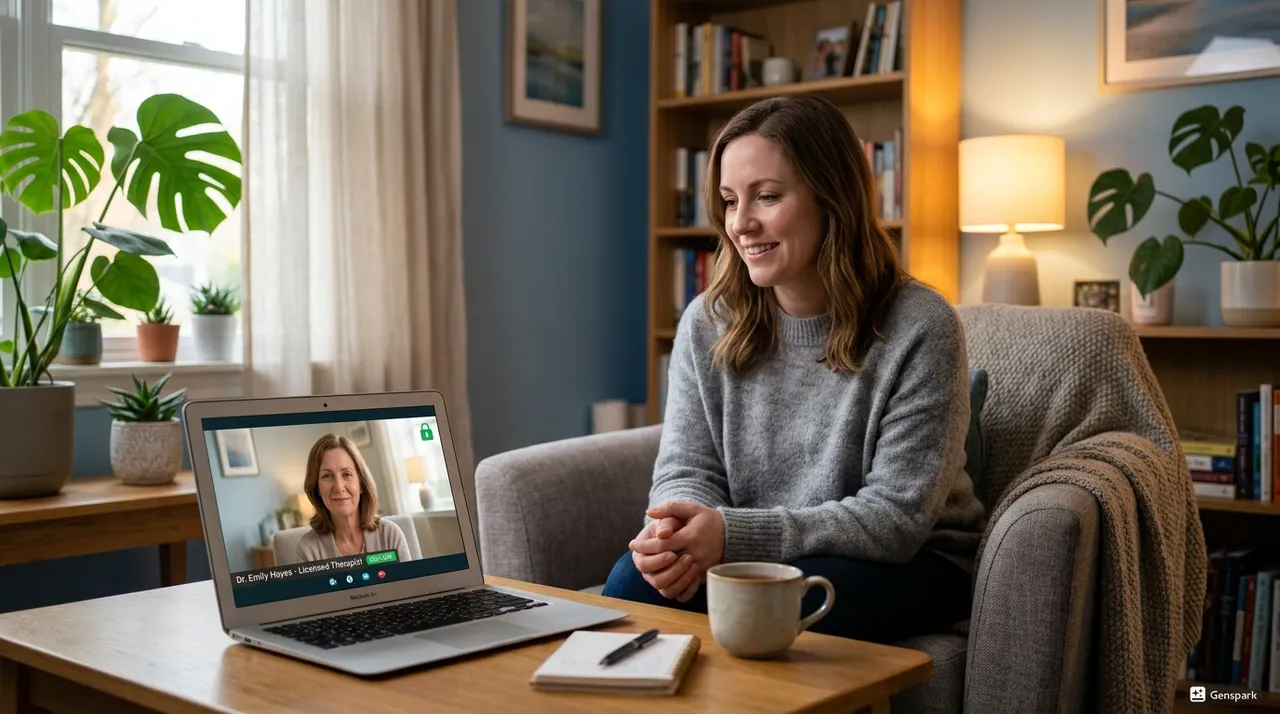
In practice, confidentiality means what you share in therapy is meant to stay between you and your therapist. Notes, session details, personal history and sensitive disclosures should be handled privately and stored securely. Whether your session takes place face to face or by video, the same ethical duty applies.
That said, online therapy adds a digital layer. Your privacy depends not only on your therapist's professional standards, but also on the security of the technology being used. A qualified therapist may be fully committed to confidentiality, yet a poor platform, weak passwords or a lack of privacy at home can still create risks.
This is why the better question is often not simply, "is online therapy confidential?" but "how is confidentiality protected, and where are the limits?" Once you understand those two parts, online support can feel much less uncertain.
If you are working with a legitimate therapist or specialist, confidentiality generally covers the content of your sessions, your contact details, your health or wellbeing information, appointment history, and any written messages or forms shared as part of care. Therapists are also usually careful about how records are stored, who can access them, and how they communicate with you.
For many people, online therapy can actually feel more private than travelling to a clinic. There is no waiting room, no chance encounter in reception, and no need to fit appointments around a public commute. For professionals with packed schedules or anyone worried about stigma, that discretion can make it easier to take the first step.
Still, privacy is strongest when both sides take it seriously. A secure platform helps, but so does having your session somewhere you cannot be overheard.
This is the part every ethical provider should explain clearly. Confidentiality is a core promise, but there are recognised situations where a therapist may need to share information.
Most often, this happens if there is a serious risk of harm to you or someone else, or if there are safeguarding concerns involving a child or vulnerable adult. A therapist may also have to disclose information if required by law or court order. In some settings, limited information may be shared with clinical supervisors to support quality of care, though that should still happen within professional confidentiality standards.
None of this is unique to online therapy. These limits exist in in-person therapy too. The difference online is that providers should explain them in plain language before you begin, usually through an agreement, privacy notice or onboarding process. If those limits are vague, hidden or overly broad, that is worth pausing over.
A trustworthy online therapy service should do more than offer video calls. It should be built to protect sensitive conversations and personal data from the start.
That usually includes encrypted communication, secure account logins, controlled access to records, protected payment systems, and clear privacy policies. Some platforms also separate administrative data from session content, keep audit trails, and give practitioners structured tools for record-keeping rather than relying on scattered emails and consumer messaging apps.
This is where platform choice matters. Not every video tool is designed for confidential care, and not every wellness marketplace handles privacy with the same level of care. If a service makes bold claims about confidentiality but says little about security, that gap is worth noticing.
At SympathiQ, for example, the emphasis on privacy and secure digital care is part of the overall experience rather than an afterthought. That matters when you are sharing personal information and want support to feel both human and well protected.
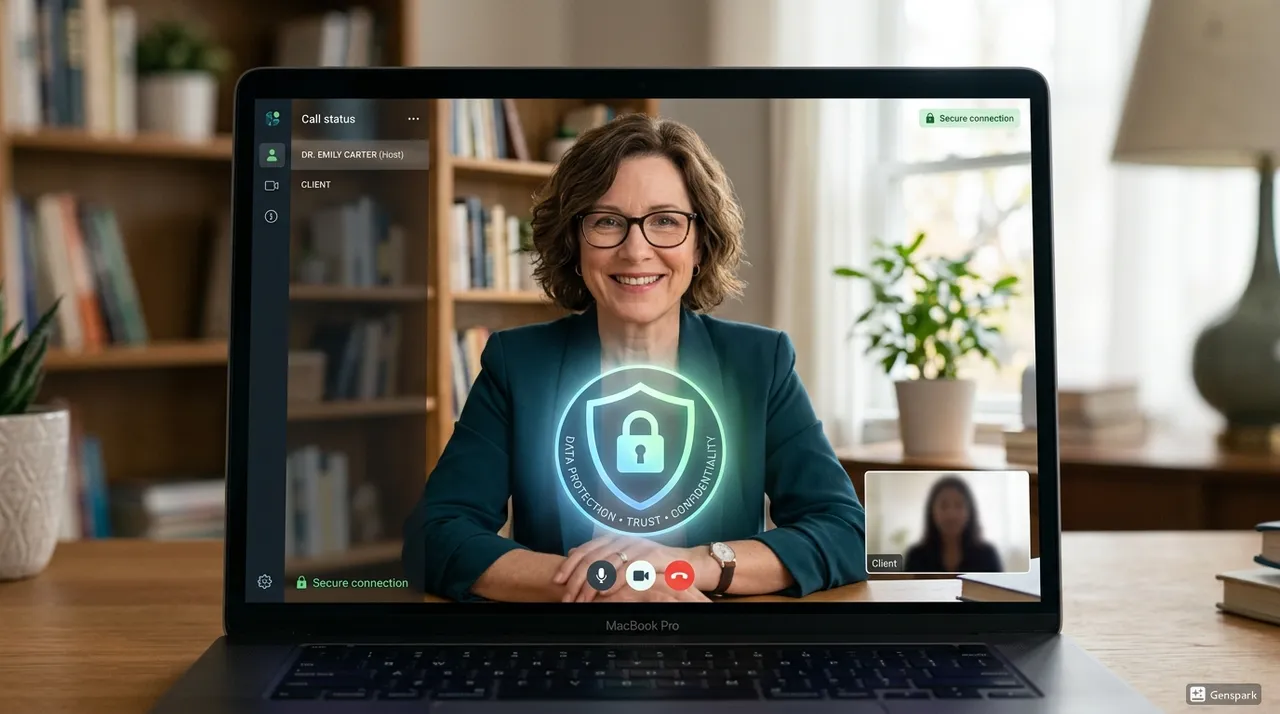
Most confidentiality worries focus on hacking or data breaches, but everyday issues are often more relevant. The biggest weak point is sometimes not the platform - it is the environment around the session.
If you are taking a call from a shared flat, parked car or office meeting room, someone may overhear more than you realise. Notifications can pop up on screen. A family member might walk in mid-session. Even using work devices can be risky if your employer has monitoring software or access controls in place.
There is also the question of communication outside the session. If reminders, invoices or follow-up messages arrive by email or text, think about who can access those devices. Shared tablets, unlocked mobile phones and synced inboxes can quietly reduce your privacy.
None of this means online therapy is unsafe. It means confidentiality is partly clinical and partly practical. A private room, headphones, a secure internet connection and a personal device can make a real difference.
You should not have to guess. A professional therapist or platform ought to be clear about how your information is handled.
Look for straightforward explanations about privacy, record storage and the limits of confidentiality. Check whether the therapist is properly accredited or registered with a recognised professional body. Notice whether the consent process feels careful rather than rushed. If you cannot easily find information about security, complaints, record keeping or emergency procedures, ask.
The way a provider answers matters. You are not being difficult by raising privacy questions. In fact, a good therapist will usually welcome them because informed trust is part of effective care.
You might ask how session notes are stored, what platform is used for video calls, who has access to your records, whether sessions are recorded, and what happens if there is a safeguarding concern. Clear, calm answers are a good sign. Defensive or evasive ones are not.
There is no simple winner. In-person therapy avoids some digital risks, but it introduces others, such as being seen entering a clinic or discussing appointments by phone in public. Online therapy reduces some of that exposure, yet relies more heavily on technology and your home setup.
For many adults, especially those balancing demanding work, family responsibilities or mobility barriers, online therapy offers a level of privacy and convenience that makes support more realistic. The session fits your life more easily, which can mean you actually stick with it. That consistency can be just as important as the format itself.
The real difference is not online versus in person. It is secure and well-managed versus casual and unclear.
If privacy is on your mind, a few small steps can help you feel more in control. Read the provider's privacy information before booking. Use a personal device rather than a work one. Choose a quiet space where you can speak freely. Wear headphones. Turn off smart speakers and notifications. If you are unsure about any part of the process, ask before the session starts.
That preparation does more than protect your information. It helps create the emotional safety needed for honest, useful conversations. When you are not worrying about who might hear you or where your data is going, it is easier to stay present.
Online therapy can be highly confidential when it is delivered by a qualified professional through a secure platform with clear privacy standards. It is not magic, and it is not risk-free, but neither is any form of care. What matters is transparency, good systems and the confidence to ask the questions that protect your wellbeing.
If you are considering support, you do not need to wait until every doubt disappears. You can take the first step by choosing a provider that treats your privacy with the same care as your progress - because feeling safe enough to speak is often where real change begins.