Subscribe to Our Newsletter
To get the latest tips and news to support your well-being journey!
Find the right specialist for youFind a Specialist


Stress rarely arrives as one dramatic moment. More often, it shows up as a shorter temper in meetings, a mind that will not switch off at 2am, or that low, constant feeling of being behind. An online stress management coach can help before that pressure hardens into burnout, exhaustion, or a life that feels narrower than it should.
For many adults, the problem is not knowing that stress is an issue. It is knowing what to do about it when work is full-on, family life is demanding, and the usual advice to “rest more” feels wildly out of touch. That is where coaching online starts to make real sense. It brings structured support into your week without adding another commute, another waiting room, or another thing to organise.
 What an online stress management coach actually does
A good coach helps you understand your stress patterns, not just talk about how busy you feel. That might include spotting the triggers that push you into overwhelm, recognising physical warning signs earlier, and building practical ways to respond before things escalate.
This is not about forcing a perfectly calm lifestyle that only works on holiday. It is about creating strategies that fit your real routine. If your hardest moments happen before school drop-off, during back-to-back calls, or late at night when your thoughts start racing, support should be shaped around that reality.
An online stress management coach may work with you on boundaries, workload habits, emotional regulation, sleep routines, communication, confidence, or recovery after periods of high pressure. In some cases, stress is tied closely to burnout, people-pleasing, conflict, or a sense that you have lost control of your own time. Coaching can help make those links clearer.
It is also worth saying what coaching is not. It is not a replacement for medical care, and it is not always the right fit for severe or acute mental health concerns. Sometimes the best support is therapy, GP care, or a more integrated plan. The right practitioner will be honest about that.
Stress has a way of making even small tasks feel heavier. When that is the case, convenience matters more than people like to admit. If support is difficult to access, many people simply put it off until they are struggling far more than they need to be.
Online coaching removes a lot of that friction. You can book sessions around work, join from home, and keep support private and flexible. For professionals, carers, parents, or anyone managing a packed schedule, that ease is not a luxury. It is often the reason support becomes possible at all.
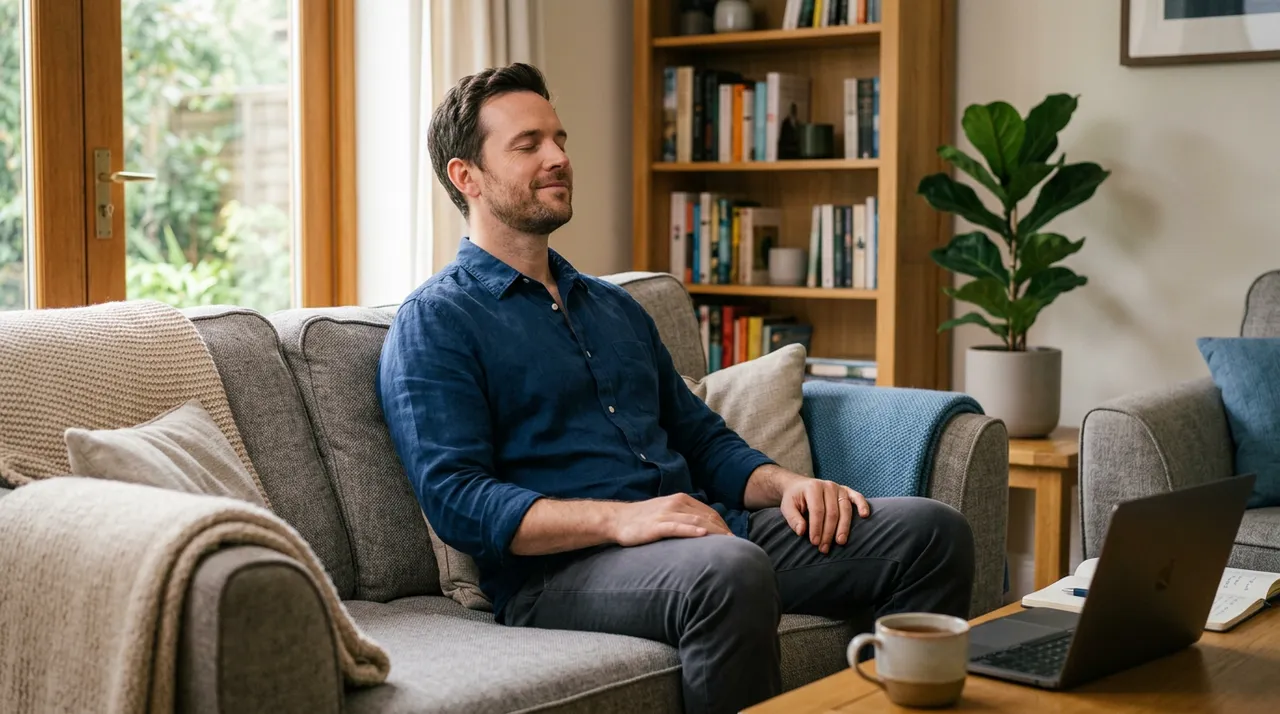
There is another benefit too. People often feel more comfortable opening up from a familiar environment. Sitting in your own space can make it easier to speak honestly about what is happening, especially if you are used to keeping everything together on the outside.
That does not mean online is automatically better for everyone. Some people focus more easily face-to-face, and some prefer the separation of leaving home for an appointment. But if you have avoided getting help because it feels inconvenient, expensive, or too exposed, online coaching can be a strong alternative.
You do not need to be in full burnout to benefit from support. In fact, earlier support is usually more effective. Coaching can be especially useful if you are functioning on paper but feeling stretched underneath it all.
This often includes people who are high-performing at work yet constantly tense, those navigating major life changes, or anyone who feels trapped in a cycle of overcommitting and under-recovering. It can also help if your stress is spilling into your relationships, sleep, eating habits, motivation, or concentration.
Many clients are not looking for abstract insight alone. They want to stop snapping at people they care about, stop waking up with dread, or stop ending each week feeling depleted. They want progress they can actually feel.
 What happens in coaching sessions
Most people worry that coaching will either be too vague or too intense. In reality, the best sessions tend to feel focused, human, and manageable.
You might begin by mapping your current stress load: what drains you, what restores you, where your pressure points sit, and what patterns keep repeating. From there, a coach can help you set goals that are realistic rather than idealised. That may mean learning how to leave work mentally at the end of the day, reduce avoidance, improve recovery time, or handle difficult conversations without carrying them for hours afterwards.
Sessions often combine reflection with action. You might look at thought patterns, routines, habits, and emotional responses, then test small changes between appointments. Those changes matter. Stress management is rarely transformed by one brilliant conversation. It shifts through consistent adjustments that make daily life feel safer, steadier, and more workable.
Depending on the coach, approaches can vary. Some are very practical and habit-led. Others are more reflective, helping you understand the beliefs or pressures sitting under your stress. Neither style is inherently better. It depends on what you need and how you work best.
Credentials and experience matter, but so does fit. You are trusting someone with a part of life that may already feel messy, fragile, or hard to explain. You need to feel safe enough to be honest.
Start with the basics. Look for clear information about the coach’s background, areas of focus, session format, and boundaries of practice. If stress is linked to burnout, work pressure, anxiety, or life transitions, it helps to choose someone who works with those areas regularly.
Then pay attention to how they communicate. Do they seem calm, clear, and grounded? Do they promise instant transformation, or do they talk realistically about change? Big promises can sound comforting when you are overwhelmed, but steady support is usually more valuable than dramatic claims.
It also helps to think about what kind of structure suits you. Some people want accountability and clear action steps. Others need more space to process before they can make changes. A strong platform makes this easier by helping you compare specialists, understand their approach, and book support without jumping through hoops. That is part of what makes digital care models such as SympathiQ appealing - they are built to reduce stress around getting support, not add to it.
Progress is not always dramatic at first. Often it starts quietly.
You may notice that stressful moments still happen, but they do not throw you off for as long. You may recover more quickly after a difficult day. You may start recognising your limits before you hit them. Sometimes the biggest shift is not becoming calm all the time. It is trusting that you can respond to pressure without being consumed by it.
You might also see practical changes: better sleep, fewer spiralling thoughts, more confidence saying no, improved focus, or less guilt around rest. These are not small wins. They are signs that your nervous system and your daily habits are beginning to work with you rather than against you.
If nothing is shifting after a fair period, that matters too. It may mean the coaching approach is not right for you, or that you need a different kind of support. Good care is not about forcing one model to fit every person.
Stress rarely stays in one lane. It affects energy, movement, food choices, mood, relationships, and self-worth. That is why a holistic approach can be so helpful.
For some people, stress management coaching works best alongside nutritional support, fitness guidance, or mental health care. If your stress is tied to poor sleep, low energy, emotional eating, or total disconnection from your body, a broader support network can make change feel more sustainable.
This matters because real wellbeing is interconnected. You are not a list of separate problems to fix one by one. You are a whole person trying to feel better in a life that places demands on your time, attention, and resilience.
Choosing support is not a sign that you are failing to cope. It is a decision to stop carrying so much on your own. If stress has become your normal, an online coach can help you see that normal does not have to stay that way. Sometimes the first step is simply letting someone help you build a calmer way forward.

Your email address will not be published. Required fields are marked *