Trying to exercise when your calendar is already full often ends the same way - a burst of motivation, a week of effort, then silence. That is exactly where an online fitness coach can make a real difference. Instead of asking you to reshape your life around a rigid programme, the right coach helps you build a plan that fits your routine, your energy, and your goals.
For many adults, fitness is not really the problem. The problem is consistency. You may know that movement matters, but between work, family responsibilities, stress and poor sleep, even simple routines can feel hard to maintain. Support changes that. Not because someone is standing over you, but because you have a clear structure, expert guidance and a person who understands what progress actually looks like in real life.
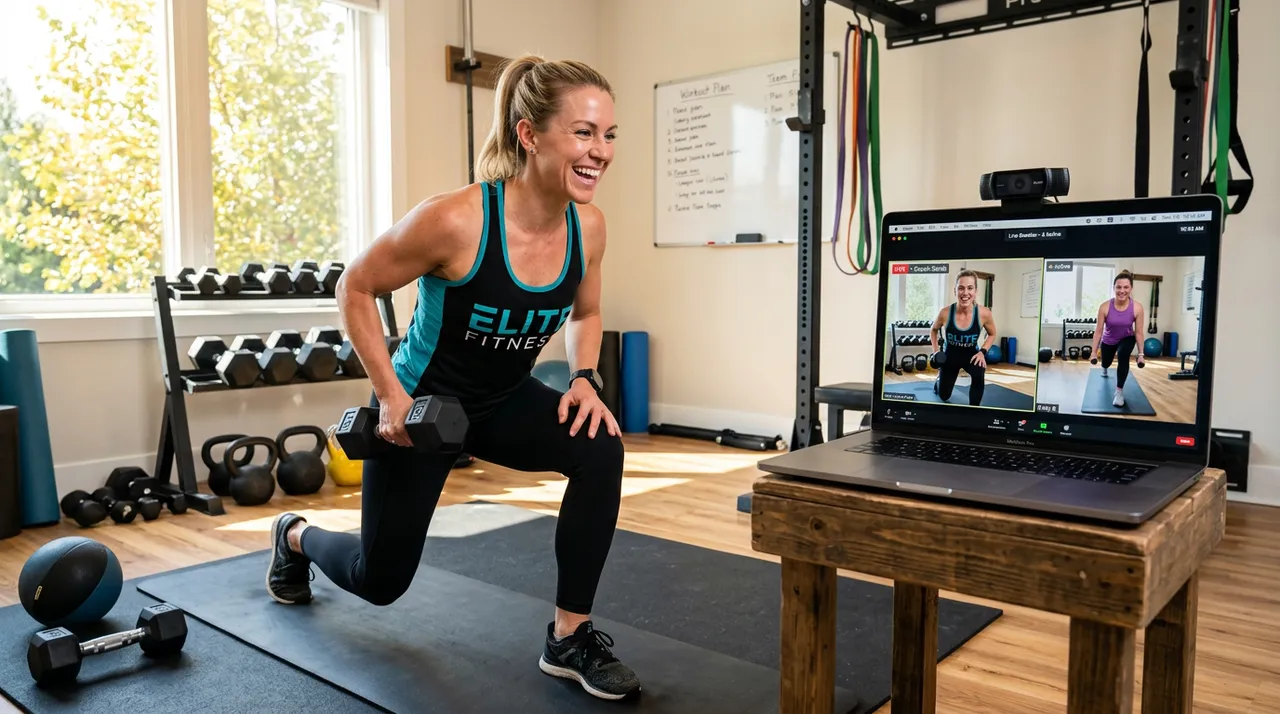
An online fitness coach is more than a digital version of a personal trainer. Yes, they may create workouts and help you improve strength, mobility, endurance or body composition. But the better ones also look at the wider picture - how you recover, how stress affects your energy, what barriers keep interrupting your momentum, and what kind of accountability will genuinely help.
That matters because fitness rarely sits in isolation. If you are feeling burnt out, your training capacity changes. If your sleep is poor, recovery slows down. If your confidence is low, even starting can feel exposing. A thoughtful coach works with those realities rather than pretending they do not exist.
For some people, online coaching is about performance and progression. For others, it is about rebuilding trust in their body after a difficult period, creating healthier routines, or finding a sustainable way to move after months or years of stop-start effort. Both are valid. The role of the coach is to meet you where you are and help you move forward with clarity.
Traditional fitness support can be helpful, but it often comes with friction. Travel time, fixed session slots, limited choice in your local area and the pressure of fitting everything into one location can make it harder to stay engaged. Online coaching removes much of that strain.
You can train at home, in a gym, outdoors or while travelling. You can check in around your work schedule rather than losing half a day to commuting. You can choose someone based on their approach and expertise, not just postcode. That flexibility is not a small perk - for many people, it is the difference between keeping going and giving up.
There is also a privacy element that matters more than people sometimes admit. Starting a fitness journey can feel vulnerable, especially if you are returning after burnout, injury, illness or a long period of inactivity. Online support can create a calmer entry point. You still receive personalised care, but in a way that feels more manageable and discreet.
The biggest benefit is not simply having workouts sent to your mobile phone. It is having a plan that reflects your current capacity instead of an idealised version of you. That makes consistency far more likely.
A good coach helps you set goals that are specific enough to guide action but flexible enough to survive real life. If your week becomes chaotic, they can adjust. If you are progressing quickly, they can build on that. If your motivation dips, they can help you spot whether the issue is discipline, exhaustion, unrealistic expectations or a programme that is no longer working for you.
That level of personalisation can protect you from two common mistakes. The first is doing too little because you are unsure where to begin. The second is doing too much too soon because you are trying to make up for lost time. Both can keep you stuck.
An online fitness coach can also improve your confidence. When someone explains why you are doing certain exercises, how to pace yourself and what kind of progress is realistic, fitness starts to feel less confusing. You are not just following instructions - you are learning how to understand your own body and habits.
Not everyone needs coaching forever. Some people need a short period of structure to build momentum, while others benefit from longer-term accountability. The key question is not whether coaching is trendy or convenient. It is whether you would do better with support than without it.
If you regularly start strong and then lose direction, coaching may help. If you are overwhelmed by conflicting advice online, coaching may help. If you have a clear goal but struggle to turn it into a practical routine, coaching may help. And if you are dealing with stress, low energy or burnout, having a coach who understands how to scale effort sensibly can be especially valuable.
That said, it depends on what you want. If you simply need a free beginner plan and enjoy figuring things out independently, you may not need one-to-one support yet. But if you want a tailored path, feedback, accountability and a more human experience, coaching often becomes far more effective than trying to piece everything together on your own.

Credentials matter, but so does communication. A coach can have technical knowledge and still be a poor fit if their style is too rigid, too generic or disconnected from your life. You want someone who listens well, asks thoughtful questions and adapts rather than forcing you into a fixed model.
Look for a coach who is clear about their process. How do they assess your starting point? How often do they check in? What kind of support is included between sessions? Do they tailor plans around equipment, time constraints and injuries? Good coaching should feel structured, but never impersonal.
It is also worth paying attention to philosophy. Some coaches focus heavily on aesthetics, others on performance, and others on long-term health and behaviour change. None is automatically wrong, but alignment matters. If your goal is to feel stronger and more balanced, a coach who only talks about drastic transformations may not be the right match.
Because wellness is interconnected, many people benefit from support that recognises more than sets and reps. If your stress levels, sleep, nutrition or mindset are affecting your fitness, a more holistic model can be especially helpful. That is one reason platforms such as SympathiQ can feel more supportive - they make it easier to find care that reflects the bigger picture, not just one isolated goal.
Accountability is often misunderstood. It is not about pressure or guilt. The most effective accountability feels steady, honest and encouraging. It helps you stay engaged without making you feel judged when life gets messy.
A strong coach will help you recognise patterns. Maybe you skip exercise when work becomes intense. Maybe you set goals that are too ambitious for your current energy. Maybe all-or-nothing thinking is keeping you trapped between overtraining and doing nothing. Once those patterns are visible, they can be changed.
This is where online coaching can be surprisingly powerful. Regular messages, progress reviews and small adjustments create continuity. You do not need to wait for a weekly in-person slot to ask a question or get back on track. That ongoing connection can make fitness feel like part of your life, rather than a separate project you keep failing to maintain.
One of the biggest worries is whether online coaching can really feel personal. It can, provided the coach takes time to understand you and offers meaningful feedback rather than automated check-ins. Another concern is cost. While coaching is an investment, online formats are often more flexible and accessible than traditional personal training.
Some people also worry that they are not fit enough to begin. In practice, that is often the strongest reason to seek guidance. You do not need to be advanced to work with a coach. You need to be willing to start honestly.
There is also the question of results. No coach can promise a perfectly straight line of progress, because life is not linear. But the right support can help you build momentum, recover from setbacks faster and make choices that are actually sustainable.
If fitness has started to feel like another thing you are failing to keep up with, that feeling can change. The right online fitness coach does not add pressure for the sake of it. They help you create a routine that supports your body, respects your reality and gives you a clearer path forward. Sometimes the first real shift is not doing more. It is finally getting the kind of support that makes progress feel possible.
Your email address will not be published. Required fields are marked *
choosing higher-fibre carbohydrates such as oats, wholemeal bread, potatoes with their skins, brown rice or wholewheat pasta;
including protein foods such as beans, lentils, eggs, fish, tofu, poultry or lean meat;
using unsaturated fats in modest amounts;
paying attention to portions, drinks and extras as well as the main meal;
building regular movement, sleep and stress management into the wider plan; and
adjusting the approach when it stops fitting your life.
The NHS guidance on healthy eating for weight loss emphasises balanced, filling choices and manageable portion sizes. The British Dietetic Association also recommends realistic goals, regular balanced meals and gradual lifestyle changes rather than fad diets.
The NHS and British Dietetic Association commonly describe around 0.5 to 1 kg, or 1 to 2 lb, per week as a realistic target for many adults who are advised to lose weight. This is a general guide, not a requirement or a prediction. Progress may be faster or slower, and body weight naturally fluctuates because of hydration, digestion, hormones and other factors.
A more appropriate first goal may be a change in behaviour rather than a number on the scales. Examples include:
adding vegetables to lunch and dinner;
preparing breakfast at home on four weekdays;
walking for 20 minutes after work three times a week;
reducing sugary drinks;
eating without a screen once a day; or
planning two home-cooked evening meals each week.
Non-scale signs of progress matter too. You might notice steadier energy, improved fitness, better sleep, greater confidence when shopping or less all-or-nothing thinking around food.
Weight loss requires an energy deficit over time, but calorie counting is only one way to create it. Some people find tracking helpful for understanding portion sizes and identifying drinks, sauces or snacks that are easy to overlook. Others find it stressful, inaccurate or difficult to sustain.
The NHS uses a reduction of around 600 calories a day as general population guidance for many adults trying to lose weight. That is not a personalised target. Your needs depend on factors such as your current intake, body size, activity, health and goals, and a generic calculator cannot account for everything.
Alternatives to detailed calorie counting include:
using a balanced-plate guide;
serving meals on a slightly smaller plate;
measuring energy-dense ingredients such as cooking oil;
planning regular meals instead of grazing throughout the day;
choosing water or lower-calorie drinks more often;
checking labels and comparing similar products; and
keeping a short food-and-mood diary to identify patterns.
If tracking numbers affects your mood, increases guilt or encourages restriction and compensation, stop and seek appropriate support.
A practical starting point is to fill roughly half your plate with vegetables or salad, then divide the other half between a protein food and a higher-fibre starchy carbohydrate. Add a small amount of unsaturated fat where needed.
This is a visual guide, not a rigid formula. Mixed dishes such as soups, curries, pasta meals and sandwiches will not separate neatly into quarters.
Protein can make meals more satisfying and helps maintain body tissues. Options include beans, lentils, chickpeas, tofu, eggs, fish, yoghurt, poultry and lean meat. You do not need an extreme high-protein diet or a supplement at every meal.
Bread, rice, pasta, oats and potatoes can be part of a healthy weight loss plan. Wholegrain and higher-fibre choices can support fullness and digestive health. Cutting out all carbohydrates is not necessary for weight loss and may make a plan harder to sustain.
Fruit and vegetables contribute fibre, vitamins and minerals. Fresh, frozen and tinned options can all be useful. Choose tinned fruit in juice rather than syrup and check salt levels in tinned vegetables when practical.
Olive oil, nuts, seeds, avocado and nut butter can contribute useful nutrients, but portions still matter because fats are energy dense. Alcohol, sugary drinks, speciality coffees, dressings and sauces can also make a meaningful difference to total intake.
For an example of how these principles can work across a week, try our flexible 7-day healthy meal plan.
No single eating pattern is automatically best for everyone. The right option should fit your preferences, nutritional needs, health and daily routine.
Approach | How it works | Possible advantages | Points to consider |
|---|---|---|---|
Balanced, Eatwell-style plan | Uses all main food groups with attention to portions and higher-fibre choices | Flexible, familiar and adaptable to different cultures and budgets | Results still depend on portions and overall intake |
Mediterranean-style plan | Emphasises vegetables, pulses, whole grains, fish, nuts and unsaturated oils | Varied and compatible with long-term healthy eating | Oils, nuts and cheese are energy dense, so portions may need attention |
Moderately lower-carbohydrate plan | Reduces some carbohydrate foods while retaining vegetables, protein and other food groups | Some people find it simplifies choices or supports appetite management | Quality and nutritional balance still matter; seek advice if you take diabetes medication |
Intermittent fasting | Limits eating to set times or reduces intake on selected days | A simple schedule can suit some routines | It is not appropriate for everyone and can encourage overeating or restriction; get advice if you have diabetes or an eating-disorder history |
Vegetarian or vegan plan | Uses plant-based protein foods and reduces or excludes animal products | Can be rich in fibre and varied plant foods when well planned | Weight loss is not automatic; vegan plans require attention to nutrients including vitamin B12 and iodine |
Structured programme | Provides a defined plan, tracking, coaching or group support | Accountability and a clear routine can help some people | Check qualifications, evidence, total cost, sales pressure and what happens after the programme ends |
A ketogenic diet is a very-low-carbohydrate, high-fat approach. It is much more restrictive than simply choosing fewer refined carbohydrates. It can be difficult to balance and may interact with health conditions or medication. The BDA’s guidance on fad diets warns against extreme plans and severe food-group restriction unless medically indicated and properly supervised.
The current article’s claim that keto and intermittent fasting can be combined to “enhance fat burning” should not be retained. Combining restrictive approaches does not automatically produce a safer or more sustainable outcome.
Be cautious if a programme:
promises dramatic results in days or guarantees a specific amount of weight loss;
removes an entire food group without a clear medical reason;
requires expensive supplements, teas, injections or branded foods sold by the person recommending the plan;
relies mainly on testimonials, before-and-after photographs or one small study;
describes ordinary foods as toxic, dirty or forbidden;
ignores medication, health conditions, mental health and eating-disorder risk; or
offers no realistic plan for maintenance once the strict phase ends.
A credible professional should explain both the benefits and limits of an approach. They should not shame you, guarantee results or advise outside their qualifications.
Instead of changing everything on Monday, use four weeks to build a foundation.
Keep a simple record of meals, drinks, hunger, mood and routine for three to seven days. Look for patterns rather than mistakes. Is breakfast often skipped? Are portions largest when you arrive home very hungry? Do stressful meetings lead to grazing?
Choose two changes, such as adding vegetables to one main meal and including a protein food at breakfast or lunch. Keep the goals small enough to repeat on a busy day.
Measure cooking oil for a week, serve snacks into a bowl rather than eating from the packet, and put convenient balanced foods where you can see them. Avoid reducing every portion at once.
Choose movement you can continue, whether that is walking, swimming, cycling, strength training or short activity breaks. Review what worked, what felt difficult and what needs to change. Continue the habits that fit and replace the ones that did not.
The NHS advises adults to work towards at least 150 minutes of moderate-intensity activity a week, but activity can be divided into shorter sessions. If you are inactive, have pain or have a health condition, ask a healthcare professional what is appropriate before making a significant change.
Keep a few easy meals available for late evenings: vegetable soup with wholemeal toast, eggs with tomatoes and potatoes, a bean chilli from the freezer, or a wholemeal wrap with salad and protein.
After an unplanned meal or social event, return to your usual routine at the next meal. Skipping meals or restricting heavily the following day can reinforce an all-or-nothing cycle.
If the plan repeatedly breaks down, ask what is creating friction. The recipe may take too long, the portions may leave you hungry, the shopping list may be too expensive or the eating schedule may not suit your working hours.
Support can come from a friend, partner, structured programme or qualified professional. The useful question is not whether you “should” manage alone, but what would make the next step safer and more realistic.
A registered dietitian is the safer starting point when weight management is connected to a diagnosed condition, persistent digestive symptoms, nutrient deficiencies, pregnancy, medication, unexplained weight change or eating-disorder recovery. Dietitians are regulated healthcare professionals in the UK.
A suitably qualified nutrition or wellbeing coach may help with non-clinical goals such as routines, planning, motivation and accountability, provided they stay within their scope and refer medical concerns appropriately.
Read our guide to choosing between a dietitian and a nutrition coach if you are unsure which kind of support fits your situation.
On SympathiQ, you can browse specialists, see how verification works and review session pricing before deciding whether to book.
There is no single best plan for everyone. A suitable plan should create a manageable energy deficit, provide balanced nutrition, fit your preferences and circumstances, and be realistic enough to continue. A flexible balanced or Mediterranean-style approach works well for many people, but individual needs differ.
The NHS commonly suggests around 0.5 to 1 kg, or 1 to 2 lb, per week as a realistic target for many adults who are advised to lose weight. This is general guidance rather than a personal target, and progress will not be identical every week.
No. Weight loss does not require eliminating carbohydrates. Higher-fibre foods such as oats, wholemeal bread, brown rice, potatoes and pulses can be part of balanced meals. Overall intake, portions, food quality and consistency all matter.
Not automatically. Some people like the structure, while others become overly hungry or find it difficult socially. What matters is whether the approach is safe, nutritionally balanced and sustainable for you.
Yes. Calorie counting is one option, not a requirement. Portion awareness, balanced meals, fewer high-calorie drinks, meal planning and regular eating patterns can also help reduce energy intake.
Speak to a GP or registered dietitian if you have a medical condition, take relevant medication, experience unexplained weight changes, have complex dietary needs or have an eating-disorder history. Seek urgent medical help if weight-loss behaviours are affecting your physical safety or you are unable to eat adequately.
Healthy weight loss is less about finding a perfect diet and more about creating a workable system. Start with a small number of changes, keep meals balanced, notice how your routine affects your choices and adjust the plan without treating setbacks as failure.
If generic advice is not enough, explore SympathiQ’s diet and weight-loss support or find a specialist whose experience matches your goals.