Subscribe to Our Newsletter
To get the latest tips and news to support your well-being journey!
Find the right specialist for youFind a Specialist


If your week is split between client sessions, admin, follow-ups and the quiet worry of where your next booking will come from, choosing the right platform is not a small decision. The best platforms for wellness practitioners do more than tidy your calendar - they shape how clients discover you, how safe they feel sharing personal concerns, and how much energy you still have left for the work that matters.
For coaches, therapists, dietitians, fitness professionals and holistic specialists, the challenge is rarely just finding software. It is finding a digital home for your practice that supports trust, growth and continuity of care without adding friction. Some platforms are brilliant at scheduling but weak on visibility. Others help you attract leads but leave you juggling messages, payments and notes across multiple systems. That is why the right choice depends less on flashy features and more on how you actually work.
A strong platform should support both the client experience and the practitioner experience. Those two things are closely connected. If a client can browse services clearly, book in minutes, pay securely and attend a session without technical stress, they are far more likely to return. If you can manage bookings, records, communication and payments in one place, you are more likely to deliver calm, consistent care.
In practice, the best options tend to do five things well. They make discovery simple, so clients can understand what you offer and whether you are the right fit. They reduce admin, especially around scheduling, reminders and invoicing. They protect privacy, which matters even more when your work touches mental health, burnout, relationships or personal development. They support online delivery through reliable video or virtual consultation tools. And they help you grow, either through marketing features, marketplace visibility or client retention tools.
What matters most will vary. A solo nutrition practitioner may prioritise easy package sales and recurring appointments. A burnout coach may care more about messaging, goal tracking and flexible scheduling for busy professionals. A therapist may place privacy, consent and record management above everything else. There is no universal winner, but there are clear categories of platform worth considering.
Before comparing features, it helps to separate two common models.
Marketplace platforms help clients find you. They usually offer practitioner profiles, category browsing, reviews or matching, and built-in booking. These can be useful if visibility is your biggest challenge, especially when you are still building a client base. The trade-off is that you are operating inside someone else’s ecosystem, which may mean platform fees, profile rules or stronger competition.
Practice management tools are more like client management or CRM systems for a wellness practice. They help health and wellness professionals run their business, but they do not always bring clients to you. They are often better for wellness businesses that already have a steady flow of referrals, social media enquiries or word-of-mouth demand. In that case, smoother operations may matter more than discovery. This software centralizes client data and can automate marketing tools.
Some of the best platforms sit between the two. They combine client acquisition with booking, payments and ongoing support. Over 50,000 practitioners use this kind of software for wellness management. For many wellness professionals, that blended model is the most sustainable because it reduces the need to stitch together separate tools.
If your work fits into a broader wellbeing journey rather than a narrow clinical category, a holistic marketplace can be a strong fit. These platforms are designed for practitioners who support the whole person, not just one issue in isolation. That is especially useful for specialists working with stress, burnout, habits, emotional resilience, movement, nutrition and personal growth, where client needs often overlap.
The main advantage is context. A client looking for help with exhaustion might also need support with sleep, boundaries, food choices or mindset. In a holistic environment, your work feels connected rather than siloed. That can lead to better-fit clients and more meaningful engagement over time.
A platform such as SympathiQ reflects this model by bringing specialist discovery, booking, virtual support and practitioner tools into one platform instead of patched-together tools. In the wellness space, purpose built platforms may also include a client portal for secure client communication, giving people access to wellness plans and tracking in one place. For practitioners, that can support stronger client care while reducing admin and leaving more time to help clients move forward with clarity.
Some practitioners need one thing fixed first - the constant back and forth of arranging appointments. Scheduling platforms are often the easiest entry point because they solve an immediate pain point and streamline daily operations by cutting down on admin work. Clients can see availability, choose a time, and use automated scheduling tools to schedule appointments themselves, then receive reminders and reschedule without endless messages.
This works particularly well for independent practitioners with an established audience. If people already know how to find you, a clean booking journey can remove enough friction to improve conversion on its own.
The limitation is that booking tools are usually not full practice systems. You may still need separate solutions for video calls, notes, intake forms, client programmes or lead generation. That can be manageable at first and helps you stay organized, but as a coaching practice expands it often becomes messy and may require other systems.
For practitioners who want more control, all-in-one systems are often the most practical choice. These platforms usually include scheduling, intake forms, client management, communications, reporting and payment processing. Some also support treatment plans, packages and subscriptions. Stronger systems can automate workflows and support a health coaching practice to streamline operations.
Their strength is operational calm. When your admin is organised, clients feel it. Sessions start on time. Follow-ups are not forgotten. Administrative tasks are easier to stay on top of. This matters in wellness work because trust is built through consistency as much as expertise. HIPAA-compliant systems also help protect sensitive client data and privacy, especially where regulations such as GDPR and HIPAA shape expectations around documentation and communication.
The trade-off is that these tools can feel more administrative than relational. Some are built with clinics in mind rather than coaches, holistic practitioners or hybrid service providers. Some all-in-one tools are purpose-built for health coaches and similar practitioners, with paid plans that can start at $25 per month and adoption across more than 50,000 practitioners. You may gain efficiency but lose some warmth in the client journey unless the interface is genuinely intuitive.
If most of your work happens online, video quality and virtual session flow deserve more attention than they often get. A video-first platform is not just a meeting tool. Ideally, it should include telehealth features like built-in video conferencing and audio calling, along with reminders, private access, mobile usability and a reassuring client experience from the moment someone joins.
This is especially relevant for sensitive work. Clients discussing anxiety, burnout, relationship strain or body image need to feel contained, not rushed into a clunky call link. User-friendly mobile apps also support client engagement between sessions. A poor virtual environment can create distance before the session has even begun.
Still, video-first tools rarely cover the whole business. They are best when paired with booking and payment features or built into a broader platform that adds communication tools such as secure two-way messaging for client check ins and coaching sessions without cluttering personal inboxes.
Wellness support is often not a one-off service. Clients may need weekly sessions, multi-session programmes, check-ins, or combined support over time, and longer-term care may also include meal plans, nutrition plans, or regular check-ins depending on the service. Platforms that handle packages, recurring payments and clear invoicing can make your offer easier to understand and easier to commit to.
That benefits both sides. Clients can see a path rather than a single appointment. Practitioners gain more predictable income and a better structure for long-term support, which also makes it easier to review client progress and improve client satisfaction over time. This is especially useful for coaching, nutrition and habit-change work, where habit tracking often supports steady follow-through, and sms reminders keep clients motivated and informed about sessions.
The risk is overcomplicating your pricing too early. If a platform encourages you to build too many tiers, bundles or automations, clients may hesitate instead of booking. Simple often converts better, even if you want to share meal plans as part of ongoing support.
Start with your current bottleneck, not the longest feature list. If you struggle to get discovered, marketplace reach may matter most. If you are fully booked but overwhelmed, practice management is the smarter priority. If drop-off happens between enquiry and appointment, your booking journey probably needs attention. Some tools lean more toward client records and appointment scheduling, while others focus on personalized reminders and client goal tracking to support accountability.
Then look closely at client fit. A platform can be technically impressive and still feel wrong for your audience. Busy professionals tend to value speed, privacy and evening availability. Clients seeking personal growth may respond well to clear goal setting and ongoing support between sessions, which can strengthen client relationships. People dealing with stress or emotional overwhelm often need a booking process that feels calm, not clinical. For a small business or a growing health coaching business, steady client engagement often comes from personalized reminders, simple resource sharing, and messaging apps that keep clients motivated.
It is also worth checking how future-proof the platform is. Can it support you if you expand from one-to-one sessions into programmes, group work or multi-disciplinary care? Can clients stay with you across different stages of their wellbeing journey? Look for integrations with popular wellness tools, including wearable syncing for activity monitoring and email platforms that can send weekly newsletters with health tips. The best platform is not only the one that works now. It is the one that still fits six months from now, when your practice has more momentum.
When you assess any platform, ask yourself a simple question: does this make care easier to access and easier to deliver, improve client care, and handle sensitive information securely where relevant?
If the answer is yes for both you and your clients, you are looking in the right place. If it helps your business but confuses clients, that tension will show up later. If clients love it but you are buried in admin, you will feel that strain too. For health and wellness professionals working in more sensitive settings, that can also mean purpose-built tools with HIPAA compliance, note taking, and assessment templates; for example, SimplePractice offers hundreds of templates for client assessments. Sustainable growth in wellness comes from platforms that support human connection while quietly taking care of the moving parts in the background.
The right system will not transform your practice on its own. But it can give your work the structure, visibility and steadiness it needs to grow with confidence. Key features still need to match your stage, whether that means a starter plan, an essential plan, or a professional plan. Choose the platform that gives you more space to show up fully for the people you support - because that is where real progress begins. Entry-level cost matters too: SimplePractice starts at $39 per month for health coaches, while Profi.io is an end-to-end HIPAA-compliant health coach platform.
Category | Example | Starting price | Client acquisition built in? | Best for |
Holistic care marketplace | SympathiQ | Pay-per-session, no monthly fee | Yes — discovery + booking in one | Practitioners who want new clients, not just admin tools |
Dedicated booking/scheduling | —
| Varies | No — you bring your own clients | Practitioners with an existing client base who just need calendar tools |
All-in-one practice management | SimplePractice | From $25/month | No | Practitioners who want templates, intake forms, and reporting in one system |
Video-first platform | — | Varies | No | Practitioners prioritising the session experience itself |
Payment & package tools | —
| Varies
| No
| Practitioners running multi-session programmes needing recurring billing |
HIPAA-compliant all-in-one | Varies
| No
| US-based practitioners with strict compliance requirements |
Do I need more than one platform, or can one tool cover everything?
Most practitioners end up using two: a marketplace or booking tool for discovery and scheduling, plus a practice management tool for clinical notes, templates, and reporting once client volume justifies it. Very few single platforms do both well.
What's the real difference between a marketplace and a practice management tool?
A marketplace (like SympathiQ) is discovery-first — built to bring you new clients. A practice management tool assumes you already have clients and helps you run sessions and handle admin for them. Confusing the two is the most common mistake.
Are these platforms compliant with data protection requirements?
Varies by platform and region — UK/EU practitioners need GDPR compliance, not just HIPAA (US-specific, doesn't automatically cover UK data handling). Check explicitly rather than assuming.
Do I still need my own website if I'm listed on one of these platforms?
Not necessarily to start — a strong marketplace profile can be enough early on. A personal website becomes more valuable once building an independent brand or relying on referrals/repeat business.
How much should I expect to pay as a solo practitioner starting out?
Ranges widely — dedicated management tools start ~$25–39/month regardless of client volume; marketplace models like SympathiQ charge only when a session happens. For unpredictable early client flow, pay-per-session avoids paying for an unused tool.
Can I use one of these platforms alongside my own private, word-of-mouth clients?
Yes — nothing stops running both simultaneously, especially early on while building a client base.

Your email address will not be published. Required fields are marked *


You might be ready to open up about burnout, anxiety, relationship strain or something you have not said out loud to anyone yet - and then one question stops you cold: is online therapy confidential? It is a fair concern. When support happens through a screen, privacy can feel less obvious than it does in a quiet therapy room.
The reassuring answer is yes, online therapy is confidential in much the same way as in-person therapy, but confidentiality is not absolute and it depends on the provider, the platform, and the situation. That nuance matters. If you know what to look for, you can choose support with far more confidence and focus on what actually brought you there.
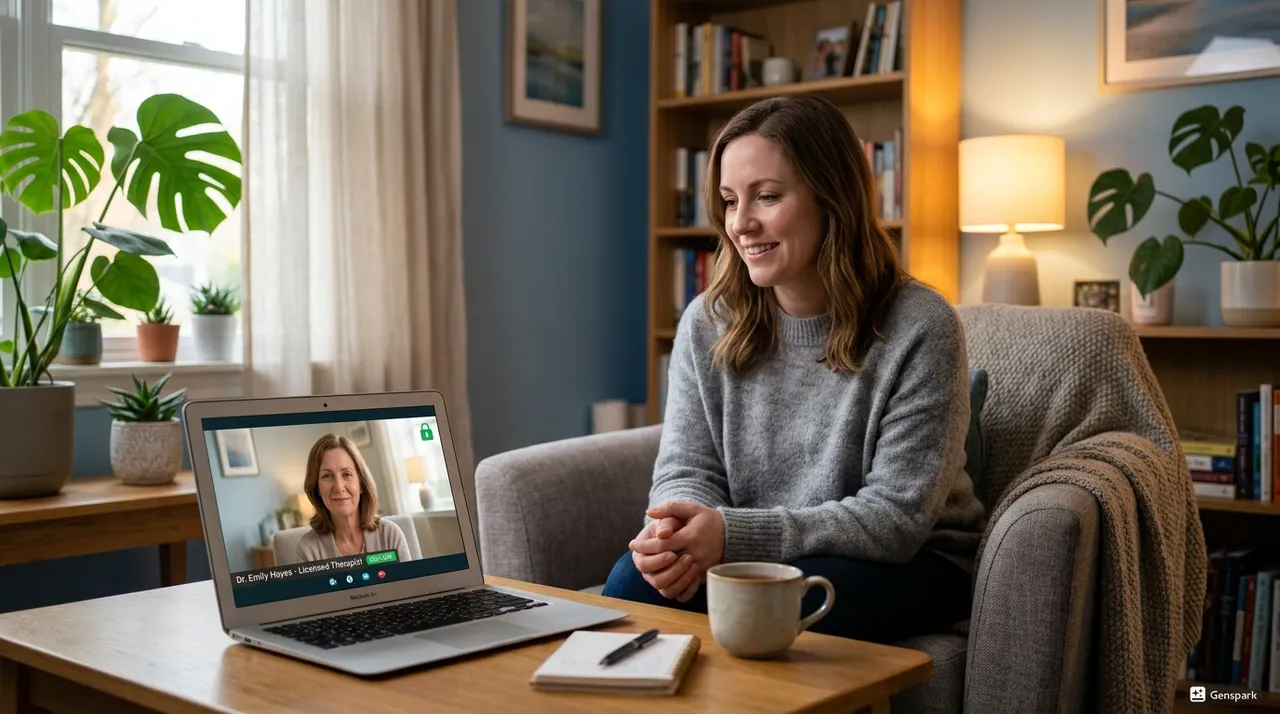
In practice, confidentiality means what you share in therapy is meant to stay between you and your therapist. Notes, session details, personal history and sensitive disclosures should be handled privately and stored securely. Whether your session takes place face to face or by video, the same ethical duty applies.
That said, online therapy adds a digital layer. Your privacy depends not only on your therapist's professional standards, but also on the security of the technology being used. A qualified therapist may be fully committed to confidentiality, yet a poor platform, weak passwords or a lack of privacy at home can still create risks.

This is why the better question is often not simply, "is online therapy confidential?" but "how is confidentiality protected, and where are the limits?" Once you understand those two parts, online support can feel much less uncertain.
If you are working with a legitimate therapist or specialist, confidentiality generally covers the content of your sessions, your contact details, your health or wellbeing information, appointment history, and any written messages or forms shared as part of care. Therapists are also usually careful about how records are stored, who can access them, and how they communicate with you.
For many people, online therapy can actually feel more private than travelling to a clinic. There is no waiting room, no chance encounter in reception, and no need to fit appointments around a public commute. For professionals with packed schedules or anyone worried about stigma, that discretion can make it easier to take the first step.
Still, privacy is strongest when both sides take it seriously. A secure platform helps, but so does having your session somewhere you cannot be overheard.
This is the part every ethical provider should explain clearly. Confidentiality is a core promise, but there are recognised situations where a therapist may need to share information.
Most often, this happens if there is a serious risk of harm to you or someone else, or if there are safeguarding concerns involving a child or vulnerable adult. A therapist may also have to disclose information if required by law or court order. In some settings, limited information may be shared with clinical supervisors to support quality of care, though that should still happen within professional confidentiality standards.
None of this is unique to online therapy. These limits exist in in-person therapy too. The difference online is that providers should explain them in plain language before you begin, usually through an agreement, privacy notice or onboarding process. If those limits are vague, hidden or overly broad, that is worth pausing over.
A trustworthy online therapy service should do more than offer video calls. It should be built to protect sensitive conversations and personal data from the start.
That usually includes encrypted communication, secure account logins, controlled access to records, protected payment systems, and clear privacy policies. Some platforms also separate administrative data from session content, keep audit trails, and give practitioners structured tools for record-keeping rather than relying on scattered emails and consumer messaging apps.
This is where platform choice matters. Not every video tool is designed for confidential care, and not every wellness marketplace handles privacy with the same level of care. If a service makes bold claims about confidentiality but says little about security, that gap is worth noticing.
At SympathiQ, for example, the emphasis on privacy and secure digital care is part of the overall experience rather than an afterthought. That matters when you are sharing personal information and want support to feel both human and well protected.
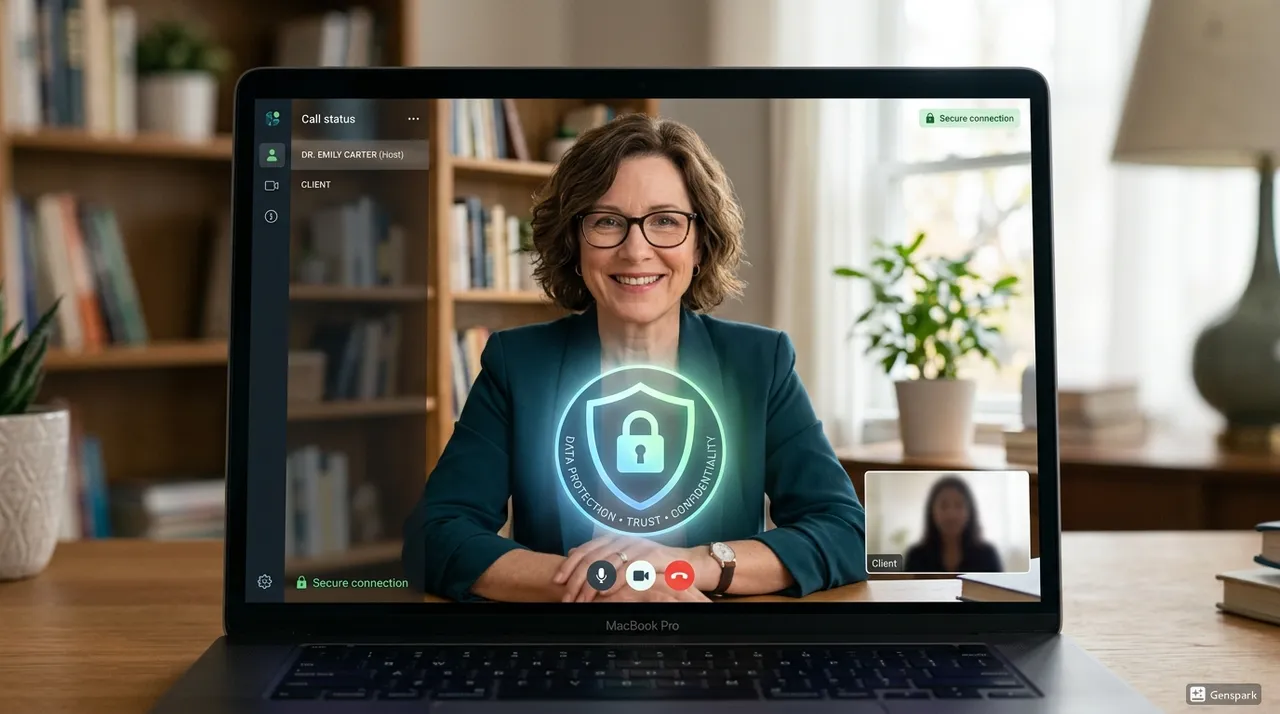
Most confidentiality worries focus on hacking or data breaches, but everyday issues are often more relevant. The biggest weak point is sometimes not the platform - it is the environment around the session.
If you are taking a call from a shared flat, parked car or office meeting room, someone may overhear more than you realise. Notifications can pop up on screen. A family member might walk in mid-session. Even using work devices can be risky if your employer has monitoring software or access controls in place.
There is also the question of communication outside the session. If reminders, invoices or follow-up messages arrive by email or text, think about who can access those devices. Shared tablets, unlocked mobile phones and synced inboxes can quietly reduce your privacy.
None of this means online therapy is unsafe. It means confidentiality is partly clinical and partly practical. A private room, headphones, a secure internet connection and a personal device can make a real difference.
You should not have to guess. A professional therapist or platform ought to be clear about how your information is handled.
Look for straightforward explanations about privacy, record storage and the limits of confidentiality. Check whether the therapist is properly accredited or registered with a recognised professional body. Notice whether the consent process feels careful rather than rushed. If you cannot easily find information about security, complaints, record keeping or emergency procedures, ask.
The way a provider answers matters. You are not being difficult by raising privacy questions. In fact, a good therapist will usually welcome them because informed trust is part of effective care.
You might ask how session notes are stored, what platform is used for video calls, who has access to your records, whether sessions are recorded, and what happens if there is a safeguarding concern. Clear, calm answers are a good sign. Defensive or evasive ones are not.
There is no simple winner. In-person therapy avoids some digital risks, but it introduces others, such as being seen entering a clinic or discussing appointments by phone in public. Online therapy reduces some of that exposure, yet relies more heavily on technology and your home setup.
For many adults, especially those balancing demanding work, family responsibilities or mobility barriers, online therapy offers a level of privacy and convenience that makes support more realistic. The session fits your life more easily, which can mean you actually stick with it. That consistency can be just as important as the format itself.
The real difference is not online versus in person. It is secure and well-managed versus casual and unclear.
If privacy is on your mind, a few small steps can help you feel more in control. Read the provider's privacy information before booking. Use a personal device rather than a work one. Choose a quiet space where you can speak freely. Wear headphones. Turn off smart speakers and notifications. If you are unsure about any part of the process, ask before the session starts.
That preparation does more than protect your information. It helps create the emotional safety needed for honest, useful conversations. When you are not worrying about who might hear you or where your data is going, it is easier to stay present.
Online therapy can be highly confidential when it is delivered by a qualified professional through a secure platform with clear privacy standards. It is not magic, and it is not risk-free, but neither is any form of care. What matters is transparency, good systems and the confidence to ask the questions that protect your wellbeing.
If you are considering support, you do not need to wait until every doubt disappears. You can take the first step by choosing a provider that treats your privacy with the same care as your progress - because feeling safe enough to speak is often where real change begins.
Not all support feels helpful just because it is available. The best online sessions for self-improvement do three things well.
First, they are specific. General motivation rarely lasts. Clear goals do. That might mean improving sleep over six weeks, building a steadier exercise routine, learning to manage stress triggers at work or communicating better in a relationship. A focused starting point gives the session shape.
Second, they are personalised. Advice that works brilliantly for one person can feel impossible for another. Your schedule, energy, finances, emotional capacity and previous experiences all matter. Good support takes those into account rather than handing you a one-size-fits-all plan.
Third, they create accountability without shame. There is a big difference between being pushed and being supported. Real progress often comes from gentle consistency - checking in, noticing patterns, adjusting goals and celebrating what is working instead of fixating on what is not.
One reason people give up on self improvement is that they choose the wrong format for the problem in front of them. If you are emotionally exhausted, a highly intense performance-based coaching style may leave you feeling worse. If you want practical habit change, reflective conversation alone may not be enough.
Mental health support can be helpful when anxiety, low mood, overwhelm or unresolved emotional strain are affecting daily life. Burnout coaching can suit professionals who are functioning on the surface but feel depleted underneath. Fitness coaching works best when you want structure, progression and someone to adapt a plan around your current level. Nutritional guidance can help if your eating habits are affected by stress, confusion or all-or-nothing thinking.
Personal development support sits slightly differently. It is often about confidence, boundaries, motivation, self-awareness and direction. For many people, that is the missing piece. They do not necessarily need crisis support. They need expert help to move from feeling stuck to feeling capable again.
Sometimes one area leads into another. Someone may start by wanting to improve productivity, then realise their real issue is chronic stress. Another person may seek help with fitness, then discover accountability and confidence are the bigger barriers. That is why a holistic approach tends to work better than treating every challenge in isolation.